What Happens When a Hair Follicle Is Pulled Out? [+ FAQs]
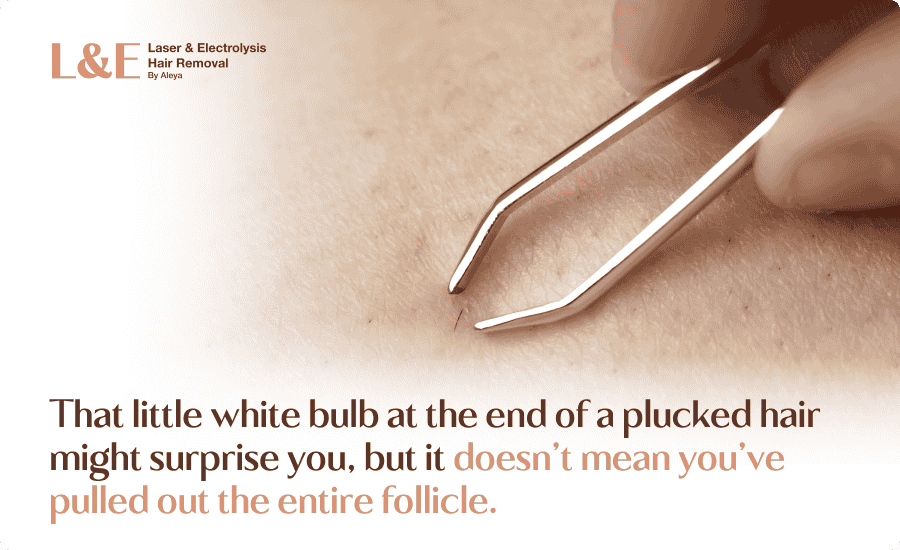
Ever pulled out a stray hair with tweezers and spotted a tiny white blob at the end? You might think you’ve removed the entire follicle, but that’s usually just the hair root and part of its sheath. The follicle stays beneath your skin, ready to grow new hair.
Still, hair plucking isn’t totally consequence-free, especially once it becomes a daily ritual. In fact, a recent review lists folliculitis, ingrown hair bumps, dark spots, and scarring among the common side effects of pulling hair from the follicle, particularly when several hairs come out at once.
In this guide, we will:
- Explain whether plucked hair grows back and how long it takes.
- Share the truth behind the thicker-or-thinner debate.
- Cover how to handle chin hair, facial hair and mole hair without making things worse.
- Explore when laser hair removal or electrolysis makes more sense than tweezers.
Can You Actually Pull Out a Hair Follicle?
Not usually. When you pluck a hair strand, you’re pulling out the shaft and root, not the entire follicle. That tiny structure stays beneath your skin, where it can produce new hair.
The dermal papilla, which helps regulate hair growth, also typically remains intact. As long as the follicle hasn’t been permanently damaged, hair can grow back.
Will Hair Grow Back After You Pull It Out?
In most cases, yes. Plucking interrupts the hair growth cycle, but the follicle usually remains intact and can produce new hair.
Regrowth depends on the area. Facial hair might return within a few weeks, while eyebrows can take a couple of months to fill in. If stubborn chin hairs seem to return sooner, see why facial hair grows so fast.
What Is the White Bulb at the End of a Plucked Hair?
That little white or clear blob at the end of a plucked hair is usually part of the hair root, sometimes with tissue from the root sheath. What it looks like depends on where the hair is in its growth cycle:
- Resting (telogen) hair: It slides out easily with a small, firm white bulb called a club root. This hair was already on its way out, so you just sped up the eviction.
- Growing (anagen) hair: It takes more force and might come out with a gooey, translucent sheath attached. That’s the inner root sheath, and the follicle makes a new one.
- Broken hair: No bulb usually means the shaft snapped above the root, so it’ll be back sooner than you’d like
Does Plucking Hair Make It Grow Back Thicker or Thinner?
Ever plucked a stray hair strand and wondered if it would grow back thicker, thinner, or not at all? Find out what really happens when you pull hair from the root and how it impacts future growth.
Does Plucking Make Hair Grow Back Thicker?
No. Plucking doesn’t change the number or size of your hair follicles, so it won’t cause hair to grow back thicker or darker.
If regrowth appears coarser, hormonal changes associated with aging, pregnancy, menopause or conditions like PMOS might be responsible. These are among the common causes of unwanted hair growth, particularly around the chin. Plucking also won’t turn fine peach fuzz into coarse terminal hair.
Does Plucking Hair Make It Thinner Over Time?
It can. Repeated plucking, especially during the growth phase, can damage the hair matrix, potentially leading to finer, patchier regrowth, or permanent hair loss. This is why some people struggle to regrow over-plucked eyebrows.
Is Plucking Hair Bad for You?
Plucking the occasional stray eyebrow or stubborn chin hair is typically no big deal. But when tweezing becomes a daily habit, your skin might start to protest. Frequent plucking, especially in the same spots, can lead to several side effects, including:
- Redness and bumps: Small red bumps right after plucking are a normal irritation response and usually fade within a few hours.
- Ingrown hairs: A regrowing hair can curl back or get trapped under the skin and form a tender bump. Here’s how to treat ingrown hairs without digging at them.
- Folliculitis: Bacteria can get into the open follicle and cause inflamed, pimple-like bumps.
- Dark spots: Repeated inflammation can trigger hyperpigmentation, especially in medium to deep skin tones.
- Scarring: Picking at ingrown hair or plucking the same spot obsessively can leave small, pitted scars.
Can You Pluck Hair Growing From a Mole?
You can, but trimming is safer. Hair growing from a mole is common and usually harmless, though repeated plucking might irritate the mole.
Use small, clean scissors to trim the hair close to the skin. For a longer-term solution, electrolysis might be an option if a dermatologist has confirmed the mole is benign. If it changes in size, shape, or color, or starts itching or bleeding, have it checked. The hair can wait.
Plucking Facial Hair at Home? Here’s How To Pluck Hair Safely
If tweezers are staying in your routine, a little technique goes a long way:
- Clean your tweezers: Wipe the tips with rubbing alcohol before and after each use.
- Pluck after a warm shower: Warm water softens the skin, so the hair slides out with less tugging.
- Grip close to the root: Grabbing the hair near the skin keeps it from snapping off at the surface.
- Pull in the direction of growth: Yanking against the grain is more likely to break the hair or irritate the follicle.
- Hold the skin taut: Gently stretching the skin with your other hand makes each pull quicker and less painful.
- Go one hair at a time: Pinching a cluster raises the odds of broken hairs and irritation.
- Soothe afterward: A cool compress or fragrance-free moisturizer calms redness. If the irritation doesn’t settle down, here’s how to treat irritated skin.
- Leave ingrown hair alone: Digging under the skin with tweezer tips is how a small bump becomes a scar.
Done With Hair Plucking? Consider Laser Hair Removal or Electrolysis at Laser by Aleya
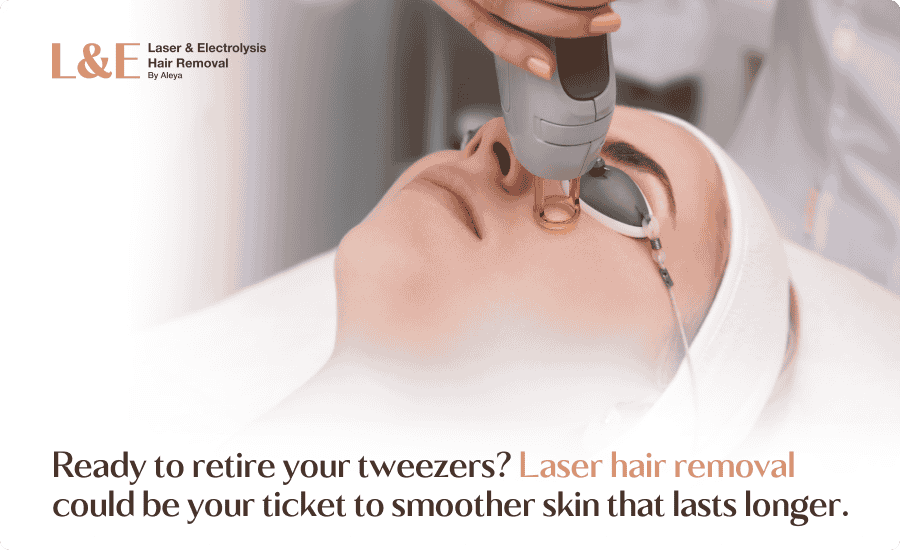
Plucking hair might feel productive, until the same stubborn hair strands show up again. If you’re ready to give your tweezers a break, laser hair removal and electrolysis offer longer lasting (and even permanent) solutions.
Here’s how they work:
- Laser hair removal uses targeted light energy to heat and damage hair follicles, gradually reducing regrowth over a series of sessions.
- Electrolysis treats individual follicles using a fine probe and electrical current. It works on all hair colors, including blonde and gray, making it a great option for small areas and those particularly persistent chin hairs.
Not sure which treatment deserves a spot in your beauty routine? See how laser hair removal and electrolysis compare to find out which suits your needs.
At Laser by Aleya, we offer both treatments, including laser hair removal with the Lumenis Diode LightSheer. We’ll help you choose an approach based on your skin, hair, and goals, so you can spend less time checking your chin in the rearview mirror.
Hair Follicle Pulled Out: FAQs
Does plucking make hair thicker?
No, plucking hair won’t make it grow back thicker. If you’re noticing coarser hair, hormones or other changes in your body are more likely responsible than your tweezers.
Is plucking hair bad?
Not necessarily. Plucking an occasional stray hair is generally fine, but doing it too often can lead to irritation, ingrown hairs, or infections.
Can you pluck mole hair?
You can, but it’s generally better to leave it alone. While plucking won’t make a mole cancerous, it can cause irritation, swelling, or an infection.


