Ingrown Pubic Hair: Causes, Treatment & Prevention
Ingrown Pubic Hair: Key Takeaways
- Most ingrown hairs clear up on their own. Resist the urge to pick or squeeze, as this can lead to infection and dark spots that stick around long after the bump is gone.
- A deep, painful cyst or signs of infection, such as spreading redness, pus or fever, deserve a healthcare provider’s attention.
- Prep your skin before shaving, use a sharp razor, or try trimming instead of shaving too close to help keep new ingrown hairs at bay.
You finally get the smooth bikini line you were going for, and a day or two later, a red, itchy bump shows up uninvited. Rude, right? Ingrown pubic hair is one of the most common side effects of shaving, waxing, and plucking, and while it’s usually harmless, it can be sore, stubborn, and just plain annoying.
Fortunately, once you understand what causes those bumps, it’s easier to treat ingrown hair and help prevent new ones from showing up.
In this article, we will:
- Cover what causes ingrown pubic hair, how to treat them at home, and how to tell when a bump has turned into a cyst or infection
- Share how to get rid of ingrown pubic hair and how to prevent them
- Discover longer-term options like laser hair removal and electrolysis for anyone ready to break the cycle
What Causes Ingrown Pubic Hair?
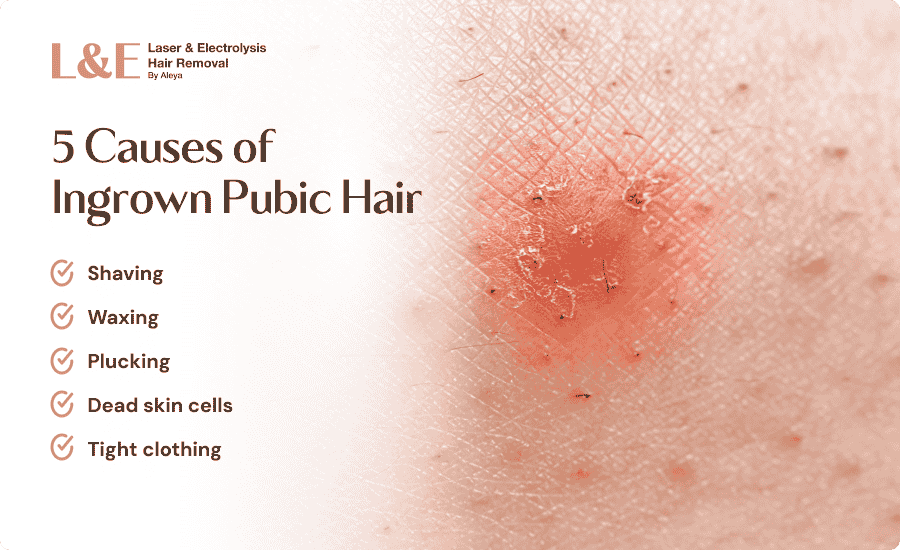
Ingrown pubic hair happens when hair curls back into the skin instead of growing outward, leaving behind a red, itchy bump. Shaving, waxing, and plucking can trigger it, especially when hair is cut too close to the skin.
Pubic hair is particularly prone to taking a wrong turn because it’s naturally coarse and curly. Dead skin cells and friction from tight clothing can make matters worse by irritating follicles or trapping regrowing hairs.
What Does an Ingrown Pubic Hair Look Like?
An ingrown pubic hair usually shows up as a small, raised bump in the groin or pubic area, often within a day or two of shaving, waxing, or plucking.
The bump might look red or irritated and feel itchy or tender to the touch. Sometimes, it develops a small, pus-filled head, or you might notice a tiny hair strand trapped beneath the skin instead of growing outward.
What Are the Risk Factors for Ingrown Pubic Hair?
A few everyday habits make those detours more likely:
- Tight clothing: Snug underwear and leggings rub against regrowing hair and can nudge it right back under the skin
- Shaving against the grain: It feels closer, but it leaves sharp, angled tips that curl into skin more easily
- A dull razor: An old blade tugs and drags instead of slicing cleanly, leaving jagged ends and irritated skin behind
How To Get Rid of Ingrown Pubic Hair
Most ingrown hairs clear up on their own within a week or two once the hair finds its way out. You can speed things along with a little gentle coaxing, though.
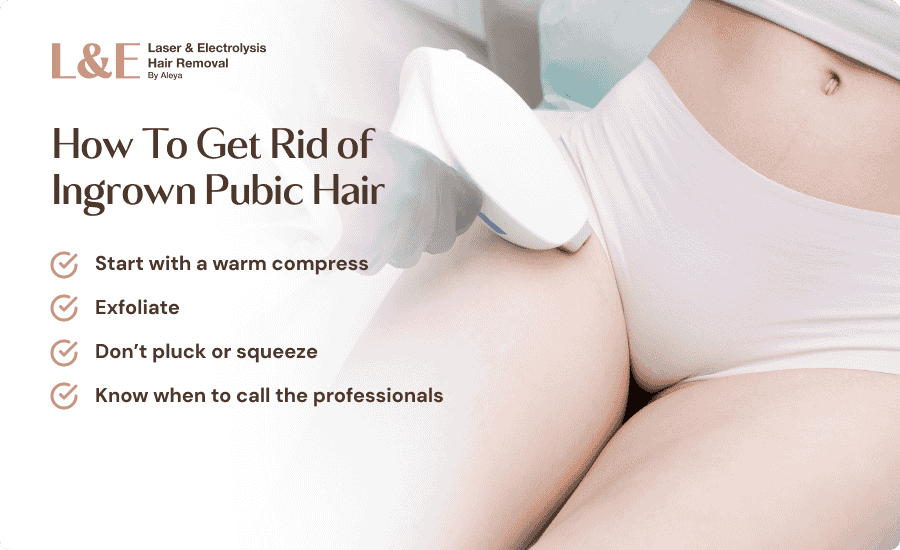
1. Start With a Warm Compress
Press a warm, damp washcloth against the bump for a few minutes, a few times a day. The heat softens the skin and opens things up, which makes it easier for the trapped hair to work its way toward the surface. It’s also a nice excuse to take a breather.
2. Exfoliate (Lightly!)
Dead skin cells can trap regrowing hairs beneath the surface. Once the irritation has settled, gently exfoliating with a soft washcloth can help keep those cells from building up. Products with salicylic or glycolic acid can also help.
3. Don’t Pluck or Squeeze
Spot a tiny hair trapped beneath the skin? Let it work its way out naturally. Avoid digging at it with tweezers or needles, and resist the urge to squeeze the bump. Doing so can increase the risk of infection, dark spots, and scarring.
4. Know When To Call the Pros
If the bump becomes painful, swollen, pus-filled or increasingly red, see a healthcare provider. The same goes for recurring ingrown hairs, since a provider can help identify the cause and recommend the right treatment.
Understanding an Ingrown Pubic Hair Cyst
Sometimes an ingrown hair overstays its welcome. When a trapped hair lingers under the skin long enough, your body might wall it off inside a small sac filled with fluid or keratin, the protein that makes up your hair and skin.
Ingrown hair cysts don’t exactly keep a low profile. Here’s what to look for:
- A raised lump under the skin
- Changes in skin color Itching or soreness
- Pus or a visible hair loop
How To Treat an Ingrown Pubic Hair Cyst
Got an ingrown pubic hair cyst that just won’t take the hint? The right treatment depends on its size, symptoms, and whether it’s infected. Here’s how to handle it:
1. Stick To the Basics
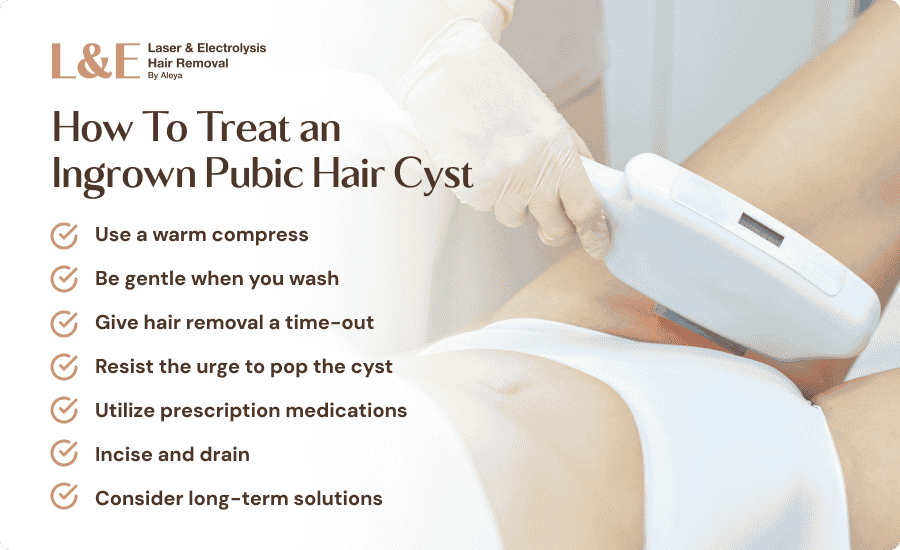
Treating an ingrown pubic hair cyst starts with the same steps as treating a regular ingrown hair. That includes applying a warm compress, gently cleansing the area, and resisting the urge to squeeze or pick at it.
2. Give Hair Removal a Time-Out
Shaving, waxing or plucking over a cyst is like testing your luck. Hold off until the area has fully healed so you don’t aggravate the skin or set yourself up for a fresh round of ingrown hairs.
3. Use Prescription Medications
Your healthcare provider might prescribe a topical steroid to reduce swelling and redness or a retinoid to help free trapped hair strands. If the cyst is infected, topical or oral antibiotics might also be needed.
4. Incise and Drain
For a cyst that refuses to budge, your provider can drain it in a clean clinical setting. Using a sterile blade or needle, they’ll make a tiny opening, release the trapped hair and let the built-up fluid out. It’s quick, it brings fast relief, and it’s exactly the kind of job that should never be tried at home.
5. Consider Long-Term Solutions
If ingrown hair and cysts keep showing up uninvited, it might be time to rethink hair removal altogether. Laser hair removal and electrolysis hair removal target hair at the follicle, which means fewer hair strands growing back and fewer chances for them to curl the wrong way.
Infected Ingrown Pubic Hair? Here’s When To See a Healthcare Professional
Most ingrown hairs are more annoying than alarming, but every so often one turns into an infection that needs a professional’s help. Reach out to a doctor or dermatologist if you notice any of these red flags:
- Pain, swelling or redness that keeps getting worse
- Lots of pus, a foul smell or ongoing drainage
- Fever, chills or swollen lymph nodes
- A deep, painful boil or abscess
How To Prevent Ingrown Pubic Hair
The best way to deal with ingrown hair in the pubic area is to stop them before they start. A few small tweaks to your grooming routine can go a long way toward keeping your skin smooth and bump-free.
1. Prep Your Skin First
Hair removal goes smoother when your skin is ready for it. Soak in a warm shower for a few minutes to soften the hair, then gently exfoliate to clear away dead skin cells that could trap regrowing hair strands. Finish with a shaving gel or cream so your razor glides instead of drags.
2. Treat Yourself to a Fresh Blade
That razor you’ve been using since who knows when is probably doing more harm than good. Swap in a sharp blade and rinse it after every stroke to keep it clean. Some people find that a single-blade razor causes fewer ingrown hairs, since it cuts the hair cleanly without slicing it below the skin’s surface.
3. Trim Instead of Shave
You don’t always have to go all the way. Using an electric trimmer to keep things short leaves a tiny bit of length above the skin, which makes it harder for hair strands to curl back in.
4. Consider a Longer-Term Fix
If you’re stuck in a cycle of ingrown hairs no matter what you try, laser hair removal or electrolysis might be worth a look. Both target hair follicles to reduce regrowth, leaving fewer opportunities for ingrown hairs to make an unwanted comeback.
Ready for a Bump-Free Bikini Line? Laser by Aleya Can Help
If you’ve had enough of stubborn bumps, constant shaving and warm compresses, it might be time to bring in a pro. At Laser by Aleya, electrolysis and laser hair removal offer two ways to tackle stubborn ingrown hairs.
Got that one ingrown hair that keeps coming back like a bad sequel? Electrolysis targets individual hair follicles, making it a great option for persistent trouble spots.
If ingrown hairs keep popping up across your bikini area, laser hair removal can minimize overall hair growth and lower the chances of new bumps forming.
Aleya tailors each treatment to your skin tone, hair type and treatment history, helping minimize irritation while keeping your goals focused. Choosing who gets near your bikini line is a big deal, so here’s what sets Aleya apart:
- More than 20 years of hands-on experience: She has worked with a wide range of skin tones and hair textures, so your skin is in seasoned hands
- Laser devices tailored for you: Her devices are adjusted to your skin and hair instead of running on a factory default, which is a big reason clients’ skin stays calmer
- Clear and simple prep guidance: From why shaving before your session matters to what to expect afterward, she makes sure you start every treatment on the right foot
Ingrown Pubic Hair: FAQs
How can I tell if it’s an ingrown pubic hair or something else?
Not every bump down there is an ingrown hair. Folliculitis, cysts, and skin infections can be convincing lookalikes. If a bump becomes painful, grows larger, or refuses to budge, it’s time to consult a healthcare provider.
Can tight underwear cause ingrown pubic hairs?
Your favorite snug underwear might not be doing your bikini line any favors. Tight fabrics create friction that can irritate hair follicles, especially after shaving or waxing. Give your skin some breathing room with softer, looser options.
Is it safe to exfoliate when you have ingrown pubic hairs?
A little exfoliation can help keep dead skin cells from trapping hair strands, but don’t go overboard. If your skin is already irritated, put the scrubs on standby. Once things calm down, stick to gentle exfoliation on the external pubic area, away from sensitive genital tissue.


