Strawberry Legs: Why They Happen and How To Treat Them
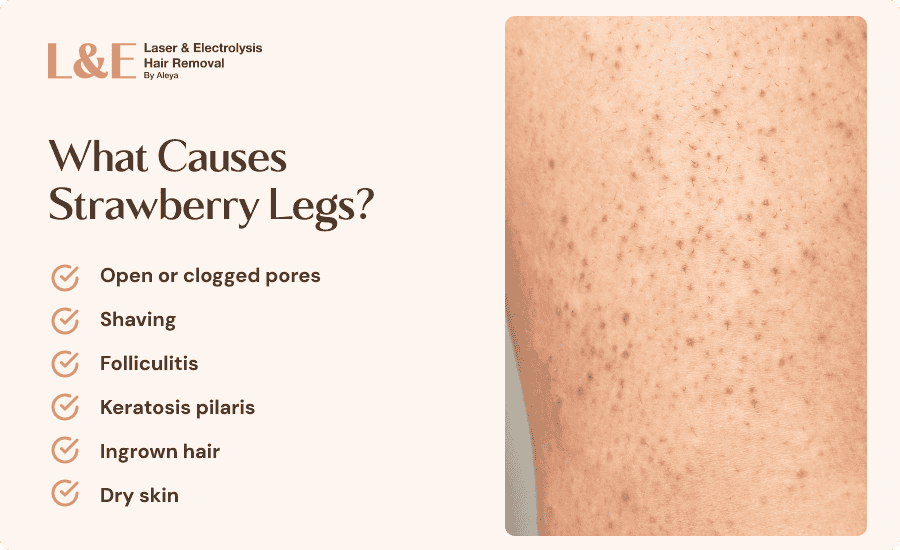
You shaved. You moisturized. You even splurged on that fancy razor. And yet, there they are: tiny dark dots scattered across your shins like someone sprinkled poppy seeds on your legs and walked away.
Meet strawberry legs. They’re common, usually harmless and often manageable once you figure out what’s behind them. One possible culprit? Keratosis pilaris a skin condition that often starts in childhood or adolescence.
But whether it’s keratosis pilaris, clogged pores, or shaving irritation, one thing’s for sure: switching body washes probably won’t solve everything.
In this guide, we will:
- Break down what those dark dots are
- Cover the usual suspects behind them, from your razor to your skin type
- Walk through the ingredients, habits, and treatments that make a visible difference
Understanding Strawberry Legs
Strawberry legs are those small dark dots that make your skin look a little like the surface of a strawberry. Cute name, but probably not the look you’re going for come shorts season.
The term isn’t a medical diagnosis. Instead, it’s an umbrella term for a few different things that all show up as dark spots around hair follicles.
Depending on the cause, they might be trapped oil and dead skin cells, visible hair beneath the surface or irritated follicles. The result? That familiar strawberry-like appearance.
Dermatologists usually trace these dots back to one (or a few) of these culprits:
- Enlarged or clogged pores
- Irritation from shaving
- Folliculitis
- Keratosis pilaris
- Ingrown hairs
Leading Causes of Strawberry Legs
Those tiny dark dots didn’t just show up uninvited. Let’s look at the causes:
1. Open or Clogged Pores
When gunk buildup encounters air, it oxidizes and darkens, much like a blackhead. People with thicker, coarser body hair may also have more noticeable follicle openings, making those tiny dots easier to spot.
2. Shaving and Razor Irritation
A dull blade, dry shaving, or going over the same patch five times can irritate follicles and leave them red and inflamed. Shaving can also lead to razor burn and razor bumps, causing anything from red, irritated skin to small bumps from ingrown hairs. Both can make those tiny dots more obvious.
That’s where laser hair removal comes in. By reducing hair growth, it cuts down on the need for frequent shaving and the irritation that comes with it.
3. Folliculitis
Folliculitis happens when hair follicles become inflamed, often due to bacteria, friction, or shaving. It usually looks like small red bumps or pimple-like spots that can sting or itch. Everyday habits like wearing tight pants or sitting in sweaty workout clothes can increase your chances of developing this condition.
4. Keratosis Pilaris
Keratosis pilaris (KP) occurs when keratin, a protein in your skin, builds up and plugs the follicle. It creates rough, bumpy skin that some people call “chicken skin. This condition often runs in families and flares up when skin gets dry, especially in winter.
5. Ingrown Hairs
When a shaved hair strand curls back into the skin instead of growing out, it can create a dark or red bump. If you get them often, here’s how to treat ingrown hairs before they turn into dark marks. For a longer-term approach, laser hair removal may help break the cycle of recurring ingrown hairs.
6. Dry Skin
Dry skin can make strawberry legs more noticeable. Without enough moisture, dead skin cells can build up around hair follicles, clogging pores, trapping hair, and leaving your legs looking rough and bumpy.
What Do Strawberry Legs Look Like?
Strawberry skin legs usually show up as pinpoint dark dots, often on the shins, calves, and thighs. The dots can look black, brown, or slightly red, and they tend to stand out right after shaving.
You might also notice:
- Rough, sandpaper-like texture: This often points to keratosis pilaris
- Small red or white bumps: These can signal irritated or infected follicles
- Dark dots that look like stubble under the skin: Coarse, dark hair sitting just below the surface can create this “shadow” effect, especially on fair skin
- Dots that never quite go away: These usually sit in enlarged pores that trap oil and dead skin
If your legs look clear in winter and polka-dotted in summer, you’re not imagining it. Shorts simply give everyone a better view.
Let’s Talk About How To Get Rid of Strawberry Legs
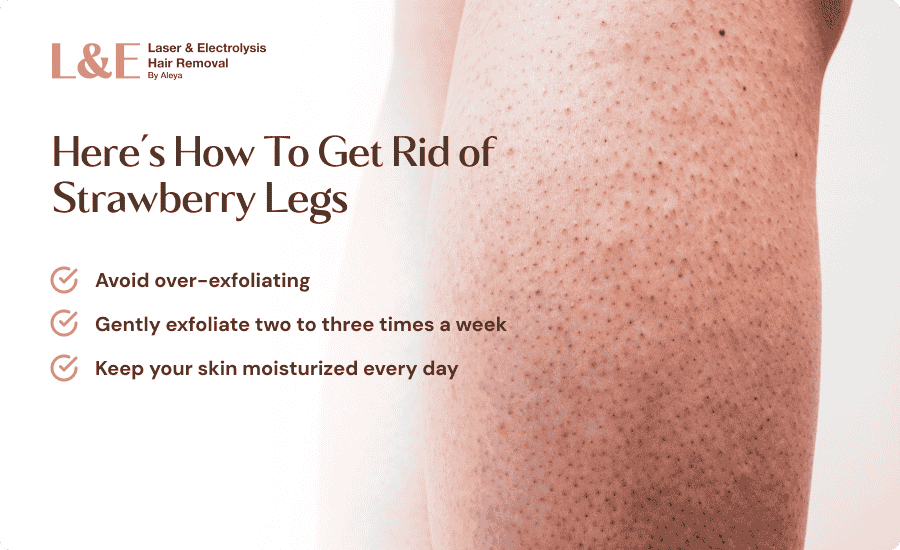
The best way to get rid of strawberry legs depends on what’s causing them. Still, a few habits help almost everyone:
- Exfoliate two to three times a week: A chemical exfoliant (more on those below!) clears out dead skin and keeps follicles from clogging
- Moisturize daily: Apply a fragrance-free body lotion while your skin is still damp to lock in hydration
- Upgrade your shaving routine: Use a sharp razor, a shaving gel, and shave in the direction of hair growth
- Skip the scrub-everything approach: Harsh physical scrubs can irritate already inflamed follicles
- Reconsider how you remove hair: If shaving keeps triggering bumps and dots, it might be time to compare hair removal methods and find one your legs can tolerate. Laser hair removal is worth considering, especially if you’re tired of dealing with razor irritation and recurring ingrown hairs.
If you want to know how to fix strawberry legs for the long haul, the answer usually involves two things: clearing the follicles and cutting down on the shaving that keeps irritating them.
Best Ingredients and Treatments for Strawberry Legs
Glycolic acid, salicylic acid, lactic acid… skincare labels can start to sound like a chemistry lesson. But you don’t need a science degree to figure out what your legs need.
Different ingredients tackle different causes of strawberry legs. Here’s how the most common options compare:
| Ingredient or Treatment | What It Does | Best For | The Quick Take |
| Glycolic acid | Dissolves dead skin on the surface | Clogged pores and rough texture | A solid first step for most people |
| Lactic acid | Exfoliates while adding moisture | Dry skin and keratosis pilaris | Gentler option for dry or sensitive legs |
| Salicylic acid | Cleans out oil inside the pore | Clogged pores and folliculitis | Good for oily skin and breakouts |
| Urea | Softens and hydrates rough skin | Keratosis pilaris and dry skin | Great for “chicken skin” texture |
| Laser hair removal | Reduces hair growth at the follicle | Shaving-related dots and bumps | Fewer shaves and less flare-ups |
The research backs up the acid-first approach. A recent review found that lactic and glycolic acids were the go-to topicals for keratosis pilaris, while laser treatments also produced consistently positive results.
If your skin reacts easily, start low and slow. Our guide to the best hair removal for sensitive skin can also help you avoid adding new irritation to the mix.
Here’s How To Use Glycolic Acid for Strawberry Legs
Thinking of giving glycolic acid a spot in your skincare routine? This exfoliating ingredient helps loosen dead skin cells that can make strawberry legs more noticeable.
But before you go all in, remember that a little goes a long way. Here’s how to introduce glycolic acid for strawberry legs without overwhelming your skin:
- Pick a body product: Look for a lotion or body wash with 5% to 10% glycolic acid. Save the face serums for your face.
- Patch test first: Apply a small amount to one area of your leg and wait a day to see how your skin reacts.
- Start two to three times a week: Build up to daily use only if your skin stays calm.
- Keep it away from freshly shaved skin: Wait at least a day after shaving, so the acid doesn’t sting or irritate open follicles.
- Follow with moisturizer: Acids can dry out your skin, so lock in hydration afterward.
- Wear sunscreen on exposed legs: Glycolic acid makes skin more sensitive to the sun.
Pro tip: Getting laser treatments? Pause glycolic acid a few days before and after each session and check with your provider on timing.
Does Laser Hair Removal Get Rid of Strawberry Legs?
In many cases, yes. Laser hair removal reduces hair regrowth, meaning fewer shaving sessions, ingrown hairs, and dark stubble shadows.
The results can last, too. A recent study found that a 755-nm alexandrite laser reduced underarm hair by over 90%, with results maintained at six and 12 months.
But there’s a catch. Laser works best for shaving-related strawberry legs, so it won’t treat conditions like keratosis pilaris on its own. You might still need exfoliating acids and a good moisturizer to manage those bumps.

Strawberry Legs Not Going Away? Here’s When To Get Professional Help
Tried switching razors, moisturizing religiously and giving your skincare routine a makeover, but those dots still won’t budge? Sometimes, your skin needs a little expert attention.
Here’s when it’s worth booking an appointment:
- Painful, swollen, or pus-filled bumps
- Bumps that spread or keep coming back despite treatment
- Fever or redness that feels warm to the touch
- Dark spots or scarring that won’t fade
- No improvement after about three months of consistent care
A dermatologist can confirm the cause and recommend a stronger strawberry legs treatment, such as prescription creams or antibiotics for stubborn folliculitis.
Get Smooth Skin, Minus the Strawberry Dots at Laser by Aleya
Strawberry legs always seem to show up when you want to wear shorts, and scrubbing won’t fix dots caused by constant shaving. Laser hair removal targets the follicle, so you can spend less time with a razor and more time enjoying smooth, clear skin.
At Laser by Aleya, we use the Lumenis Diode LightSheer to treat larger areas like the legs efficiently and comfortably. Every session is tailored to your skin and hair type for lasting results, minus the guesswork (and the poppy seed look!)
Strawberry Legs: FAQs
What are strawberry legs a sign of?
Most of the time, the dots signal clogged pores, shaving irritation, folliculitis, keratosis pilaris, or ingrown hairs. They’re usually harmless, though they can point to irritation that needs a gentler routine.
Can you get rid of strawberry legs permanently?
Strawberry legs can improve long-term, especially when shaving is the culprit. Laser hair removal helps reduce regrowth and irritation, while keratosis pilaris (KP) usually requires ongoing care to keep bumps under control.
Is it better to wax or shave if you have dark dots on your legs?
Waxing removes hair from the root, avoiding stubble and razor irritation, but it can still trigger ingrown hairs and folliculitis. For longer-lasting hair reduction, consider laser hair removal. Just avoid waxing and sun exposure before your sessions, as advised by your provider.
Do strawberry legs go away on their own?
Sometimes. Dots from a single bad shave can fade within days. Dots from enlarged pores or repeated shaving tend to stop sticking around only once you change your routine.


