Laser Hair Removal and Hyperpigmentation: Is It Possible?
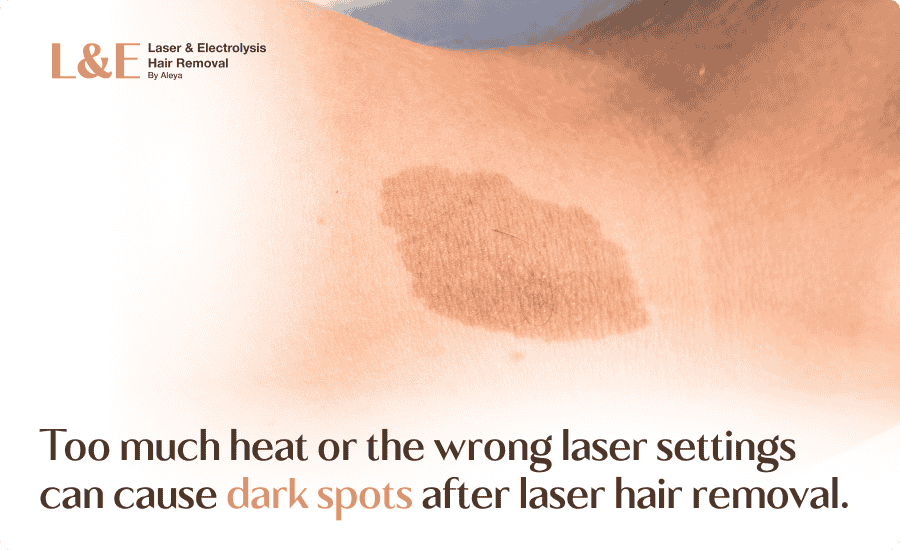
Laser Hair Removal Hyperpigmentation: Key Takeaways
- Dark spots after laser hair removal tend to show up when skin gets overheated, so deeper skin tones deserve gentler settings and a little extra TLC
- When talking about laser hair removal and hyperpigmentation, those dark spots are usually just passing through
- With sun protection, some patience, and the right laser specialist, they pack up and leave
Let’s be honest: nobody walks into a hair removal appointment dreaming of swapping stubble for a scatter of dark spots.
However, if you’ve gone down the rabbit hole researching laser hair removal and hyperpigmentation, you’ve probably bumped into a horror story or two about skin that came out darker than expected.
Let’s put those scary stories into perspective, as most of them come down to one fixable mistake.
When laser hair removal and hyperpigmentation get tangled up, the troublemaker is usually a mismatch between the laser and the skin, not the treatment itself.
In this guide, we will:
- Explain whether laser hair removal really causes dark spots or skin discoloration
- Share who is most at risk for laser hair removal skin discoloration
- Discuss how laser hair removal and hyperpigmentation really play together, from prevention all the way to aftercare
Does Laser Hair Removal Cause Hyperpigmentation?
Yes, it can, but it’s an uncommon side effect when the treatment is performed correctly.
Laser hair removal targets the pigment in your hair follicles using heat.
In some cases, the surrounding skin can also absorb heat, causing inflammation.
That inflammation might trigger melanocytes, the cells that produce pigment, to create excess melanin, resulting in post-inflammatory hyperpigmentation (PIH).
This is the same process that can leave dark marks after acne or other skin injuries.
The treatment itself isn’t usually the cause. Hyperpigmentation is more likely when the:
- Wrong type of laser device is used for your skin tone
- Settings are too aggressive
- Aftercare instructions weren’t followed
Who Is More at Risk for Dark Spots After Laser Hair Removal?
People with medium to deep skin tones are generally at a higher risk because their skin contains more melanin, making it more likely to absorb excess laser heat.
According to a recent study, post-inflammatory hyperpigmentation is often more severe in Fitzpatrick skin types III to VI.
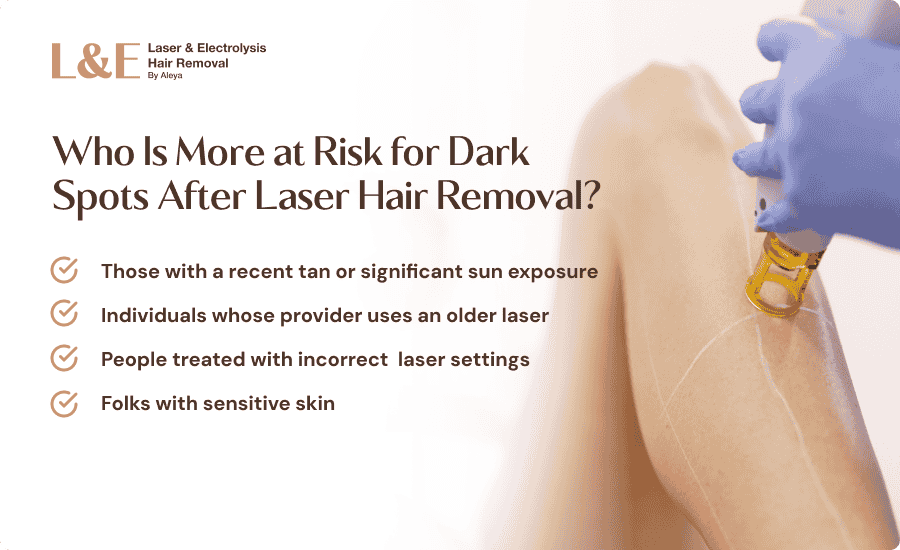
Your risk also increases if you:
- Have a recent tan or significant sun exposure
- Are treated with an older laser that isn’t suitable for your skin tone
- Take medications or have conditions that make your skin more sensitive
- Receive treatment with settings that are too aggressive
As Aleya puts it, “Dark spots can happen if the laser setting is too high or your skin is especially sensitive.”
“The best way to reduce the risk is to speak up if the treatment feels excessively uncomfortable.”
She also emphasizes that proper preparation is just as important as the treatment itself.
“Hypopigmentation, where the skin turns lighter after a laser hair removal burn, is a more serious concern.”
“It can happen if you’re tan, have recently taken antibiotics or certain acne medications, or have products like deodorant or lotion on the treatment area.”
How To Prevent Hyperpigmentation Before Laser Hair Removal
Want to keep dark spots off the guest list? These simple steps stack the odds in your skin’s favor before your laser hair removal session even begins.
1. Stay Out of the Sun
Avoid tanning and prolonged sun exposure for at least two weeks before treatment.
Freshly tanned skin contains more pigment, making it more likely to absorb excess laser energy.
2. Wear Sunscreen Every Day
Apply a broad-spectrum SPF daily before and after your treatment.
Consistent sun protection is one of the best ways to prevent post-inflammatory hyperpigmentation.
3. Pause Harsh Skincare Products
Stop using retinoids, exfoliating acids, and other strong active ingredients a few days before your session to minimize irritation.
4. Choose an Experienced Laser Specialist
An experienced laser specialist will perform a patch test when needed, adjust the laser settings for your skin type, and select the most appropriate laser for your complexion.
Here’s What To Do About Hyperpigmentation After Laser Hair Removal
Saw a dark spot in the mirror?
Before you start Googling at 2 a.m. and convince yourself you’ve unlocked a brand-new skin condition, take a deep breath.
Most post-laser discoloration fades on its own as your skin heals.
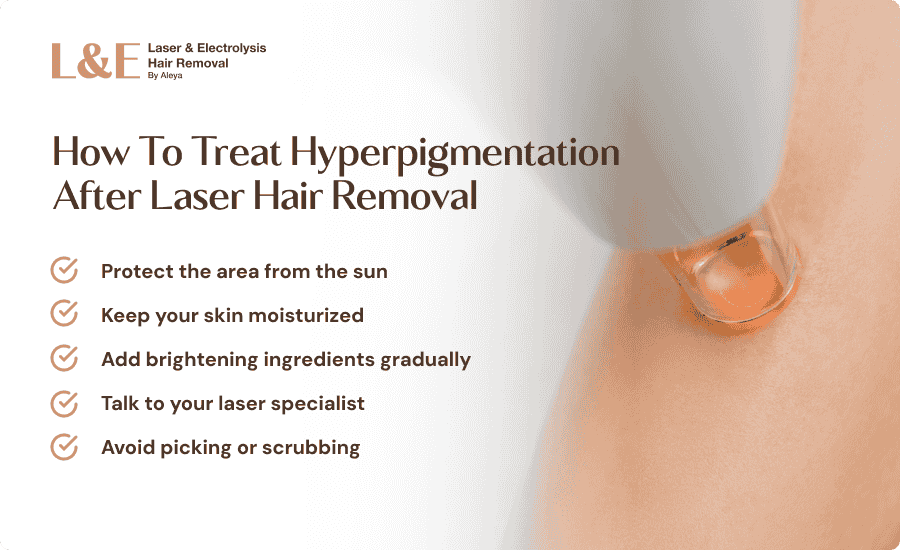
1. Protect the Area From the Sun
UV exposure can make dark spots become more noticeable and slow the healing process.
Wear broad-spectrum sunscreen every day and avoid unnecessary sun exposure.
2. Keep Your Skin Moisturized
Use a gentle, fragrance-free moisturizer to support your skin barrier and minimize irritation.
3. Add Brightening Ingredients Gradually
Once your skin has healed, ingredients like niacinamide or vitamin C might help even out your skin tone.
Introduce them slowly to avoid irritation.
4. Talk To Your Laser Specialist
If the discoloration doesn’t improve or worsens, your laser specialist can recommend prescription treatments or other options.
5. Avoid Picking or Scrubbing
Don’t pick at the skin or use harsh scrubs and strong treatments in an attempt to fade the spots faster.
Extra irritation can make hyperpigmentation last even longer.
How Long Does Hyperpigmentation After Laser Hair Removal Last?
Here is the question almost everyone asks: will this fade?
For most people, hyperpigmentation after laser hair removal is temporary and cosmetic rather than harmful.
It usually lightens over a few weeks to a few months, especially with steady sun protection.
Here’s the reassuring part.
A recent case report in the Journal of Cosmetic Dermatology found that even hyperpigmentation caused by a laser hair removal complication improved with the right follow-up care.
Laser Hair Removal Hyperpigmentation: When To Call the Experts Like Aleya
When it comes to laser hair removal and hyperpigmentation, your skin deserves more than a “let’s see what happens” approach.
Aleya knows how different skin tones respond to laser treatment, when an Nd:YAG laser is the better choice, and how to fine-tune settings to keep dark spots from stealing the spotlight.
When you visit Laser by Aleya, you’ll get:
- Personalized laser settings tailored to your skin tone and hair type to lower the risk of hyperpigmentation
- Advanced Nd:YAG technology for safer treatment on medium to deep skin tones
- Thorough skin assessment before every treatment
- Honest recommendations if your skin needs more time before it’s safe to treat
- Clear aftercare guidance to support healing and minimize post-treatment discoloration
Whether you’re dealing with dark spots or hoping to dodge them entirely, a consultation is a great place to start!
Laser Hair Removal Hyperpigmentation: FAQs
Does laser hair removal cause hyperpigmentation?
It’s possible. However, most people don’t experience hyperpigmentation when the treatment is done properly.
Does laser hair removal cause hyperpigmentation for everyone?
No. When it comes to laser hair removal and hyperpigmentation, the risk mainly increases with darker skin tones, recent sun exposure, or the wrong laser.
A properly matched laser and good aftercare help keep that risk low.
Is hyperpigmentation after laser hair removal permanent?
Rarely. In most cases it is temporary and fades over weeks to months with consistent sun protection.
Persistent pigment is uncommon and often responds well to professional treatment.
Can people with deeper skin tones get laser hair removal safely?
Yes. Choosing the right laser, usually a long-pulsed Nd:YAG, and working with an experienced laser specialist can significantly minimize your risk of hyperpigmentation.
However, achieving your desired results might take a little longer because lower, safer laser settings are often used to protect darker skin tones.
During your consultation, Aleya will determine whether laser hair removal or electrolysis hair removal is the better option for your skin and hair type.


