Vellus Hair and Peach Fuzz: Can You Laser It Off?
Vellus Hair and Peach Fuzz: Key Takeaways
- Vellus hair (peach fuzz) is fine, soft, and pale, nothing like the coarse hair on your legs, and it reacts differently to treatment
- Laser hair removal targets pigment, so it struggles with pale, wispy peach fuzz
- Electrolysis hair removal is usually the better fit for fine, low-pigment hair
Here’s what nobody tells you about peach fuzz: it’s one of the toughest hairs for laser hair removal.
That soft, downy, barely-there hair on your cheeks, forehead, and upper lip?
It’s called vellus hair. Unlike the coarse, dark hair on your legs or underarms, it contains little pigment.
It’s so pale you probably only notice it when the sun catches your face at the wrong angle in a selfie.
So, it’s fair to ask: if laser can handle stubborn hair, surely it can zap a little fuzz, right?
Well, not so fast.
In this guide, we will cover:
- What vellus hair is and how it differs from terminal hair
- Whether laser can remove peach fuzz on the face
- Discover the safest ways to manage peach fuzz when laser isn’t the answer
Vellus Hair vs. Terminal Hair: Key Differences
Your body grows two main types of hair and telling them apart is the key to understanding what a laser can and can’t do.
Here’s a quick side-by-side look at what makes peach fuzz so different from terminal hair.
| Feature | Vellus Hair (Peach Fuzz) | Terminal Hair |
| Appearance | Fine, soft, and lightly pigmented | Thick, coarse, and dark |
| Where it’s found | Covers most of the face and body | Scalp, eyebrows, underarms, legs, bikini area, and beard |
| Follicle depth | Shallow, in the upper layers of the skin | Extends deeper into the dermis |
| Melanin (pigment) | Very little | High melanin content |
| Laser hair removal response | Poor candidate because the laser has little pigment to target | Excellent candidate because the laser easily targets the pigment |
| Best hair removal option | Electrolysis | Laser hair removal (for most people with suitable hair and skin types) |
Vellus hair is the short, fine, lightly pigmented hair that covers most of your face and body.
Its follicles sit shallow in the skin and produce very little melanin, which is a polite way of saying there is not much color for a laser to grab onto.
Terminal hair is the thicker, darker, deeper-rooted hair you see on your scalp, eyebrows, underarms, and legs.
According to a recent study, follicles that produce terminal hairs reach deep into the dermis, while follicles producing peach fuzz stay in the upper layer of the skin.
Why Does Peach Fuzz Appear on the Face?
Peach fuzz helps regulate body temperature while providing a light protective layer for the skin.
On the face, it is often most noticeable on the cheeks, upper lip, and jaw, especially in bright light.
Can Hormones Change Peach Fuzz?
Hormones can also influence peach fuzz.
During puberty and other hormonal changes, some vellus hairs might become darker, coarser terminal hairs, which is why facial hair varies from person to person.
If you notice a sudden change in the texture or color of your peach fuzz, it’s worth mentioning to a healthcare provider, as it can occasionally be linked to hormonal changes.
Can You Laser Peach Fuzz?
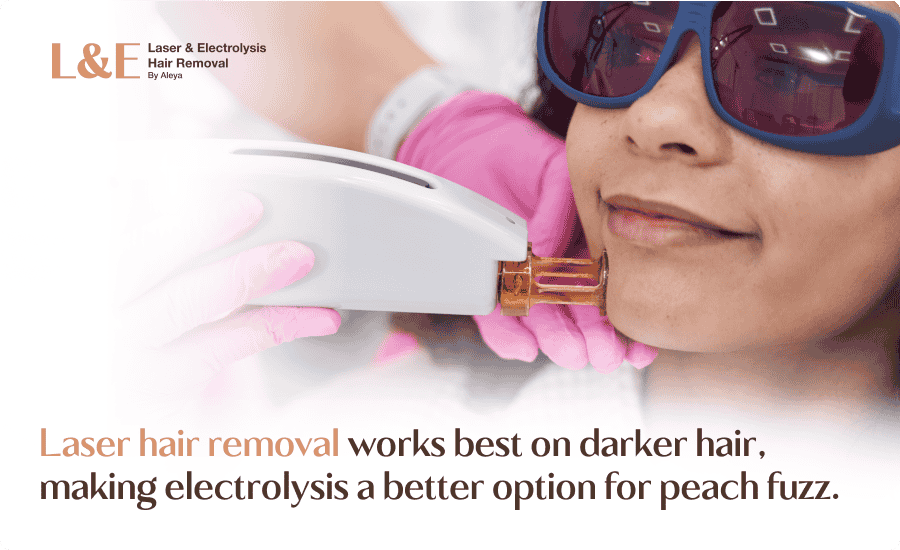
While laser hair removal can be used on peach fuzz, that doesn’t mean it is the right choice.
As Aleya explains, “Fine vellus hairs should generally be avoided because they contain too little pigment for the laser to target effectively.”
“Treating them can also increase the risk of paradoxical hypertrichosis, where hair grows back thicker or more noticeable.”
That means laser treatments on peach fuzz are often inconsistent and far less effective than they are on coarse, dark hair.
Why Laser Hair Removal Works Better on Terminal Hair
Laser and terminal hair are, frankly, a great match.
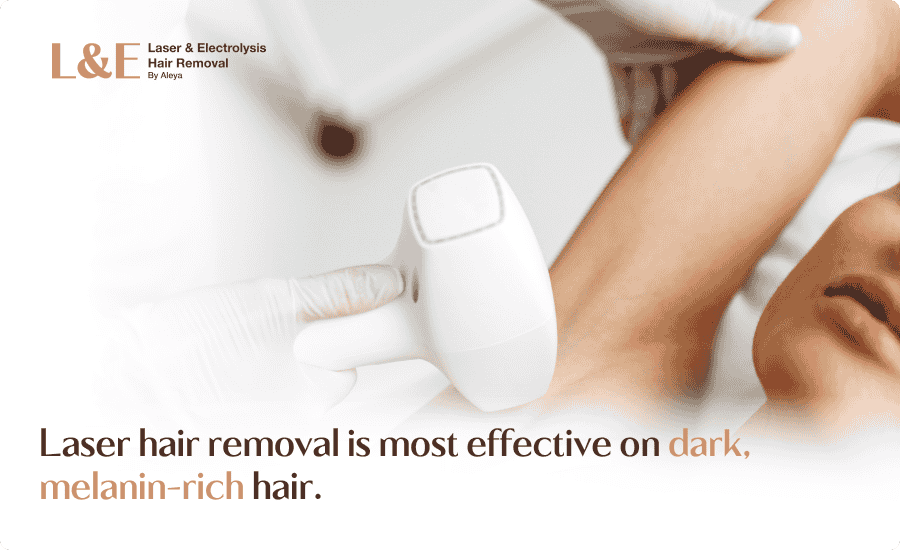
Terminal hair is dark and rich in melanin, so it absorbs laser energy efficiently.
Its follicles also sit deeper in the skin, which gives the laser a clear, well-defined target to work with.
That is why laser hair removal delivers its best results on areas like the legs, underarms, bikini line, and coarse facial hair.
You get fewer sessions, longer-lasting reductions, and more predictable outcomes.
This fine hair simply can’t offer the laser that same clear target, and that’s the whole reason peach fuzz is such a tricky customer.
Risks of Treating Peach Fuzz With Laser Hair Removal
Here is where things get counterintuitive.
You might think laser hair removal either works or has no effect. In some cases, however, it can do the opposite.
Treating peach fuzz might trigger paradoxical hypertrichosis, a documented side effect in which hair grows back thicker and darker.
Research found that this excess growth is more likely to occur in areas with fine facial hair.
While relatively uncommon, it happens often enough that many experienced laser specialists avoid treating peach fuzz, especially on the face.
Before booking a session, it’s also worth understanding the potential side effects of laser hair removal.
How To Remove Vellus Hair on the Face
If laser hair removal isn’t the hero of this story, what is?
Fortunately, you have several effective options for managing peach fuzz.
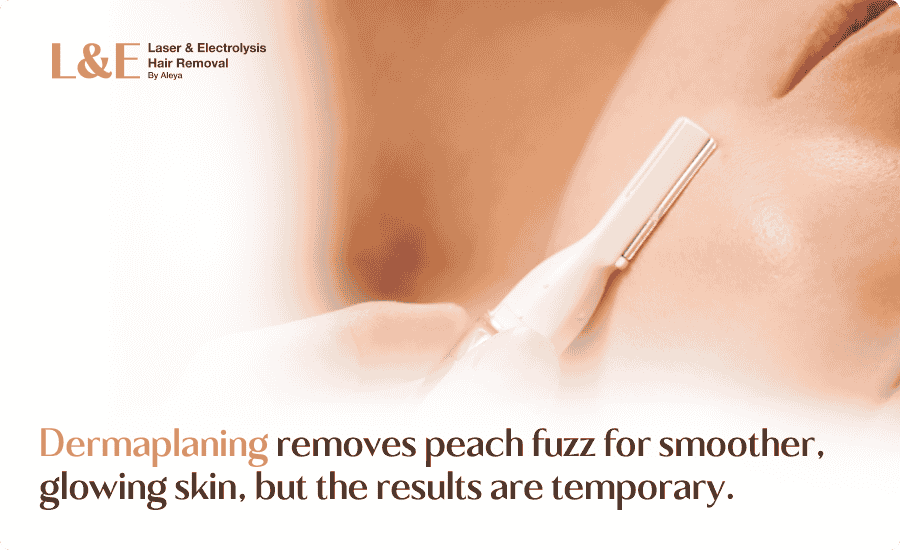
Dermaplaning gently removes peach fuzz and dead skin, leaving your skin smoother and brighter. The results are temporary, but it’s a low-risk option.
Threading and waxing pull hair out at the root and can work well for slightly denser fuzz. However, both might irritate sensitive skin.
Electrolysis offers a permanent solution. Since it treats each follicle directly instead of relying on pigment, it works well even on pale, fine vellus hair.
When Peach Fuzz Deserves a Second Look by a Healthcare Professional
Peach fuzz is usually just that, peach fuzz.
However, if your facial hair suddenly starts acting out of character, it’s worth checking in with a healthcare provider.
Keep an eye out for these signs:
- It shows up out of nowhere: If facial hair starts growing much faster than usual, it might be more than a normal change.
- It starts looking like terminal hair: Peach fuzz that becomes darker, thicker, or coarser can sometimes point to hormonal changes.
- Your body is sending other signals: A deeper voice, sudden acne, or increased muscle mass can also signal that hormones are involved.
- Your menstrual cycle changes: Irregular or missed periods paired with increased facial hair might be linked to conditions, such as PMOS.
Treat Vellus Hair and Peach Fuzz at Laser by Aleya
Here’s the thing about peach fuzz: the hair itself isn’t the hard part. Choosing the wrong treatment is.
That’s exactly why an honest consultation matters.
At Laser by Aleya, you’ll get a straight assessment before anything begins.
If your hair’s a good candidate for laser, we’ll tell you.
Plus, if you’re dealing with fine vellus hair or true peach fuzz, we’ll usually steer you toward electrolysis instead since it’s the more reliable permanent option for fine vellus hair.
Either way, you’ll leave knowing exactly what your skin and hair actually need.
Vellus Hair and Peach Fuzz: FAQs
What is vellus hair?
Vellus hair is the fine, soft, lightly pigmented hair that covers most of the human body, commonly known as peach fuzz.
It is short and thin, and it helps with temperature regulation and gives the skin a light layer of protection.
Vellus hair vs. terminal hair: what’s the difference?
The vellus hair vs. terminal hair distinction comes down to size, color, and depth.
Vellus hair is fine, pale, and shallow-rooted, while terminal hair is thicker, darker, and sits deeper in the skin.
Since it contains more pigment, terminal hair responds better to laser hair removal.
Can shaving peach fuzz make it grow back thicker?
No. Shaving only cuts the hair at the surface of your skin.
It doesn’t affect the follicle, so your peach fuzz won’t grow back thicker or darker.
It feels coarser than usual, that’s because the freshly cut hair has a blunt tip.
Can you undergo laser hair removal if you have both vellus and terminal hair on your face?
Yes, but don’t expect the same results across all your facial hair.
Laser works best on dark hair and has little effect on fine vellus hair.


