Nose Hair Removal: Best and Safest Methods [+ FAQs]
![Nose Hair Removal: Best and Safest Methods [+ FAQs]](https://www.laserbyaleya.com/wp-content/uploads/2026/09/nose-hair-removal-hero-image.png)
Nose Hair Removal: Key Takeaways
- Nose hair can help filter dust, pollen, and other particles, so the goal is to tidy visible strays
- Laser hair removal targets follicles around the nostril edge to gradually minimize regrowth, while deeper nose hairs stay where they belong
- Trimming is the simplest nose hair removal option. A rounded-tip trimmer tidies up visible hairs while leaving the protective hairs deeper inside your nose alone.
Nobody grows up dreaming about nose hair removal, and yet here we all are, squinting into the bathroom mirror and wondering when a tiny forest (around 120 to 122 visible hairs per side!) decided to move in.
Nose hair serves an important purpose, so the goal isn’t to remove it all. Instead, choose a safe, effective method to keep visible hairs neat. Fortunately, there are plenty of ways to tidy things up, along with a few methods that belong firmly in the “please don’t” pile.
In this guide, we will:
- Cover why nose hair is there in the first place
- Explore the safest ways to keep it in check
- See how treatments like laser nose hair removal fit in
What Are the Best Nose Hair Removal Options?
Not sure which nose hair removal method deserves a spot in your grooming routine? Here’s how the options stack up:
| Method | How Long It Lasts | Ideal For | Upkeep | The Quick Take |
| Electric trimming | Two to four weeks | Quick cleanup | Every few weeks | Easy, quick, and low-risk |
| Waxing | Three to six weeks | Longer-lasting results | Every few weeks | Lasts longer, but can irritate |
| Laser hair removal | Long-term reduction | Less regrowth overtime | Multiple sessions | More upfront, less upkeep later |
| Plucking | Up to three weeks | Single stray hair strands | Only when needed | Best avoided inside the nose |
Why Do We Have Nose Hair?
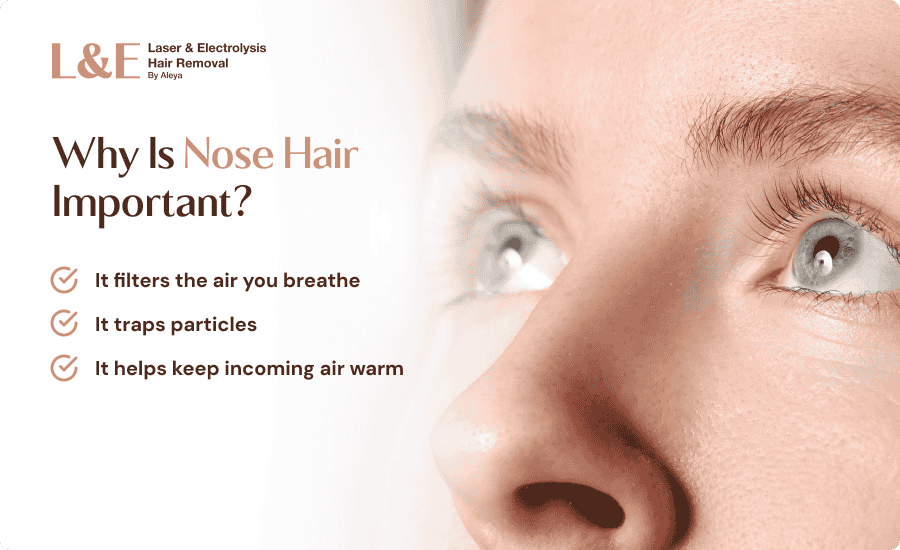
Before you get rid of nose hair, it helps to know why it’s there. Those tiny hairs are part of your respiratory system, helping filter and condition the air you breathe.
1. Nose Hair Filters What You Breathe
Nose hairs near the nostril opening act as a first line of defense, catching dust, pollen, and other particles before they travel deeper into your airway. A recent study found that longer, denser nose hair can trap more particles, though it might also slightly increase breathing resistance. In other words, those hairs are there for a reason.
The goal isn’t to clear them all out. Like safe ear hair removal, it’s about tidying up visible strays while leaving the useful hairs alone.
2. Nose Hair Works With Mucus To Trap Particles
Nose hair also works with the mucus lining your nasal passages to catch particles you inhale. Together, they create a sticky barrier that helps keep unwanted particles from traveling farther into your airway.
This natural filtration system has even inspired new technology. Researchers recently developed an air filter modeled after mucus-coated nasal hairs that uses a sticky layer to trap airborne particles.
3. Nose Hair Can Help Keep the Air Moist
Your nose also warms and humidifies the air you breathe. That’s why you should only remove visible hairs near the nostril opening, leaving deeper hairs intact.
How To Trim Nose Hair Safely
Trimming is the safest way to remove visible nose hair without disturbing deeper hairs. It’s low-risk and takes about 30 seconds once you get the hang of it.
Here’s how to tidy things up without turning it into a whole production:
- Clean your tool before and after with rubbing alcohol: The inside of your nose is warm, moist, and easily irritated, so a clean blade prevents infection.
- Use a rounded-tip nose hair trimmer: The rounded tip matters, because a pointed blade near soft nasal tissue is asking for a nick.
- Trim only hair strands that poke past the nostril opening: Resist the urge to reach up and clear everything, since the deeper hairs are the ones filtering your air.
- Work in good light and go slowly: A quick pass in the mirror beats a rushed swipe that catches skin.
- Don’t tweeze individual hair strands: Plucking from inside the nostril can inflame the follicle, raise the odds of an ingrown hair, and, in rare cases, invite infection into an area that sits uncomfortably close to your sinuses.
- Never share a trimmer: Your nose is pretty good at picking up germs, so consider this one grooming tool you definitely don’t want to share!
Pro tip: Trimming won’t slow regrowth, so expect touch-ups every week or two. If that feels like one chore too many, longer-lasting options may be worth considering.
Can You Safely Wax Nose Hair?
Nose wax kits promise weeks of smoothness in one satisfying pull. Tempting? Sure. However, just because you can wax nose hair doesn’t mean it’s the best place to do it.
Waxing pulls hair from the follicle, so results can last a few weeks. The catch is that the skin inside your nostrils is thin and sensitive, and some of those hairs are there for a reason. Removing them can interfere with your nose’s natural filtering system, while waxing itself can lead to irritation, swelling, ingrown hairs, or small breaks in the skin.
Can You Safely Wax Nose Hair?
Nose wax kits promise weeks of smoothness in one satisfying pull. Tempting? Sure. However, just because you can wax nose hair doesn’t mean it’s the best place to do it.
Waxing pulls hair from the follicle, so results can last a few weeks. The catch is that the skin inside your nostrils is thin and sensitive, and some of those hairs are there for a reason. Removing them can interfere with your nose’s natural filtering system, while waxing itself can lead to irritation, swelling, ingrown hairs, or small breaks in the skin.
Laser Nose Hair Removal: How Does It Work?
Tired of trimming every week but not sold on waxing? Laser nose hair removal offers a longer-lasting option by targeting the follicles responsible for regrowth. Here’s what the process looks like.
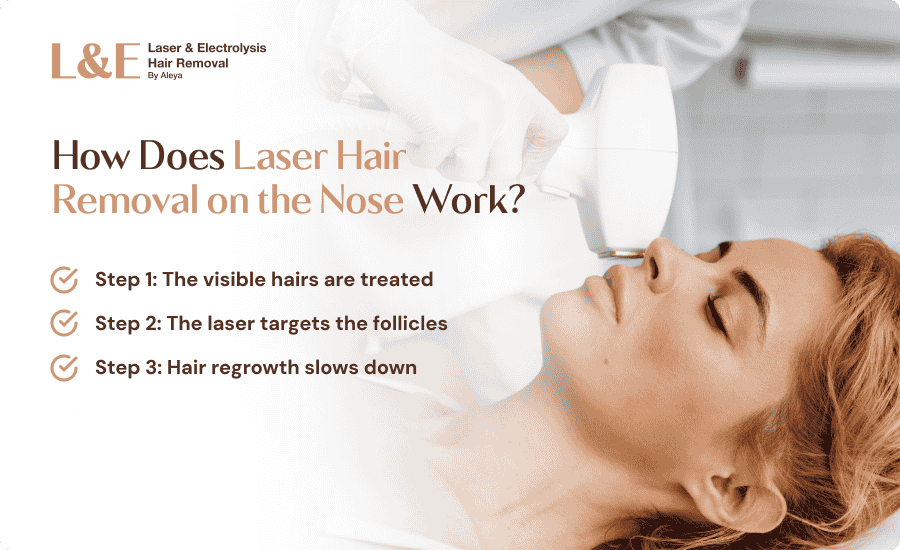
Step 1: The Visible Hairs Are Targeted
Treatment focuses only on unwanted hair around the edge of the nostrils. The deeper hair strands stay in place so they can keep doing their job as part of your nose’s natural filtration system.
Step 2: The Laser Targets the Follicles
The laser targets pigment in the hair, converting light into heat that damages the follicle and slows regrowth. The type of laser used also matters, as different technologies suit different skin tones and hair types.
Step 3: Regrowth Gradually Slows
Unlike trimming, laser hair removal targets the follicle below the surface. Multiple sessions are needed to treat different growth cycles, gradually making hair grow back finer, lighter, or not at all.
Waxing vs. Laser Nose Hair Removal
Waxing and laser both last longer than trimming but work differently. Waxing pulls hair from the root, keeping it away for weeks at a lower upfront cost but with repeated sessions and potential irritation.
Laser costs more upfront but reduces regrowth and upkeep over time, while trimming is best for occasional strays. Compare the pros and cons in our guide to hair removal methods.
Nose Hair Removal for Men: What Are the Best Methods?
For many men, nose hair has a habit of getting thicker and more noticeable with age. Hormones play a role in faster-growing facial hair, which means those sneaky strays can become regular guests.
So, how do you keep them from stealing the spotlight?
Trimming for Quick Upkeep
For occasional strays, a rounded-tip trimmer is quick and easy. Trim only what’s visible near the nostril opening and leave deeper hairs alone.
Laser Hair Removal for Longer-Lasting Results
Laser hair removal can gradually reduce nose hair regrowth, especially for dark, coarse hair. It can also be part of a broader male laser hair removal or facial hair laser removal plan.
Waxing and Plucking
Waxing and plucking remove nose hair from the root but can cause irritation, ingrown hairs, and inflammation. If you’re prone to sensitivity, consider gentler hair removal options for sensitive skin.
Nose Hair Removal Methods You’ll Want to Skip
Not every nose hair hack deserves a try. Some methods can irritate the delicate skin inside your nostrils or remove hairs that are better left alone.
Think twice before trying these nose hair removal methods:
1. Plucking With Tweezers
See a stray and feel tempted to yank it? Stick to trimming instead. Plucking hairs from inside the nostril can irritate the follicle and increase the risk of inflammation or infection.
2. Hair Removal Creams
Hair removal creams and noses are not a good match. These products use chemicals to dissolve hair, which can be far too harsh for sensitive nasal tissue. Keep them away from the inside of your nostrils.
3. Deep Waxing
Waxing gets riskier when it goes beyond the nostril rim. Pushing wax deeper into the nose can irritate the skin and pull out the protective hairs that help filter what you breathe.

Tidy Up Your Nose Hair at Laser by Aleya
Nose hair is stubborn, the upkeep is relentless, and the nose is not the place to improvise with a wax kit and a prayer. Choose a treatment designed for sensitive areas and performed by an experienced laser specialist.
At Laser by Aleya, we use the Lumenis Diode LightSheer, high-performance laser that delivers real results without compromising comfort or safety.
It’s made to target the visible strays at the nostril edge precisely, so you get lasting reduction where you want it and keep the protective hair your nose needs.
Nose Hair Removal: FAQs
Is nose hair removal normal?
Yes, removing visible nose hair is generally fine. Stick to trimming, as plucking or waxing deeper hairs can cause irritation and interfere with their filtering role.
Why does nose hair get longer with age?
Nose hair can grow longer and coarser with age as follicles become more sensitive to androgens like testosterone. This can extend the growth cycle, making stray hair more noticeable.
Women can notice changes too, especially after menopause. As estrogen levels decline, androgen-related hair growth might become more noticeable in areas like the nose and chin. Laser hair removal isn’t an option for me yet.
Is it better to wax or trim nose hair?
Trimming is a better option. It tidies up visible nose hairs without pulling them from the root or removing the deeper hairs that help filter what you breathe.
Waxing lasts longer, but it can irritate the sensitive skin inside your nostrils and increase the risk of ingrown hairs or infection.


