Laser Hair Removal vs. IPL: A Comparison Guide [+ FAQs]
![Laser Hair Removal vs. IPL: A Comparison Guide [+ FAQs]](https://www.laserbyaleya.com/wp-content/uploads/2026/08/laser-hair-removal-vs-ipl-hero-image.png)
Laser Hair Removal vs. IPL Hair Removal: Key Takeaways
- Laser hair removal vs. IPL hair removal comes down to precision
- Laser uses a single, concentrated wavelength that zeroes in on the hair follicle, while IPL relies on broad-spectrum light that scatters across the treatment area
- Skin tone and hair color determine which treatment is safer and more effective
Here’s a fun fact: laser hair removal isn’t just popular; it’s one of the most-requested cosmetic treatments in the country right now.
A recent consumer survey from the American Society for Dermatologic Surgery found that 70% of Americans are now considering some kind of cosmetic procedure, with laser hair removal landing in the top five most popular categories that year.
So, if you’ve been going back and forth between laser hair removal vs. IPL, you’re in good company.
Both promise smoother skin without razor burns, but they work in very different ways and don’t deliver the same results for every skin or hair type.
Understanding those differences can help you choose the treatment that’s right for you.
In this guide, we will:
- Discover exactly how laser hair removal vs. IPL hair removal works
- Compare laser hair removal vs. IPL hair removal by cost, comfort, hair type, and skin tone
- See why so many people choose Laser by Aleya for professional laser hair removal
Laser Hair Removal vs. IPL Hair Removal: The Main Difference
When it comes to laser hair removal vs. IPL, they don’t play the same game. Let’s break it down.
| Factors | Laser Hair Removal | Intense Pulsed Light (IPL) |
| Process | One focused laser beam that zeroes in on the skin | Broad light, scattered wide |
| Speed to results | Faster, fewer sessions | Slower, so more sessions are needed |
| Long-term results | Long-lasting, almost near-permanent | Fades faster without upkeep |
| Darker skin tones | Safe with the right type of laser device (Nd:YAG) | Higher risk of laser burns |
| Ideal for | Folks with coarse and dense hair | Those with fine hair and fair skin |
| Cost | Higher upfront | More affordable |
| Where it’s done | Certified laser specialists only | Clinic or at-home devices |
Laser Hair Removal vs. IPL Hair Removal: Pain, Comfort, and Recovery
Wondering which treatment is easier to sit through in the laser hair removal vs. IPL debate?
Here’s the play-by-play look at what you can expect during and after each session:
| Category | Laser Hair Removal | IPL Hair Removal |
| Pain level | Mild snapping sensation | Moderate warmth or snapping sensation |
| Comfort | Built-in cooling makes treatments more comfortable | Comfort depends on the device used |
| Recovery | Temporary side effects, such as mild redness, fades after a day or two | Little to no downtime, temporary redness is common |
| Aftercare | Avoid heat, sun exposure, and workouts for 24 to 48 hours | Similar aftercare with extra sun protection |
| Overall experience | Fewer laser hair removal sessions, less upkeep | Requires more sessions and regular touch-ups |
Laser Hair Removal vs. IPL Hair Removal: Cost and Long-Term Value
When you compare the cost of laser hair removal vs. IPL, the biggest difference isn’t the upfront price. It’s how much you spend over the long term.
At Laser by Aleya, professional laser hair removal pricing starts at just $30 for the upper lip and goes up to $500 for full-body treatments, depending on the area being treated.
By comparison, at-home IPL devices typically cost between $150 and $500 upfront.
While they’re convenient and budget-friendly at first, they often require more treatments and regular touch-ups because the results aren’t as long-lasting.
IPL vs. Laser Hair Removal: Results and Effectiveness
If you’ve been comparing laser vs. IPL, you’ve probably noticed both promise smoother, hair-free skin.
But the results you get from each one aren’t quite the same, and that’s worth understanding before you book any session!
How Each Technology Targets Hair
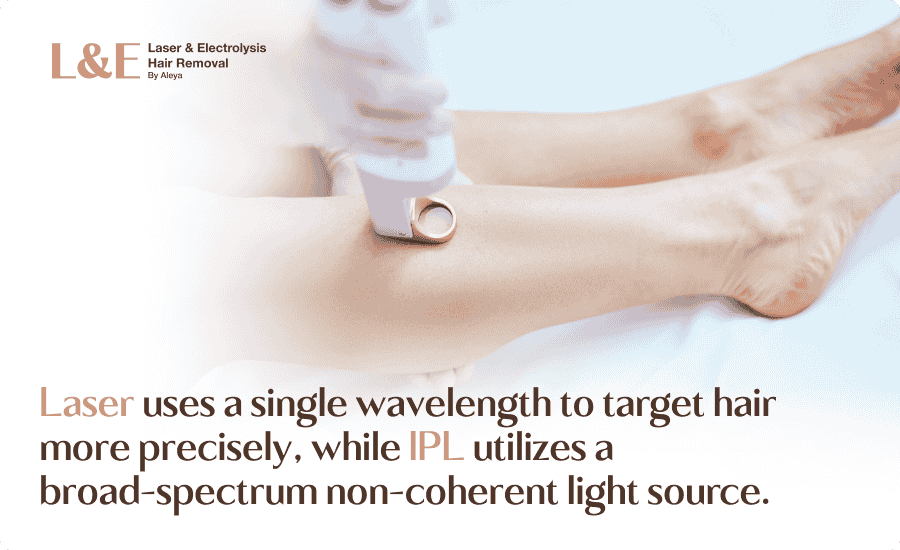
IPL sends out a broad spectrum of light that scatters across the treatment area.
Laser hair removal, on the other hand, uses a single, concentrated wavelength that’s aimed directly at the pigment in your hair follicle.
As Aleya puts it, “Laser uses monochromatic light and IPL uses broad spectrum, so the laser is more effective in achieving more reduction because of the way the energy targets the hair.”
That focused energy is one of the biggest reasons laser hair removal usually delivers more consistent, longer-lasting results with fewer sessions.
What Kind of Results Can You Expect
Most people start seeing less hair growth within one to three weeks of their first laser hair removal session.
Around that time, the treated hairs begin to shed, and yes, that’s exactly what you want to see! It’s a sign the treatment is doing its job.
IPL can also minimize hair growth, but you’ll typically need more sessions and regular touch-ups to keep those results going.
If you’re after smoother skin with less upkeep, laser hair removal usually comes out on top.
Laser Hair Removal vs. IPL Hair Removal: Which Is Better for Different Skin and Hair Types?
Here’s the thing: what works wonders for one person might not work as well for another.
Your skin tone and hair color have a huge impact on how effective laser hair removal vs. IPL will be for you.
So, which treatment is the better match?
Best Options for Fair to Medium Skin Tones
If you have lighter skin with darker hair, you’re in luck.
Both IPL and laser tend to work well here, since the contrast between your skin and hair makes it easier for the light or laser to zero in on the follicle without affecting the surrounding skin.
Best Options for Darker Skin Tones
Here’s where laser starts to stand out.
IPL’s broad-spectrum light can have a harder time distinguishing between pigment in the hair and pigment in darker skin, increasing the risk of burns or discoloration.
Laser hair removal, especially with Nd:YAG lasers, is more precise.
As Aleya explains, “There are different lasers that can safely and effectively work on different skin tones. IPL works best on lighter skin.”
Nd:YAG lasers use a longer wavelength to target the hair follicle while minimizing interaction with the surrounding skin, making them a safer choice for many people with darker skin tones.
What About Light or Gray Hair?
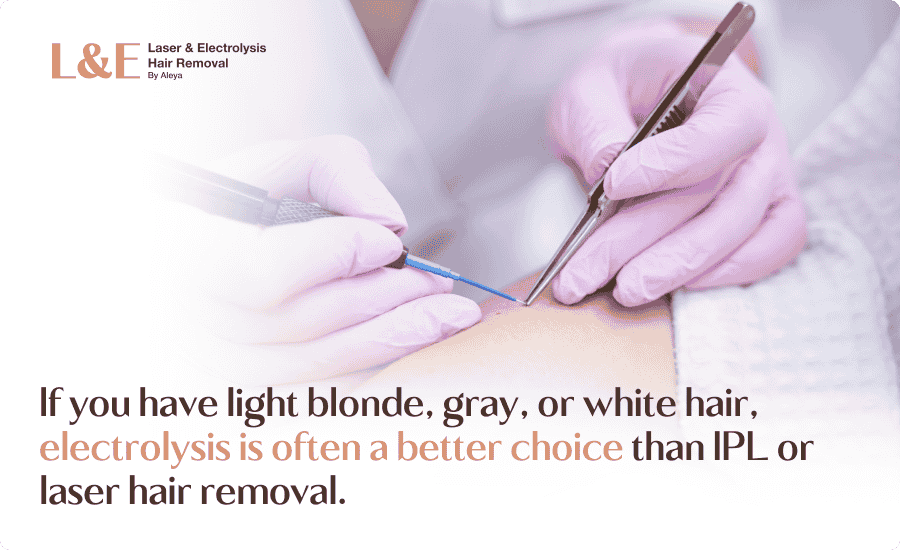
Here’s the honest truth: neither IPL nor most laser treatments work well on very light blonde, red, gray, or white hair.
Both technologies rely on pigment in the hair to do their job, so if there’s little to no pigment, there’s not much for the light to hold on to.
If you can relate, it’s worth having a consultation to talk through alternatives like electrolysis hair removal.
Laser Hair Removal vs. IPL Hair Removal: So, Which Should You Choose?
By now, you’ve probably realized there’s no single right answer here.
The best treatment for you really just comes down to your skin tone, hair color, budget, and what you’re hoping to get out of it in the end.
If you’re after long-lasting hair reduction without a ton of upkeep, professional laser hair removal is usually going to be your best bet.
It works faster, it’s more precise, and it tends to deliver better results for most people, especially if you’re dealing with coarse, dark hair.
IPL can still be a solid option though, especially if you like the idea of treating yourself at home and don’t mind putting in the time for regular touch-ups.
If you’re weighing the pros and cons of DIY devices, check out our guide to at-home laser hair removal vs. professional treatments.
It can definitely slow down hair growth, but you’ll likely need more sessions and some ongoing maintenance to keep seeing results.
Here’s a simple way to think about it:
- Choose laser hair removal if you:
- Want long-lasting results
- Prefer fewer maintenance sessions
- Have coarse, dark hair
- Want professional treatment tailored to your skin type
Choose IPL if you:
- Want an at-home option
- Are comfortable with regular touch-ups
- Have fair to medium skin with dark hair
- Don’t mind waiting longer to see results
Looking for Expert Laser Hair Removal? Meet Laser by Aleya
Here’s the thing about IPL devices sitting in your bathroom cabinet: they’re only as good as the person using them, and most of us aren’t trained to read our own skin the way a specialist is.
So, if the instructions say, “read the manual” there’s a good chance it’s still folded in the box!
That’s the real gap laser hair removal closes, and it’s exactly what Aleya brings to the table.
She’s spent years learning:
- Which laser settings work best for different skin tones
- When certain hair types need extra sessions
- Why shortcuts often backfire
Instead of guessing your way through touch-ups, you get a treatment plan built around your actual skin and hair, not a templated setting on a drugstore gadget.
Laser Hair Removal vs. IPL Hair Removal: FAQs
What is IPL hair removal?
IPL, short for Intense Pulsed Light, uses flashes of broad-spectrum light to target the pigment in hair follicles.
Over time, this slows hair growth and provides long-term hair reduction.
What is the difference between IPL and laser hair removal?
Laser hair removal utilizes a single, concentrated beam of light to target hair follicles, while IPL uses broad-spectrum light that treats a larger area.
As a result, laser hair removal typically requires fewer sessions and delivers longer-lasting results than IPL.
IPL vs. diode laser hair removal: what’s the difference?
A diode laser is a type of professional laser that uses a single wavelength to target hair follicles precisely.
IPL uses multiple wavelengths, making it less focused and generally less effective.
For most people, diode laser treatments provide faster, longer-lasting hair reduction with fewer maintenance sessions.


