Ingrown Hair Treatment: At-Home Remedies, Causes & FAQs
Ingrown Hair Treatment: Key Takeaways
- People with thick, curly, or coarse hair are more likely to experience ingrown hair
- Ingrown hair treatment can include exfoliating, using warm compresses, and/or applying acne or hydrocortisone treatments can help calm irritation
- Home remedies are a good start, but if you want to eliminate ingrown hairs for good,laser hair removal and electrolysis are your most effective options
An ingrown hair usually starts as a small bump on your skin; slightly raised, sometimes discolored, and easy to mistake for a pimple.
But surprise! Tucked underneath is a rebellious hair growing the wrong way, trapped beneath the surface aftershaving, waxing, or tweezing.
Ingrown hairs tend to show up more often if you’ve got curly or coarse hair.
However, just because they’re common doesn’t mean you have to live with them, as there are ways to prevent them and get rid of them when they pop up.
In this quick guide, here’s what you can expect:
- How to treat ingrown hair at home
- Why ingrown hairs happen and what can go wrong
- What you can do to keep ingrown hair from coming back
- Why Laser by Aleya might be your best fix
How To Treat Ingrown Hair at Home: 7 DIY Methods
Dealing with ingrown hair isn’t fun.
But here’s the upside: you can take care of them yourself, right at home, with a few simple steps.
With a little consistency (and a few minutes in the shower), you can make them a thing of the past.
Let’s talk through how to treat ingrown hair at home:
1. Exfoliate
Start with a warm shower or rinse your skin with hot water to open your pores.
Once your skin is prepped, gently exfoliate the area.
This helps remove dead skin and lets that trapped hair come to the surface.
And guys,don’t sleep on exfoliating! It’s not just a “girlie” thing.
Your skin will feel smoother, look better, and no one even must know you’re doing it (unless you want to brag about how good your skin feels).
2. Use the Right Shaving Gel
Your shaving cream matters more than you think.
Go for a gel that’s non-comedogenic (won’t clog your pores) and non-carcinogenic (no harmful chemicals).
A good shaving gel acts like a buffer between your razor and your skin, helping reduce razor burn and the chance of more ingrown hairs showing up later.
3. Shave With the Grain
We get it; going against the grain gives you that ultra-smooth finish. But if you’re prone to ingrown hairs, it’s not worth it.
Shaving in the direction your hair naturally grows is gentler on your skin and way less likely to cause irritation.
4. Use Acne Spot Treatment
Got some salicylic acid or benzoyl peroxide lying around?
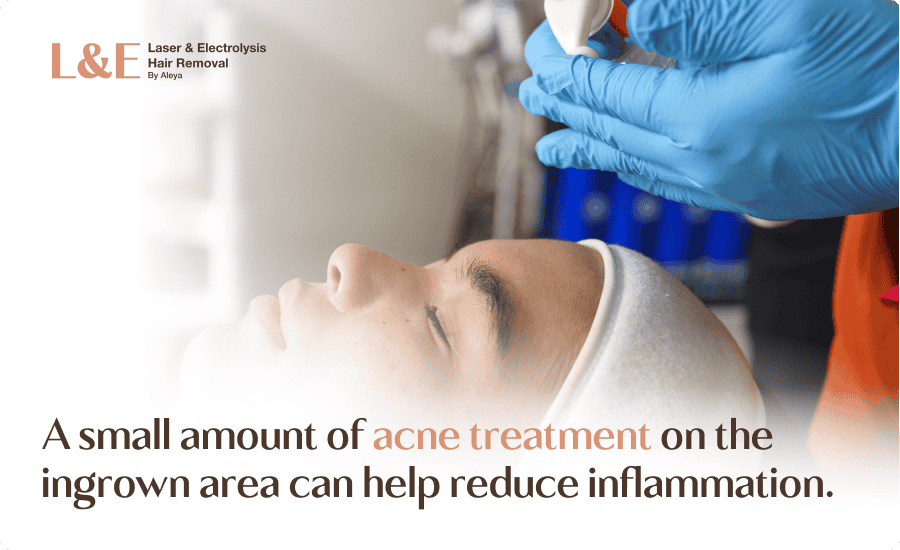
A dab of acne treatment over the ingrown area can help calm inflammation and speed up healing.
Just don’t overdo it; once a day is plenty.
5. Tweeze (But Only If You’re Careful)
Tweezing can work if you’re smart about it.
First, clean your tweezers with hot water or rubbing alcohol.
Then, apply a warm compress to the area (or just do this post-shower) to soften your skin.
If you can see the hair clearly and it’s close to the surface, gently tease it out.
Just a note: If it resists, don’t force it. Digging too deep can damage your skin or cause an infection. Sometimes, leaving it alone is the best move.
6. Get a Warm Compress
Take a clean washcloth, soak it in warm water, and gently press it against the area for a few minutes. Do this a couple of times a day.
The warmth helps soften your skin and open the pores.
Think of it as a spa treatment… just for that one annoying bump.
7. Apply Topical Treatments
Let’s talk creams and gels.
- Salicylic acid or glycolic acid: These are like tiny exfoliating ninjas. They clear out dead skin cells and make room for the hair to pop through.
- Hydrocortisone cream: If your ingrown is red, itchy, or throwing a tantrum, this will help calm things down.
- Antibiotic ointments: Got a spot that looks a little too angry? A dab of antibiotic cream can help stop any infection before it starts.
Hey, don’t go slathering everything on at once. Follow the instructions, keep it simple, and your skin will thank you.
What Causes Ingrown Hair?
When you remove hair, you’re only getting rid of the strand; not the actual follicle under your skin where the hair grows from.
So, when new hair starts to grow back, it can sometimes curl the wrong way and get stuck under the skin.
This is especially common if your hair is thick, curly, or coarse; it’s just more likely to loop back around instead of growing straight out.
How Do Ingrown Hairs Affect Your Body?
Ingrown hairs tend to show up in the spots where we remove hair most often, like your:
- Face (especially around the beard area, including the neck, cheeks, and chin)
- Legs
- Underarms
- Pubic area (think bikini line and inner thighs)
But they’re not picky.
You might also find them in unexpected places like your scalp, chest, stomach, back, eyebrows, inside your nose (yep, that’s a thing), and even on your butt.
Complications of Ingrown Hair
Let’s face it. Ingrown hairs are simply annoying.
However, if one sticks around too long or gets irritated, it can lead to a few not-so-fun issues, including:
- Bacterial infections: Especially if you’ve been scratching or picking. (We know it’s tempting but try not to!)
- Postinflammatory hyperpigmentation: That’s just a fancy term for dark patches that stick around after the irritation fades.
- Keloids: These are raised scars that can show up darker than the surrounding skin.
- Pseudofolliculitis barbae: Also known as razor bumps. Common in the beard area, and yes, they can be persistent.
- Fine depressed skin scars: In some cases, repeated irritation can leave small grooves in the skin.

Longer-Lasting Ingrown Hair Treatment Options
If ingrown hairs keep coming back or start to feel more serious, it might be time to talk to a healthcare provider.
They may suggest longer‑term hair removal options, like these:
Electrolysis: This method uses a tiny needle and a small electrical pulse to destroy the hair at the root, one follicle at a time. Since each hair has to be treated individually, it’s usually better for smaller areas rather than large sections of the body.
Laser hair removal: This option uses heat from a laser to target pigment in the hair and damage the follicle. It tends to work best on darker hair and can be a great option if you’re dealing with frequent ingrown hair.
Eliminate Ingrown Hair for Good at Laser by Aleya
Ingrown hairs have a sneaky way of showing up right when you least want them: itchy, red, and impossible to ignore.
But here’s the truth: they don’t have to be part of your routine.
With laser hair removal or electrolysis, you can stop the cycle before it even starts.
These treatments don’t just remove hair; they also prevent it from growing back the wrong way.
Aleya will guide you through every step.
From choosing the right method for your skin and hair type to making sure you feel comfortable, safe, and informed throughout your treatment.
Ingrown Hair Treatment: FAQs
What happens if you just ignore an ingrown hair?
In most cases, nothing too dramatic. Most ingrown hairs will work themselves out within a week or two.
As the hair grows, it usually breaks through the skin on its own, maybe causing some mild irritation in the meantime.
But sometimes, things can take a turn.
If the area gets infected, you might notice redness, pain, swelling, or even some pus (yep, gross but true).
How do you avoid ingrown hair in the first place?
Stop them before they start. Here are a few quick tips to keep your skin smooth and bump-free:
- Always wet your skin and hair with warm water before shaving (a warm shower does the trick)!
- Use a good shaving gel or cream to help the razor glide and protect your skin
- Stick to a single-blade razor; it’s gentler and less likely to cause trouble
- Replace your razor or blade often
Can I prevent ingrown hair from occurring?
Yes, you can prevent ingrown hair from occurring.
The best way to do it long-term is by removing hair at the root with either laser hair removal or electrolysis.
When should I see a professional for ingrown hair treatment?
If ingrown hairs keep coming back, get painful, or start leaving dark spots or scars, it might be time to call in a pro.
When hair is constantly growing the wrong way, DIY fixes can only do so much.
A professional can help you treat the root of the problem and keep those bumps from coming back.


