Laser Hair Removal for PMOS: Does It Really Work? [+ FAQs]
![Laser Hair Removal for PMOS: Does It Really Work? [+ FAQs]](https://www.laserbyaleya.com/wp-content/uploads/2026/05/laser-hair-removal-pmos-hero-image.png)
Laser Hair Removal PMOS: Key Takeaways
- Laser hair removal for PMOS (formerly known as PCOS) may help minimize excess hair growth caused by hormonal imbalance
- Previously known as PCOS, the updated name better reflects how the condition affects hormones, metabolism, ovarian function, and reproductive health
- If you have PMOS, laser hair removal can help you reduce the daily stress of shaving, tweezing, and constant upkeep
Have you ever wondered why your ponytail feels thinner, while stubborn hairs start appearing in places you never asked for them?
For many women with PMOS, that frustrating mix of scalp hair thinning and excess facial or body hair is caused by hormonal imbalances that affect hair growth.
And if this sounds familiar, you’re definitely not alone. An estimated 10–13% of women globally are thought to have this condition.
If you’ve been researching PMOS and laser hair removal, you’re probably wondering whether laser hair removal treatments can help manage stubborn hormonal hair growth long term.
In this guide, we will:
- Find out whether laser hair removal for PMOS can help manage unwanted hair growth
- Understand why PMOS can cause both scalp hair thinning and excess hair
- Discover what laser hair removal for PMOS can and can’t do
- Explore how laser hair removal can help PMOS hair growth easier to manage over time
Does Laser Hair Removal Work for PMOS?
Yes, laser hair removal is often used to help manage PMOS-related hair growth.
While hormonal fluctuations might mean you’ll need more sessions and occasional maintenance, most folks still see slower regrowth, fewer ingrown hair, and a major reduction in hair thickness.
Polyendocrine Metabolic Ovarian Syndrome (PMOS) Explained
Polyendocrine metabolic ovarian syndrome (PMOS) is a common hormonal condition that disrupts the body’s hormone balance and can lead to symptoms such as:
- Excessive hair growth
- Acne
- Irregular menstrual cycles
- Fertility challenges
Previously known as polycystic ovary syndrome (PCOS), the condition was often misunderstood because the name placed too much focus on ovarian cysts.
In reality, PMOS is a complex endocrine and metabolic disorder that affects multiple systems in the body, and not just the ovaries.
This misunderstanding has contributed to delayed diagnoses and limited treatment approaches for many patients.
While the exact cause of polyendocrine metabolic ovarian syndrome is still unclear, experts believe it is linked to a combination of hormonal and metabolic imbalances.
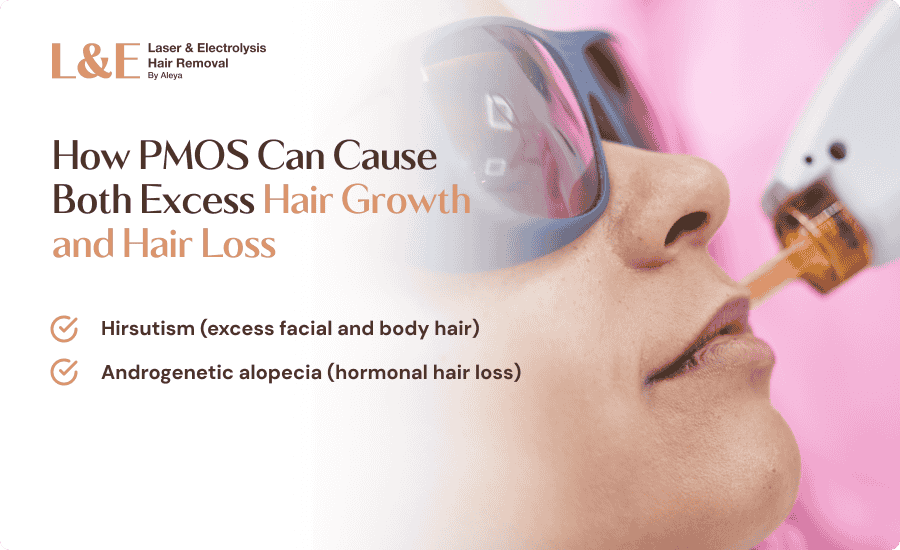
How Does PMOS Cause Excess Hair and (Ironically) Hair Loss?
When you have polyendocrine metabolic ovarian syndrome, it can sometimes feel like your hormones are running an elaborate prank on you.
Thinning the hair on your scalp while simultaneously deciding your chin or upper lip could use a little extra coverage? Yikes!
As frustrating as these changes can be, they’re also manageable.
With the right treatment plan and patience, many people can improve both hair thinning and unwanted hair growth over time.
1. Androgenetic Alopecia
Androgenetic alopecia, also known as male or female-pattern hair loss, is closely linked to elevated androgen levels.
These hormones can gradually affect the scalp’s hair follicles, causing them to shrink over time.
As the follicles become smaller, the hair they produce are more likely to shed.
Eventually, this can lead to visible thinning, especially around the:
- Part line
- Temples
- Crown of the scalp
2. Hirsutism
While scalp hair might become thinner, the same hormonal imbalance can also trigger increased hair growth in other parts of the body.
This symptom, known as hirsutism, is a common effect of PMOS and usually appears in areas that are more sensitive to androgens.
Hair growth might appear on the:
- Chin
- Upper lip
- Sideburns
- Neck
- Chest
- Stomach
- Lower back
- Inner thighs
The hair in these areas is often darker, thicker, and grows back more quickly than typical body hair.
How Many Sessions Are Needed for PMOS Hair Removal?
Women with polyendocrine metabolic ovarian syndrome typically need eight to 12 laser hair removal sessions to see ideal results.
With this condition, fluctuating androgen levels can continue stimulating new hair follicles over time.
In other words, just when you think your hair has gotten the memo, your hormones sometimes decide to send reinforcements.
Thanks to this ongoing hormonal influence, laser hair removal for PMOS often requires a little more patience and consistency.
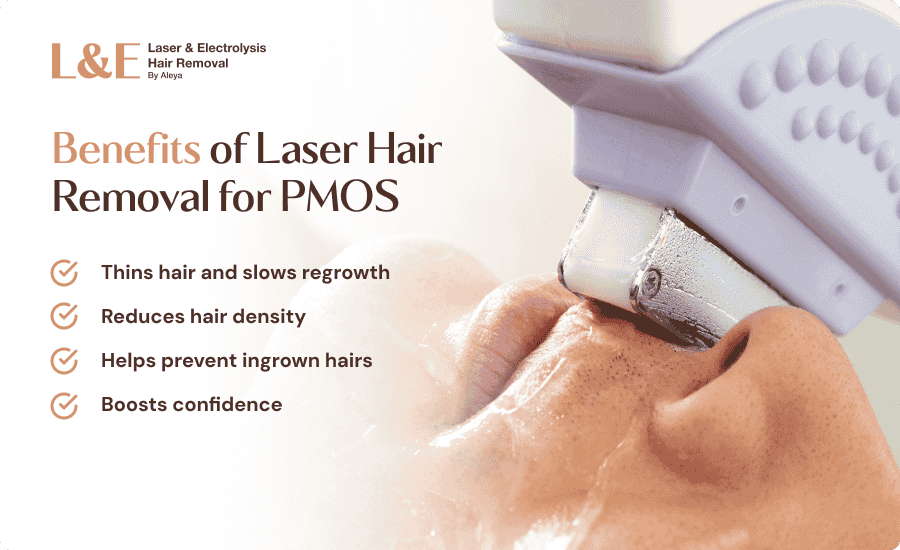
4 Benefits of Laser Hair Removal for PMOS
Your hormones have probably caused enough drama already, which is why finding a way to make PMOS-related hair growth easier to manage can feel like such a relief.
Thankfully, managing unwanted hair growth doesn’t have to feel like a full-time job forever.
Here are some of the biggest perks of laser hair removal for PMOS:
1. Thins Hair and Slows Regrowth
Unlike shaving or waxing, which basically turns hair removal into a never-ending side quest, laser hair removal for PMOS targets the hair follicle itself.
Over time, this helps weaken future growth, so hair comes back finer, lighter, and much slower.
2. Reduces Hair Density
With consistent laser hair removal for PMOS, the course, dark hair commonly linked to hormonal imbalances can gradually become finer, sparser, and far less noticeable.
Many people also find that, after around 12 sessions, hair growth becomes much easier to manage overall.
3. Helps Prevent Ingrown Hair
With consistent laser hair removal for PMOS, hair often becomes finer and less dense over time, which means it’s less likely to get trapped under the skin.
That can lead to fewer ingrown hairs, less irritation, and a lot less razor burn or inflammation, something your skin will definitely thank you for!
4. Boosts Confidence
Let’s be honest: constantly dealing with unwanted facial or body hair can be frustrating and unfairly time-consuming.
For many women with PMOS, it’s not just about the hair itself, but the daily mental load that comes with managing it.
Minimizing unwanted hair can mean spending less time worrying about tweezing, shaving, or hiding it, and more time simply feeling comfortable in your own skin again.
Limitations To Consider with Laser Hair Removal for PMOS
As helpful as laser hair removal for PMOS can be, it’s not exactly a “goodbye forever” situation, especially when hormones like to keep everyone on their toes.
1. Hormones Can Still Influence Future Hair Growth
Laser hair removal for PMOS can effectively decrease active hair follicles, but polyendocrine metabolic ovarian syndrome can continue triggering new ones over time.
In other words, your hormones might occasionally try to stage a comeback.
2. Hormones Still Need Attention
Laser hair removal for PMOS can help manage unwanted hair, hair, but it can’t exactly sit your hormones down for a serious talk.
Since hormone-related hair growth is driven by underlying hormonal imbalances, working with your GP or healthcare provider is still an important part of the process.
3. Fine or Light Hair Can Be More Stubborn
Laser hair removal for PMOS tends to work best on course, dark hair because the laser targets the pigment (melanin) inside the hair follicle.
Very fine hair, light blonde hair, gray hair, or “peach fuzz” might not respond effectively to treatment.
In some cases, skin experts suggest other options like electrolysis hair removal for better results.
The reassuring part? Even with these limitations, many people with PMOS still notice a big improvement in how their hair grows and feels.
Over time, hair often becomes finer and easier to manage overall.
How To Maximize Laser Hair Removal Results With PMOS
PMOS-related hair growth can definitely be stubborn because hormones continue influencing the hair follicles.
Laser hair removal can still make a huge difference, especially when combined with long-term hormone and lifestyle management.
1. Dietary Focus
Food won’t magically “cure” your condition overnight.
However, what you eat can influence insulin levels and hormone balance, both of which play a major role in PMOS symptoms, including excess hair growth.
Building meals around more balanced, nutrient-dense foods may help support steadier blood sugar levels and reduce some of the hormonal fluctuations that can make symptoms harder to manage.
Try focusing on:
- Whole foods
- Lean proteins
- High-fiber vegetables
- Complex carbohydrates
- Healthy fats
2. Exercise
Regular movement can also help improve how your body processes insulin, which is especially important for many people with PMOS.
Better insulin regulation might help support more balanced hormone levels overall.
A combination of aerobic exercise (walking, cycling, swimming, and jogging) and strength training or resistance workouts can be particularly beneficial.
3. Stay Consistent With Your Laser Hair Removal Sessions
With PMOS, consistency matters almost as much as the laser treatment itself.
Hormonal hair growth often needs more sessions and occasional upkeep because new follicles can continue progressing over time:
That’s why it’s important to:
- Choose an experienced and reputable laser hair removal specialist
- Stick to your recommended treatment schedule
- Avoid stopping treatments too early
- Be patient with gradual progress
Think of it less as a quick fix and more as a long-term strategy for keeping hormonal hair growth at bay.
Manage Hormonal Hair Growth With Laser Hair Removal at Laser by Aleya
PMOS-related hair growth can be stubborn, unpredictable, and honestly… a bit of a prankster sometimes.
While laser hair removal isn’t a cure for the underlying imbalance behind it, it can be a game-changer when it comes to keeping unwanted hair under control.
At Laser by Aleya, we focus on helping clients manage hormonal hair growth in a way that feels supportive and sustainable.
With consistent treatments, many clients notice slower regrowth, finer hair, smoother skin, and a lot less daily maintenance.
Laser Hair Removal PMOS: FAQs
Does laser hair removal work for PMOS?
Yes! In fact, for many people, it’s a huge relief.
PMOS-related hair growth tends to be more stubborn because hormones keep influencing the follicles, so you might need more sessions than usual.
Will I regret PMOS hair removal?
Honestly, most people wish they’d started sooner with their laser hair removal sessions.
The biggest thing is going in with realistic expectations: laser hair removal for PMOS helps manage hormonal hair growth, not magically silence your hormones forever.
Does insurance cover PMOS facial hair removal?
Unfortunately, insurance companies don’t usually cover laser hair removal for PMOS since they see it as a cosmetic treatment rather than a medical one.
That said, there can be exceptions.
If your PMOS-related hair growth is causing more serious concerns, like recurring folliculitis or significant emotional distress, don’t fret.
Your doctor might provide documentation showing how the condition is affecting your health and quality of life.


