Laser Hair Removal for Folliculitis & Ingrown Hair [+ FAQs]
![Laser Hair Removal for Folliculitis & Ingrown Hair [+ FAQs]](https://www.laserbyaleya.com/wp-content/uploads/2026/02/laser-hair-removal-for-folliculitis-and-ingrown-hairs-hero-image.png)
Laser Hair Removal for Folliculitis & Ingrown Hair: Key Takeaways
- By disabling the hair follicle, laser hair removal for folliculitis helps prevent both folliculitis and ingrown hairs from forming
- Laser hair removal for folliculitis can help reduce future breakouts, but it doesn’t treat active infections
- A personalized consultation can help you choose the safest and most effective hair removal option for your skin
Laser hair removal is having a major glow-up; gliding from a $1.22 billion market in 2024 to a projected $4.6 billion by 2032.
With its growing popularity, and since we’re talking about hair (or getting rid of it), you might be wondering: can it help with pesky ingrown hair and folliculitis too?
Spoiler alert: it just might!
By the end of this guide, you will:
- Know whether laser hair removal can help prevent folliculitis and ingrown hair
- Understand how laser hair removal for folliculitis and ingrown hair works
- Explore how Laser by Aleya can help you achieve smoother skin and a better overall experience with expert laser hair removal for folliculitis
Can Laser Hair Removal Help Prevent Folliculitis?
Absolutely. Laser hair removal is a long-term solution for minimizing and even preventing chronic folliculitis.
By targeting the hair follicle at the root, the treatment minimizes inflammation and eliminates common triggers like shaving, waxing, or plucking; methods known to irritate the skin and cause infection.
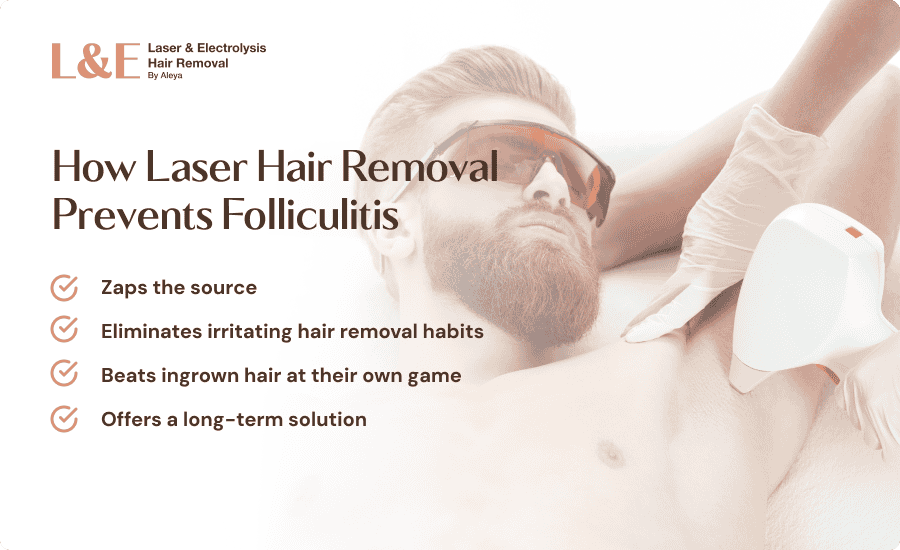
How Laser Hair Removal Prevents Folliculitis
Laser hair removal can help prevent folliculitis before it even begins; by targeting the source: the hair follicle.
Here’s how laser hair removal for folliculitis works:
1. Zaps the Source
Laser hair removal uses concentrated light to target and destroy the hair follicle.
Without a follicle, there’s nowhere for bacteria to hide and cause inflammation.
2. Eliminates Irritating Hair Removal Habits
Shaving often leads to nicks, razor burn, and irritation, all of which make folliculitis worse.
Laser hair removal for folliculitis gives you smoother skin without the constant battle.
3. Beats Ingrown Hair at Their Own Game
If your hair is curly, coarse, or grows in odd directions, you’ve likely dealt with ingrown hair.
Laser hair removal for folliculitis softens regrowth and reduces hair density, making it more difficult for hair strands to turn against you.
4. Offers a Long-Term Solution
Laser hair removal for folliculitis doesn’t treat active infections, but it’s an amazing option for preventing repeat flare-ups.
Fewer follicles mean lower chances for inflammation to start in the first place.
Laser Hair Removal for Folliculitis: A Few Things to Keep in Mind
Laser hair removal for folliculitis sounds enticing, but if you’re dealing with this condition, there are a few things you’ll want to know first.
1. Skip It If You’ve Got an Active Outbreak
If the area is red, sore, or infected, press pause.
Wait until your skin has healed before booking that laser hair removal for folliculitis session.
2. Consult With an Expert Laser Specialist
Just like people, lasers have their own personalities, and your skin might prefer one over another.
An expert laser specialist (hi, we’ve got those!) will match you with the safest laser for your skin and hair.
3. Laser Hair Removal Is Preventive, Not a Cure
Laser hair removal for folliculitis keeps future razor bumps at bay, but it won’t treat active infections.
If you’re dealing with a current case of folliculitis, you may need to clear that up first with help from a dermatologist.
Can Laser Hair Removal Help Prevent Ingrown Hair?
Yes, and it’s one of the reasons so many people make the switch.
Laser hair removal targets the hair follicle at the root, which means it prevents new hair from growing in a way that gets trapped under the skin.
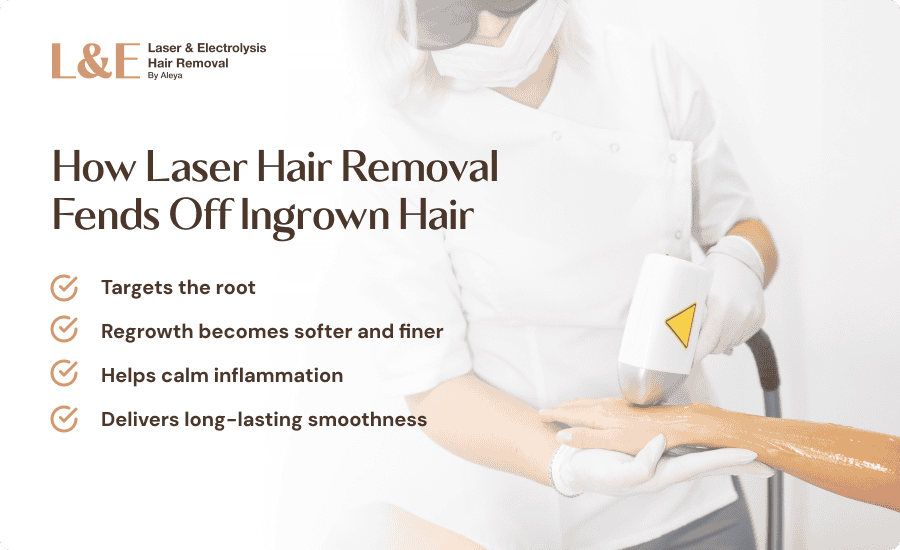
How Laser Hair Removal Fends Off Ingrown Hair
Ingrown hairs show up when a hair decides to grow the wrong way, curling back into the skin instead of pushing out like it’s supposed to.
If you’ve got curly or coarse hair, you probably know the struggle all too well.
The result? Redness, bumps, and sometimes those painful, inflamed spots that just won’t quit.
1. Targets the Root
Unlike shaving, which cuts hair at the surface, or waxing, which pulls it out by the root, laser hair removal targets and disables the follicle itself, so the hair can’t grow back at all.
2. Regrowth Becomes Softer and Finer
With each session, the hair that does grow back tends to be thinner and less coarse.
That means it’s way less likely to get trapped under the skin or cause irritation.
3. Helps Calm Inflammation
Laser energy doesn’t just prevent new hairs; it can also help destroy existing ingrown ones, leading to smoother, less inflamed skin over time.
4. Delivers Long-Lasting Smoothness
Once your treatment series is complete, many clients see a dramatic drop in ingrown hairs.
This is especially true in trouble zones like the bikini line, underarms, and jawline.
A Little Heads-Up: Laser Hair Removal and Ingrown Hair
Thinking about laser hair removal to get rid of ingrown hair?
Here’s a quick rundown on what to expect, especially when it comes to ingrown hairs and who gets the best results.
1. It’s Not a One-and-Done Deal
Laser hair removal works best when the hair is in its active growth phase, which is just one part of the hair cycle.
That’s why most folks need anywhere from six to eight sessions (sometimes more) to see long-lasting results.
Patience pays off!
2. Have Dark, Coarse Hair? You’re the Ideal Candidate
Lasers love pigment, so the treatment works best on darker, thicker hair.
If your hair is lighter or finer, shoutout to the blonde gals, don’t worry!
Aleya can walk you toward the best option for your skin and hair type, like electrolysis hair removal.
Laser hair removal is a safe and effective way to treat facial hair, like on the upper lip, chin, or jawline, when it’s done by a certified pro using the right, FDA-approved equipment.
Can You Safely Use Laser Hair Removal on Facial Hair?
Laser hair removal is a safe and effective way to treat facial hair, like on the upper lip, chin, or jawline, when it’s done by a trained laser specialist using FDA-approved laser hair removal device.
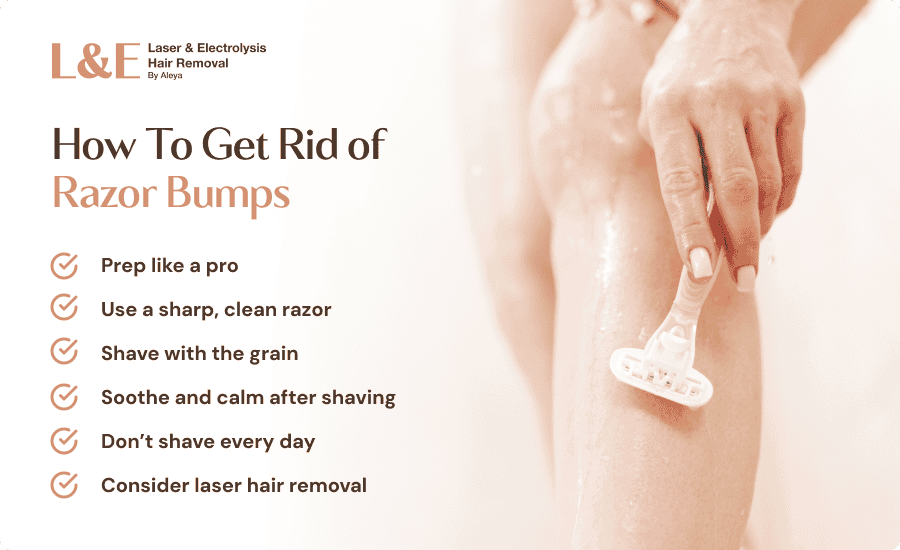
How To Get Rid of Razor Bumps: Tried-and-Tested Tips
Razor bumps? Not on our watch. Get a sneak peek at what works when it comes to beating them.
1. Prep Like a Pro
Before you even think about shaving, prep your skin! Hop into a warm shower to soften your hair and open your pores.
Exfoliate gently to sweep away dead skin cells, as this helps prevent hair from getting trapped under the skin.
2. Use a Sharp, Clean Razor
Dull razors are your skin’s worst enemy. They tug, pull, and leave irritation behind.
Always use a clean, sharp blade, and if it’s disposable, don’t stretch its lifespan.
3. Shave With the Grain
Shaving against the grain might seem like the secret to a closer shave, but it increases the risk of ingrown hair.
For happier, bump-free skin, stick to shaving in the direction your hair naturally grows.
4. Soothe and Calm After Shaving
Don’t skip the aftercare.
After shaving, treat your skin to a gentle, alcohol-free product packed with calming ingredients like aloe, chamomile, or witch hazel.
5. Don’t Shave Every Day
Give your skin a little breathing room because shaving every day can leave your follicles irritated and inflamed.
Try spacing out your shaves to let your skin fully heal and stay happy.
6. Consider Laser Hair Removal
If razor bumps are a regular battle, laser hair removal for folliculitis might be the answer you’re looking for.
It targets the hair follicle itself, reducing regrowth and giving you smoother skin over time, without the bumps.
Get Smooth, Bump-Free Skin at Laser by Aleya
Struggling with razor bumps, ingrown hairs, or pesky folliculitis?
At Laser by Aleya, we specialize in safe, personalized laser hair removal treatments designed to soothe irritated skin and prevent future flare-ups.
Shaving shouldn’t feel like a gamble and your skin shouldn’t have to pay the price.
Got more questions about folliculitis? Check out our article!
It’s packed with helpful info, real talk, and what to expect if you’re thinking about going the laser route.
We’re here to help you break up with bumps for good, one laser pulse at a time.
Laser Hair Removal for Folliculitis & Ingrown Hair: FAQs
Should I worry if I have folliculitis?
Most cases of folliculitis are mild and nothing to panic about. It’s common, especially after shaving, waxing, or sweating.
That said, if the bumps become painful, spread, or don’t improve after a few days, it’s worth checking in with a dermatologist.
How long does folliculitis last?
Mild folliculitis usually clears up within a few days to a week, especially if you stop shaving the area and keep it clean and dry.
More stubborn cases can stick around longer, especially if they’re infected.
How long does ingrown hair last?
An ingrown hair can last anywhere from a few days to a couple of weeks, depending on how deep it is and whether it becomes inflamed.
How can I get rid of razor bumps without daily shaving?
The easiest way? Ditch the razor altogether.
Treatments like laser hair removal for folliculitis or electrolysis offer long-term smoothness without the daily irritation.
That said, some people choose to embrace free form hair, allowing hair to grow naturally without removal, for reasons like:
- Comfort
- Skin health
- Personal preference
In the meantime, whether you’re between sessions or opting out of hair removal entirely, gentle exfoliation, soothing aloe gel, and loose-fitting clothing can help.
When is laser hair removal not recommended?
Laser hair removal for folliculitis isn’t a good fit if you have an active skin infection, open wounds, or a sunburn in the treatment area.


