Laser Hair Removal Folliculitis: Prevention, Treatment & FAQs
Laser Hair Removal Folliculitis: Key Takeaways
- Folliculitis from laser hair removal is common and is usually mild and temporary
- Without proper care, laser hair removal folliculitis can become more stubborn
- Whether you notice mild swelling or even hives after laser hair removal, the key is how you care for your skin afterward
A few days after your first laser hair removal session, everything is smooth, glowing, and going exactly as planned until a few tiny red bumps pop-up out of nowhere.
Plot twist.
Folliculitis after laser hair removal is a real side effect, but it often flies under the radar, especially for people with coarse or easily irritated hair.
If you’re someone who’s prone to ingrown hair, razor burn, or skin that gets fussy at the slightest friction, you might be more likely to notice these post-laser bumps.
But don’t worry, with the right care (and a little patience), your skin can bounce back smoother than ever.
By the end of this guide, you will:
- Understand what folliculitis is and why it happens
- Recognize what folliculitis looks like after laser hair removal
- Understand why laser hair removal can sometimes trigger it and whether it’s avoidable
- Find out how Laser by Aleya’s expert care helps keep those bumps away, so your glow stays smooth and stress-free
Understanding Folliculitis
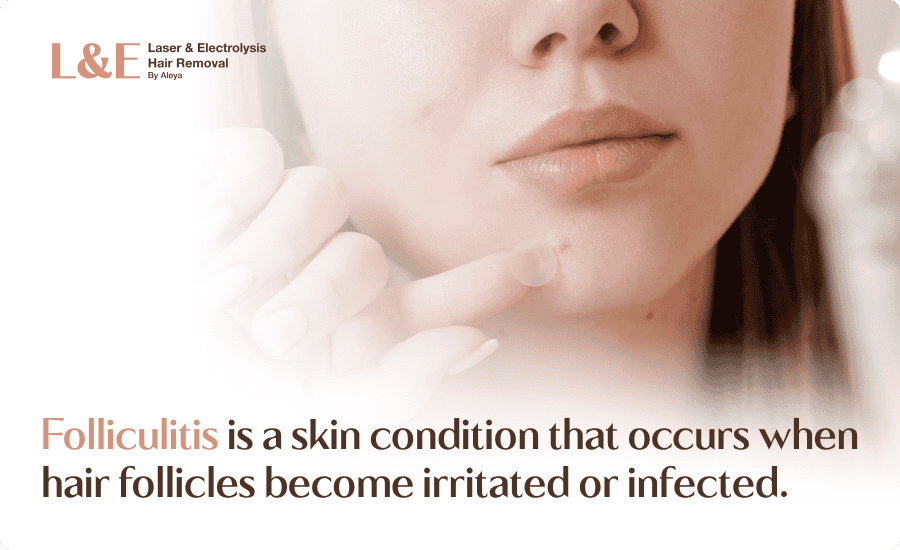
Folliculitis is a common skin condition that occurs when hair follicles become irritated or infected.
It often starts with small, red bumps that look like pimples, usually forming around the base of a hair shaft.
In many cases, this irritation is caused by bacteria entering the follicle through friction, shaving, or blocked pores.
If you don’t treat it early, the irritation can get worse and might turn into bigger, crusty sores or patches of inflamed skin.
What Does Folliculitis Look Like After Laser Hair Removal?
Folliculitis is a mild, temporary reaction that can happen after laser hair removal.
It might look a little dramatic, but it’s usually nothing to worry about.
Here’s what you might notice:
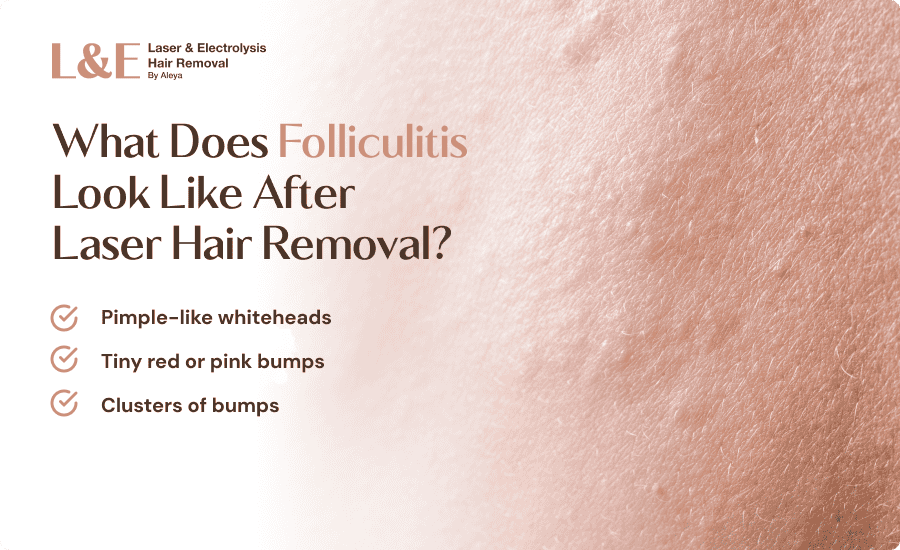
- Slight itching or a sunburn-style tingle
- Mild swelling or tenderness
- Pimple-like whiteheads (don’t pop them; they’re not invitations!)
- Tiny red or pink bumps hugging each hair follicle like little warning lights
- Clusters of bumps that tend to hang out in warm, snug areas like the bikini line, chest, or back
It might remind you of razor bumps or a breakout.
However, unlike acne, this shows up right after your session and usually disappears within a few days with some TLC.
Why Laser Hair Removal Might Cause Folliculitis
Laser hair removal is one of the best ways to say goodbye to stubble, shaving nicks, and weekly waxing appointments.
But sometimes, your skin isn’t thrilled about the change and flares up with folliculitis.
Let’s take a closer look at what’s going on and why it’s nothing to worry about.
1. The Heat Irritates Your Follicles
Laser hair removal works by sending concentrated heat into each follicle to damage the root and stop future growth.
It’s targeted and effective, but that burst of heat can also leave the follicle inflamed for a short time.
If you have sensitive skin, that inflammation may show up as redness, swelling, or tiny bumps.
2. Your Pores Are Wide Open
Right after treatment, your pores are in recovery mode.
Since the follicles are still open, things like sweat, bacteria, or friction from tight clothing can slip in more easily.
This combo can irritate the skin and trigger a reaction that looks very much like folliculitis.
This is one reason your laser specialist might tell you to skip the gym or sauna for a day or two.
3. Shedding Hair Can Clog Pores
Here’s something most people don’t realize: your treated hair doesn’t fall out immediately.
Instead, they slowly work their way out over the next week or two.
As they shed, they can bring dead skin cells and oil with them, and if those get trapped in the follicle, boom: more bumps.
How To Treat Folliculitis After Laser Hair Removal
So, you’ve got a few bumps after your laser hair removal session. Here’s how to show your skin some love while it recovers:
1. Be Gentle When Washing
Stick to a mild, fragrance-free cleanser and lukewarm water.
Gently wash the area twice a day to remove sweat, oil, and bacteria.
However, skip the scrubs, exfoliants, or anything that says “deep clean.”
Your skin is already a little irritated, and now’s the time to baby it.
2. Avoid Heat and Friction
Heat and sweat can make things worse, so give your skin a break for at least 24 to 48 hours. This means:
No hot showers or baths
- No saunas or steam rooms
- No intense workouts (sorry, spin class)
- No tight clothing rubbing against the area
3. Use Anti-Inflammatory Products
To calm redness and soothe irritation, apply something gentle and cooling:
- Witch hazel
- Aloe vera gel (pure, not the neon green stuff)
- Fragrance-free hydrocortisone cream (if recommended by your provider)
These reduce inflammation and help your skin feel less angry, faster.
4. Consider a Topical Antibiotic
If the bumps are persistent, pus-filled, or starting to spread, it’s time to call in the medicated reinforcements.
You can try over-the-counter options like bacitracin or Polysporin to help fight bacteria and stop an infection from starting.
Just make sure to apply it with clean hands or a fresh cotton swab.
Note: If you’re unsure whether it’s bacterial folliculitis or just irritation, it’s smart to check with your provider before starting medicated products.
5. No Picking or Popping Your Skin Even if It Sounds Tempting
We get it: those little bumps can be hard to ignore.
However, picking at them can invite bacteria, slow down healing, and even cause scarring.
Treat your skin like it’s recovering from a sunburn, with gentle care only.
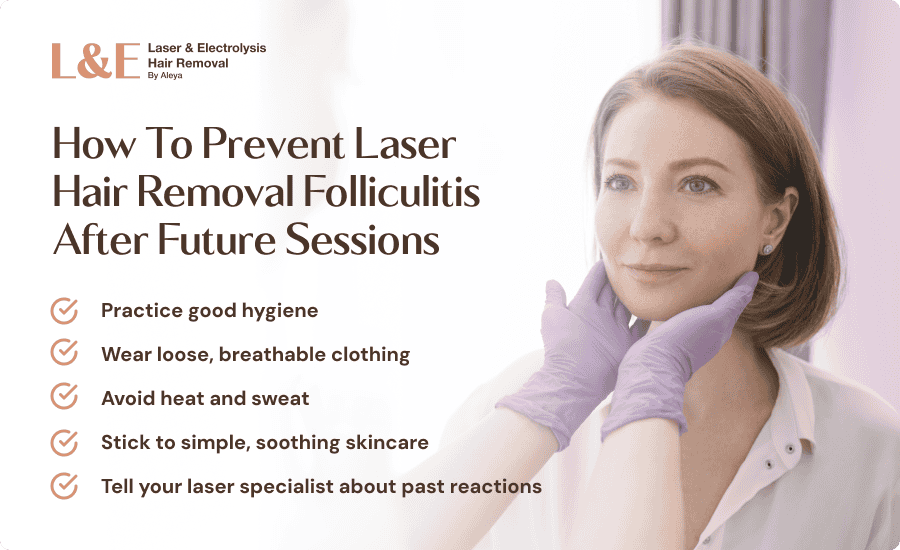
How To Prevent Laser Hair Removal Folliculitis After Future Sessions
You know what they say: prevention is always better than cure.
Once you get a feel for how your skin responds to laser hair removal, a few simple habits can go a long way in keeping irritation, and those pesky red bumps, at bay.
Let’s walk through what works:
1. Practice Good Hygiene
Clean skin is happy skin. Wash the treated area before and after your appointment with a mild, fragrance-free cleanser.
This helps remove sweat, bacteria, and any leftover products that could clog pores or irritate open follicles.
Aleya’s tip: Always use clean towels and pillowcases for the first couple of nights post-treatment.
2. Wear Loose, Breathable Clothing
Tight leggings or synthetic fabrics might look cute, but they’re not your skin’s best friend after laser hair removal.
Friction and trapped heat can make laser hair removal folliculitis worse, especially in high-rub areas like the bikini line, thighs, or underarms.
Choose soft, breathable fabrics like cotton and let the area breathe for at least two days.
3. Avoid Heat and Sweat
Skip the gym, sauna, hot yoga, or steamy showers for at least a day after your session.
When follicles are still open, sweat can sneak in and trigger inflammation or bacterial growth, both of which can lead to laser hair removal folliculitis.
If you must be active, keep it light and cool. Your skin will thank you.
4. Stick To Simple, Soothing Skincare
Post-laser, avoid heavy lotions, exfoliants, or fragranced products for a few days. Instead, go for:
- Pure aloe vera gel or witch hazel to calm inflammation
- Fragrance-free moisturizer to keep the skin hydrated
- SPF 30 or higher if the treated area is exposed to sunlight
5. Tell Your Laser Specialist About Past Reactions
If you’ve had laser hair removal folliculitis before, speak up.
Your laser technician can adjust your settings, suggest preventative products, or recommend a better prep routine for your skin type.
The more they know, the better they can help prevent future flare-ups.
Best Aftercare Routine to Prevent Laser Hair Removal Folliculitis
Want a cheat sheet for post-laser hair removal success?
Here’s a quick routine to follow after each session:
- Gently cleanse the area morning and night
- Apply a soothing gel like aloe vera
- Wear loose clothing for the next 48 hours
- Avoid heat, sweating, and friction
- Keep your hands off the treated area
- Use sunscreen if the skin is exposed
- Stay hydrated and skip heavy products
Laser Hair Removal Folliculitis? Aleya Can Help Keep It From Becoming Part of Your Story
You can get professional laser hair removal that puts your skin first, and with Aleya, you’re in good hands.
Folliculitis can happen, especially if your skin is sensitive, but with the right care, it doesn’t have to ruin your laser hair removal journey.
At Laser by Aleya, we take the time to understand your skin, adjust treatments when needed, and guide you through aftercare that works.
Aleya uses the Lumenis Diode LightSheer, an advanced, skin-friendly laser that gets real results without making you squirm in the chair.
It’s fast, precise, and designed to keep your skin smooth and your experience comfortable.
Want to treat more than one area? We’ve got flexible packages to keep things easy (and more affordable).
If you’re a student, you’re in luck!
We offer special student laser hair removal discounts so you can stay silky without stretching your budget.
Laser Hair Removal Folliculitis: FAQs
How long does folliculitis last after laser hair removal?
Mild laser hair removal folliculitis usually clears up in a few days to about a week, especially if you’re following proper aftercare.
However if the area gets irritated, rubbed by tight clothing, or isn’t cared for properly, those bumps can stick around for two to four weeks.
Can laser hair removal folliculitis cause scars or hyperpigmentation?
In most cases, laser hair removal folliculitis clears without leaving a trace.
However, if the inflammation is severe, keeps coming back, or goes untreated, it can lead to long-term changes like dark spots, scarring, or even permanent hair loss in the affected area.
What does an ingrown hair look like vs. laser hair removal folliculitis?
Ingrown hairs usually appear as single red bumps with visible hair trapped under the skin, and they’re most common after shaving or waxing.
Folliculitis, on the other hand, shows up as clusters of red or pus-filled bumps around hair follicles and often follows friction, sweating, or laser hair removal.
While they might look similar, ingrown hair tends to stay isolated, whereas laser hair removal folliculitis can spread and feel more inflamed.
![Laser Hair Removal for Folliculitis & Ingrown Hair [+ FAQs]](https://www.laserbyaleya.com/wp-content/uploads/2026/02/laser-hair-removal-for-folliculitis-and-ingrown-hairs-hero-image-768x469.png)

