Ear Hair Removal: What Actually Works & How To Do It Safely
Ear Hair Removal: Key Takeaways
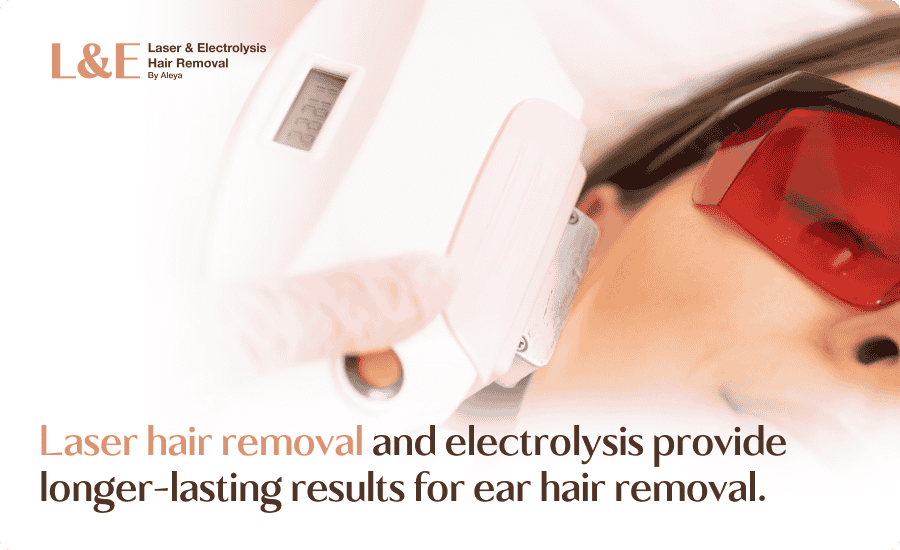
- Laser hair removal and electrolysis hair removal offer the longest-lasting results
- Both hair removal methods should be performed by a trained laser specialist because of how close the treatment area is to the ear canal
- Ear hair usually gets more obvious with age and hormones, not because it suddenly started growing faster
Ear hair is one of those grooming concerns most people ignore, until a rogue strand catches the bathroom light.
Like hair elsewhere on your body, ear hair changes with age and hormones.
A recent review of hair follicle aging explains how these changes can turn once-fine, barely noticeable hairs into thicker, darker strands.
Once they become noticeable, the next question is what to do about them.
In this guide, we will:
- Cover why ear hair becomes more noticeable
- Discover how laser ear hair removal works and how long the results last
- Compare options like waxing and creams, including when they make sense and when they don’t
Best Ear Hair Removal: What Are Your Options?
When those pesky ear hairs start demanding attention, you’ve got a few ways to show them the door.
| Method | How Long It Lasts | Ideal For | What To Know |
| Trimming | Days to weeks | Quick upkeep | Easy, but needs repeating |
| Waxing | Three to six weeks | Smoother results | Lasts longer, but can sting |
| Hair removal cream | Up to two weeks | Painless removal | Not every hair removal cream is suitable for the ears |
| Tweezing | Three to six weeks | Stray hair strands | Precise, but can be uncomfortable |
| Laser hair removal | Long-term | Less upkeep | Reduces regrowth over time |
| Electrolysis | Permanent | Individual hair strands | Effective, but takes time |
Why Does Ear Hair Become More Noticeable?
Here’s the plot twist: your ear hair might not actually be growing faster; it’s just getting harder to miss.
Age, hormones, genetics, and even where the hair grows can all play a part.
Age and Hormones
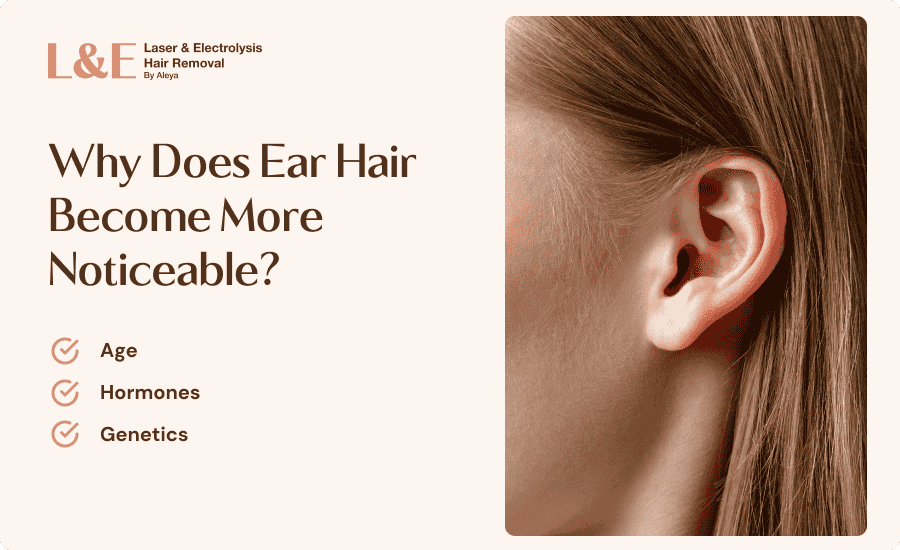
As you get older, hormone-sensitive follicles around the ear can start producing thicker, darker hair instead of the fine, barely visible ones you had before.
Testosterone and DHT play a role in this shift.
As this review of hair follicle aging explains, hormonal changes can cause hair to thin in some places and become more prominent in others.
For many people, the ears fall into that second camp.
Genetics
You can also thank your ancestors.
Genetics influences how many hair follicles you have and how strongly they respond to hormones.
You can’t change the blueprint, but you can manage what grows from it.
The Ear Simply Shows Everything
Location matters, too.
Ear hair is often dark and wiry, growing on curves that easily catch the light.
A tiny hair you’d never notice on your arm can suddenly steal the spotlight on your ear, which is why even a few strands can feel surprisingly obvious.
How Does Laser Ear Hair Removal Work?
Laser ear hair removal uses concentrated light to target the pigment in each hair.
The follicle absorbs the light and converts it into heat, which damages the follicle and reduces future growth.
It’s the same technology used for laser hair removal elsewhere on the body, just applied to a smaller area.
Since the laser targets pigment, treatment typically works best on darker hair.
However, the type of laser device can make a difference across different skin and hair types.
For safety, a seasoned laser specialist treats only appropriate areas of the outer ear, not deep inside the ear canal.
And the results can be significant.
A recent clinical study found that Alexandrite laser treatment achieved up to 94% hair reduction in the area studied, with few reported side effects.
While the study didn’t focus on ears specifically, it demonstrates how effectively laser energy can minimize unwanted hair.
Is Laser Ear Hair Removal Permanent?
Not exactly.
Laser hair removal is more about long-term reduction than a forever farewell.
It can leave you with much less hair, and finer regrowth, but a few strands might make a comeback over time, especially as hormones change.
Ear Hair Removal Wax: Benefits and Risks
Ear hair waxing removes hair from the root, giving you smoother, longer-lasting results than trimming.
But the ears are tricky territory, so it pays to know the trade-offs before bringing out the wax.
Waxing has a few perks, including:
- Regrowth often comes back finer over time with repeated sessions
- Results last longer than shaving or trimming, usually three to six weeks
- It clears the visible outer rim and tragus in one quick pass rather than hair by hair
The risks are just as real:
- The skin around the ear is sensitive, so redness and irritation are common
- Wax should never, ever go inside the ear canal, where it can trap against the eardrum or cause blockage and injury
- It can trigger ingrown hairs if the area is not cared for afterward
Can You Use Ear Hair Removal Cream?
Technically, yes.
However, this is one area where you don’t want to get too adventurous.
Hair removal creams dissolve hair at the surface, but the delicate skin around your ears can be more prone to irritation.
Placement is the biggest concern.
Keep the cream on the outer ear and well away from the ear canal, and always patch-test first.
If you’re weighing your options, see how hair removal cream compares to laser treatment.
Ear Hair Removal for Men: How To Keep It Under Control
For many men, ear hair becomes more noticeable with age as testosterone and DHT give certain follicles a little extra enthusiasm.
It’s normal, if not exactly the birthday gift anyone asked for.
For quick upkeep, a rounded-tip trimmer gets the job done in seconds, while tweezing works for the occasional stubborn strand.
Tired of the routine?
Laser hair removal for men can provide long-term reduction, just as it does for areas like the neck, back, and chest.
And yes, ears can be sensitive, but laser sessions are typically quick.
Here’s what to expect when it comes to laser hair removal discomfort.
Take the Hassle Out of Ear Hair Removal at Laser by Aleya
Ear hair is a normal part of getting older, thanks to hormones, genetics, and some extra-enthusiastic follicles.
The real trick is finding a removal method that works for you, without turning your ears into a DIY experiment!
At Laser by Aleya, every treatment is built around your skin tone, hair type, and the specific area being treated, because ears demand a lighter, more precise touch than almost anywhere else on the body.
Here’s why clients trust Aleya with the tricky spots:
- More than 20 years of hands-on experience across a wide range of skin tones and hair textures
- Genuine precision for small, sensitive areas where a careful hand matters most
- Honest guidance on when laser is the right call and when another method serves you better
Ear Hair Removal: FAQs
Can you remove ear hair at home?
Yes. Trimming is usually the easiest option to do at home.
You can also try hair removal cream or waxing, but you’ll want to be a little more careful with those methods since the skin around your ears can be sensitive.
Is waxing ear hair safe?
Waxing can be a safe option for the outer ear when done carefully.
Since it removes hair from the root, the results tend to last longer than trimming.
Just be sure to keep the wax away from the ear canal, where the skin is more delicate.
What is the best ear hair removal method for sensitive skin?
The best ear hair removal method depends on your skin and hair type.
Trimming is gentle for regular upkeep, while laser hair removal can reduce regrowth over time.
How long does ear hair removal last?
It depends on the method.
Trimming requires regular upkeep, while waxing pulls hair from the root, so you can enjoy smoother results for longer.
Laser hair removal can provide longer-term reduction after multiple sessions.
Is ear hair removal cream better than waxing?
It depends on your needs.
Hair removal cream dissolves hair at the surface, while waxing pulls ear hair from the root.
The best ear hair removal option comes down to your skin sensitivity and preferred level of upkeep.


