Numbing Cream for Laser Hair Removal: Does It Really Help?
Numbing Cream for Laser Hair Removal: Key Takeaways
- Numbing cream can make your laser hair removal session more comfortable, since it contains lidocaine or prilocaine that helps reduce the stinging sensation
- Comfort doesn’t stop with numbing cream for laser hair removal
- Simple steps like staying hydrated and following aftercare tips can help make your laser hair removal experience smoother
“Beauty is pain” is a phrase most of us have heard before.
The saying dates back to the 19th-century French expression il faut souffrir pour être belle, which translates to “one must suffer to be beautiful.”
For generations, beauty treatments were often seen as something to endure, from corsets and harsh skincare to painful waxing appointments.
The message was simple: if you wanted the results, you had to put up with the pain.
Fortunately, that’s no longer the case.
Modern laser hair removal is now designed to make comfort a priority, and numbing cream can provide that extra layer of relief.
In this article, we will:
- Answer if numbing cream for laser hair removal works
- How to use numbing cream for laser hair removal safely (without overdoing it)
- How Laser by Aleya helps keep comfort front and center during your laser hair removal sessions
Does Numbing Cream Work for Laser Hair Removal?
Yes, numbing creams can make a big difference during laser hair removal, especially in more sensitive areas like the bikini line, upper lip, or underarms.
The best numbing cream for laser hair removal contains ingredients such as lidocaine or prilocaine.
It temporarily dulls the skin’s nerve endings and minimizes the stinging sensation caused by the laser.
While you might still feel some warmth or mild discomfort, many clients find that this type of cream makes the treatment easier to tolerate.
When Should You Use Numbing Cream Before Laser Hair Removal?
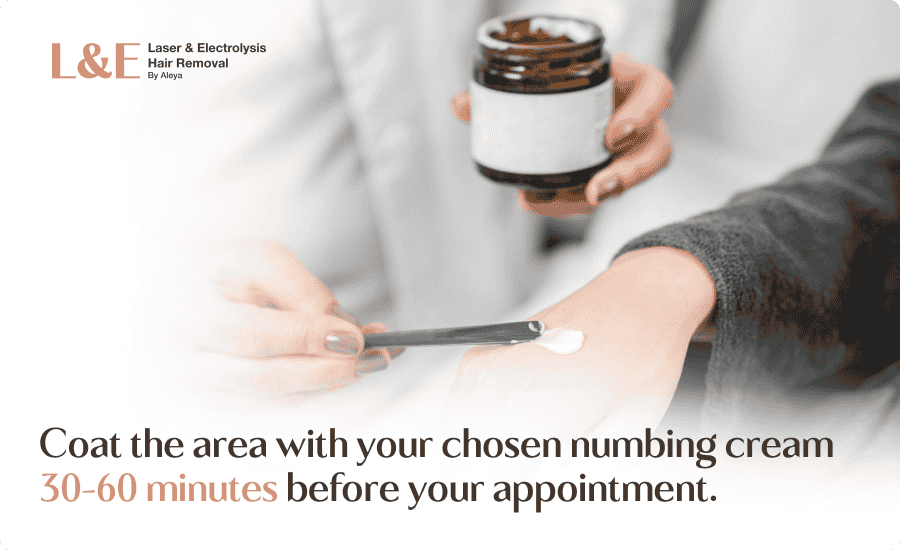
According to Aleya, prescription numbing creams like Emla work best when applied in a thick layer 30 to 60 minutes before treatment.
“Emla contains 2.5% lidocaine and 2.5% prilocaine, and prescription-strength formulations are generally more effective than over-the-counter options.”
Start with clean, dry, healthy skin, then cover the area with plastic cling film to help the cream really settle in and do its job.
When it’s time for your treatment, be sure to remove the cream completely.
As Aleya notes, “Of course, if you’re feeling any discomfort or have questions about how your skin is reacting, reach out to your doctor for guidance.”
Is Lidocaine Cream Safe for Laser Hair Removal?
Yes, lidocaine cream is generally safe and can make laser hair removal more comfortable, as long as it’s used correctly.
Numbing Cream for Laser Hair Removal: Safety Guidelines for Using Lidocaine Cream
A little lidocaine can go a long way toward taking the sting out of laser hair removal.
Follow these simple safety guidelines to keep your treatment seamless and worry-free.
1. Stick With the Right Lidocaine Concentration
When choosing a lidocaine cream, it’s best to stick with products that contain 4% to 5% lidocaine or less, which is the standard strength found in most over-the-counter numbing creams.
It can be tempting to reach for products marketed as “extra strength” or “maximum strength,” but stronger isn’t always better.
Unless your laser specialist specifically recommends it, avoid products with more than 5% lidocaine.
Higher strength and unapproved formulas can be absorbed into the body more easily, especially when applied too generously or over large areas.
2. Apply a Thin Layer
A little goes a long way.
Apply a thin, even layer of numbing cream for laser hair removal to the treatment area, and avoid using it on broken skin, rashes, cuts, or irritated areas.
3. Don’t Fall Into the “Plastic Wrap Trap”
Avoid covering lidocaine-treated skin with plastic wrap or other airtight coverings.
Doing so can cause your skin to absorb too much lidocaine, increasing the risk of side effects and toxicity.
Instead, apply the cream as directed and leave the area uncovered.
4. Don’t Overdo It
More cream won’t make you more numb.
Remember, your goal is to feel comfortable, not turning yourself into a science experiment!
Stick to the amount recommended on the product label and don’t use more than one 30-gram tube within a 24-hour period.
If you’re treating a larger area, check with your laser specialist before opening a second tube of numbing cream for laser hair removal.
5. Wipe It Off Before Your Appointment
Before your session starts, make sure all of the numbing cream has been wiped off.
After all, the cream has already done its job, now it’s time for the laser to do its thing!
Leaving cream on the skin can get in the way of treatment and might increase the risk of irritation or burns.
A clean treatment area helps your technician get the best results while keeping your skin happy.
How To Apply Numbing Cream Before Laser Hair Removal
A smooth laser hair removal experience starts before you even walk through the door.
Here’s how to make sure your numbing cream is ready to clock in before your session:
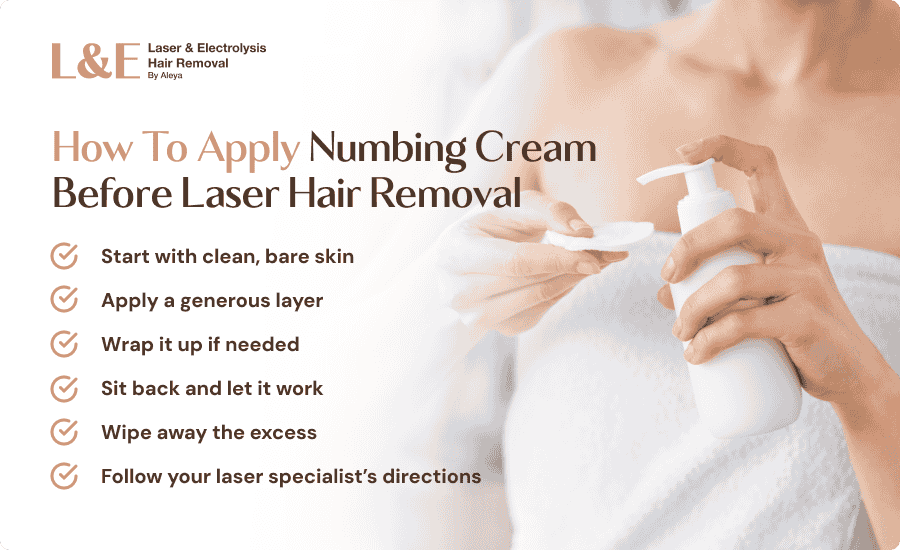
1. Start With Clean, Bare Skin
Cleanse the treatment area gently and pat it dry.
Skip products like makeup, lotion, deodorant, sunscreen, and oils, which can act like unwanted roadblocks and interfere with absorption.
2. Apply a Generous Layer
Don’t be shy here. Apply a thick, even layer of numbing cream for laser hair removal over the entire treatment area.
However, avoid rubbing it all the way in.
The goal is to leave a visible layer on the skin, so the anesthetic has time to do its job.
3. Wrap It Up if Needed
Some laser specialists might ask you to cover the area with plastic wrap after applying the cream.
This helps trap heat and can improve absorption, giving the numbing cream a better chance to work its magic before your appointment.
4. Sit Back and Let It Work
Now comes the easiest part: doing absolutely nothing.
Let the numbing cream for laser hair removal sit for 30 to 60 minutes or as directed.
Resist the urge to check on it, wipe it off, or poke at it.
5. Wipe Away the Excess
Before your laser hair removal session, give your skin a clean start.
Wipe away any leftover numbing cream for laser hair removal and do a quick, gentle cleanse.
6. Follow Your Laser Specialist’s Directions
Not all creams play by the same rules.
Some numbing cream for laser hair removal kick in quickly, others take their sweet time, and many come with their own application instructions.
When in doubt, trust the guidance from your laser specialist, as they know exactly how to help you get the most comfort out of your treatment.
Aleya’s tip: Set a timer when you apply your numbing cream. A “quick” scroll through social media can easily turn 30 minutes into… who knows?
Laser Hair Removal Pain Relief Tips
While laser hair removal is often described as a quick snap or zap, there are plenty of ways to make your session more comfortable.
Here are more ways to ensure a comfortable session on top of using numbing cream for laser hair removal:
1. Before Your Session
Grab a Razor, Not the Wax
Shave the treatment area about 24 hours before your appointment.
Leave the waxing, hair removal creams, and sugaring for another day.
Surface hair can absorb the laser’s energy, making treatments more uncomfortable and increasing the risk of irritation.
Let Numbing Cream for Laser Hair Removal Work Its Magic
Applying a topical anesthetic, such as an over-the-counter lidocaine cream, 30–45 minutes before your appointment can help take the edge off.
For extra absorption, some laser specialists recommend covering the area with plastic wrap.
Just be sure to remove it before your session.
Consider a Pre-Appointment Pain Reliever
With your laser specialist’s approval, take acetaminophen 30–45 minutes beforehand for added comfort.
Avoid aspirin and ibuprofen unless directed otherwise, as they might increase bruising.
Hydrate Like You Mean It
Your skin loves water, especially before laser treatments.
Well-hydrated skin tends to handle heat and irritation better, so keep that water bottle nearby.
Give the Sun a Rain Check
Tanned or sunburned skin is much more sensitive to laser treatments.
Avoid excessive sun exposure for at least two to four weeks before your appointment, and pause harsh exfoliants or retinoids on the treatment area for about a week.
2. During Your Session
Speak Up
Your laser technician wants you to be comfortable. If the treatment feels too intense, let them know.
They may be able to adjust the settings or pace of the session.
Take Advantage of Cooling Technology
Many modern laser systems come equipped with built-in cooling features that help soothe the skin during treatment.
If available, don’t be shy about asking for them.
Breathe Through It
It sounds simple, but it works. Slow, steady breathing can help your body relax and make those quick zaps feel a little less dramatic.
3. After Your Session
Cool Down
A cold compress, ice pack, or cool washcloth can help calm redness, swelling, and that mild sunburn-like sensation.
Keep Your Skin Happy and Hydrated
Reach for soothing products like pure aloe vera gel or a gentle, fragrance-free moisturizer to help replenish moisture and support healing.
Avoid Turning Up the Heat
For at least 24 hours, skip hot showers, saunas, steam rooms, and intense workouts.
Your skin has been through enough excitement for one day.
Dress for Comfort
Loose, breathable clothing can help prevent friction and irritation while your skin settles down.
Become Best Friends With Sunscreen
Freshly treated skin is more sensitive to sunlight, so protect it with a broad-spectrum sunscreen of at least SPF 30 and avoid direct sun exposure whenever possible.
Explore Laser Hair Removal Treatments at Laser by Aleya
They say beauty is pain, but at Laser by Aleya, we like to challenge that idea.
While laser hair removal can feel like a quick snap against the skin, it doesn’t have to be an experience you dread.
With the right preparation, including the proper use of numbing cream for laser hair removal, you can make your treatment more comfortable and definitely worth your while.
With our expert laser hair removal services, we use the Lumenis Diode LightSheer, a reliable laser hair removal device known for delivering effective results while keeping comfort and safety top of mind.
Numbing Cream for Laser Hair Removal: FAQs
How does numbing cream for laser hair removal work?
Numbing cream for laser hair removal helps reduce discomfort during laser hair removal by temporarily dulling the skin’s pain receptors.
Ingredients such as lidocaine and prilocaine work beneath the skin’s surface to interrupt the nerve signals that would normally register pain.
Is the strongest numbing cream for laser hair removal considered the best one?
No, the strongest numbing cream isn’t necessarily the best choice.
While prescription-strength formulas are available, most people can achieve effective pain relief with a standard over-the-counter lidocaine cream containing 4% to 5% lidocaine.
How bad does laser hair removal hurt?
Laser hair removal pain level is often describe as a quick snap against the skin, similar to a rubber band being lightly flicked against the treatment area.
The sensation lasts only a fraction of a second with each pulse and disappears almost as quickly as it arrives.
Can I undergo laser hair removal without numbing cream?
While we understand that some individuals like to live on the edge, numbing cream isn’t a requirement for laser hair removal.
Many clients comfortably undergo treatment without it, thanks to modern laser technology with built-in cooling technologies (like chilled air or dynamic cooling devices).


