PMOS Hair Removal: Is Electrolysis Right For You?
PMOS Hair Removal: Key Takeaways
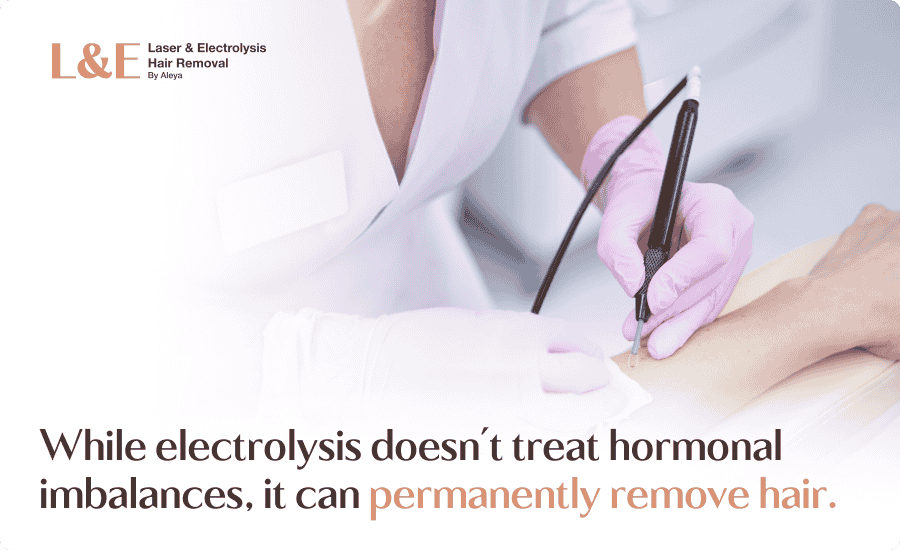
- While electrolysis hair removal can’t treat the hormonal cause of excess hair growth, it can permanently remove unwanted hair
- Consider electrolysis for PMOS hair removal if you have lighter hair and darker skin
- Insurance coverage is never guaranteed for PMOS hair removal, but it’s still worth checking with your doctor
Acne that refuses to budge, unwanted facial hair, unexplained weight gain, and fertility challenges.
PMOS (formerly known as PCOS) can affect far more than your physical health.
For many women, it can chip away at confidence and leave them feeling disconnected from the person they once recognized in the mirror.
If this sounds familiar, you’re far from alone.
PMOS is thought to affect around 1 in 8 women worldwide, making it one of the most common hormonal conditions affecting women today.
When hormonal hair growth keeps coming back, many women begin searching for effective PMOS hair removal solutions that offer more than temporary results.
In this guide, we will:
- Share how electrolysis hair removal works
- Explore when electrolysis might be the better choice for PMOS
- Compare the pros and cons of electrolysis and laser hair removal
- See how electrolysis can support long-term PMOS hair removal and help you spend less time worrying about unwanted hair
How Does Electrolysis Hair Removal Work?
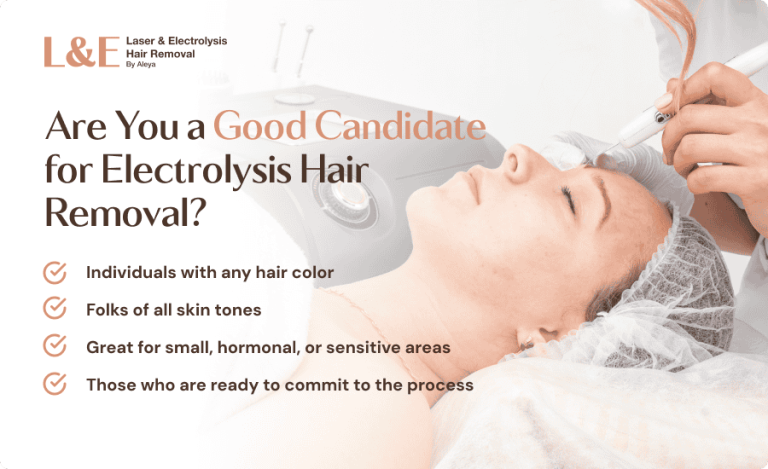
Electrolysis hair removal works by inserting a very fine probe into each individual hair follicle.
A small electrical current is then delivered to the follicle, targeting the cells responsible for hair growth.
Once those cells are destroyed, the hair is gently removed, and the follicle can no longer produce new hair.
This makes electrolysis the only FDA-recognized method of permanent hair removal.
While it can’t address the hormonal imbalance that causes excess hair growth, it can permanently remove existing unwanted hair and help manage common PMOS related concerns.
This makes it a popular PMOS hair removal option for facial hair on the upper lip, chin, sideburns, and jawline.
When To Choose Electrolysis for PMOS
Living with polyendocrine metabolic ovarian syndrome (PMOS) can make unwanted hair feel like a constant battle.
You might find yourself shaving every day, reaching for the tweezers before sprinting out the door, or scheduling waxing appointments just to keep up with new hair growth.
The good news is that you don’t have to rely on temporary fixes forever.
While electrolysis won’t fix the hormonal imbalances behind PMOS, it can help you feel more in control of unwanted hair and support your long-term PMOS hair removal goals.
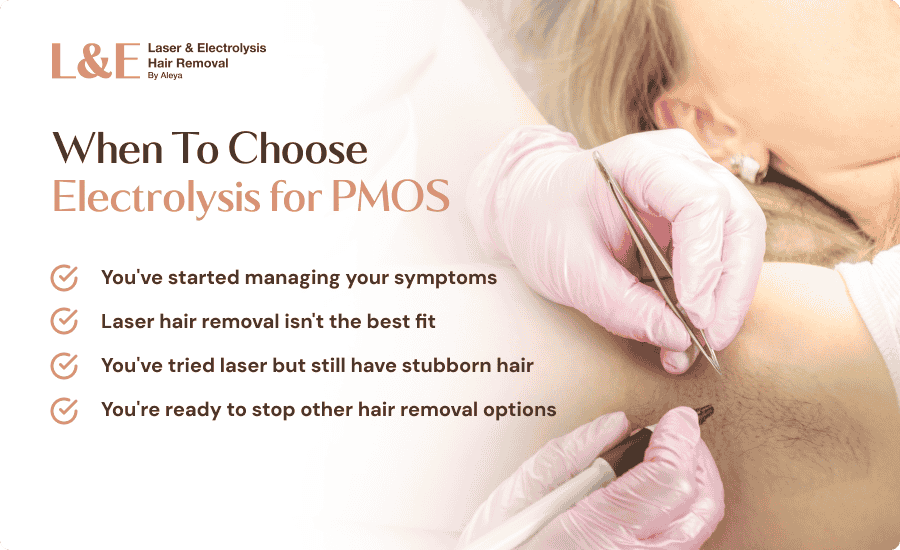
For those exploring PMOS hair removal, here are a few signs it might be the right choice:
1. You’ve Started Managing Your PMOS Symptoms
PMOS-related hair growth is often fueled by hormonal imbalances.
While electrolysis can permanently remove existing hairs, new hairs may continue to develop if hormones remain uncontrolled.
That’s why many laser specialists recommend starting electrolysis after you’ve begun managing your symptoms with your healthcare team.
Once your hormones are more stable, it’s easier to stay ahead of new growth and get the most from your PMOS hair removal treatments.
2. Laser Hair Removal Isn’t the Best Fit
Laser hair removal works best when there’s plenty of pigment for the laser to target.
So, if your unwanted hairs are platinum blonde, silver, strawberry blonde, or scarlet red hair, the laser hair removal device might have a hard time “seeing” them.
Electrolysis doesn’t have that problem.
It treats the follicle directly, which means it can remove hair strands of any color, from dark and coarse to fine and fair.
3. You’ve Tried Laser but Still Have Stubborn Hair
For many people with PMOS, the most stubborn hairs seem to have a mind of their own, especially around the chin, upper lip, cheeks, and jawline.
You might see great results from laser hair removal, only to find a few fine or persistent hairs hanging on.
In these cases, electrolysis can help complete your PMOS hair removal journey by targeting the hairs laser treatments might miss.
4. You’re Ready To Stop Shaving, Waxing, and Plucking
Let’s be honest: constantly chasing unwanted hair can feel like a part-time job you never signed up for.
If you’re tired of reaching for the razor every morning, scheduling waxing appointments every few weeks, or keeping tweezers within arm’s reach, electrolysis for PMOS can offer a welcome change.
Does Insurance Cover PMOS Hair Removal?
Insurance usually does not cover PMOS hair removal, including laser hair removal or electrolysis, because most plans classify it as cosmetic.
There are rare exceptions, though.
If PMOS-related hair growth is causing concerns, such as recurring folliculitis, your endocrinologist or dermatologist can provide documentation explaining why treatment is necessary.
Laser Hair Removal vs. Electrolysis for PMOS
If you’ve spent any time researching PMOS hair removal, you’ve probably found yourself caught between two popular options: electrolysis and laser hair removal.
Both options minimize unwanted hair, but they go about it in very different ways.
Let’s put them side by side:
| Factor | Electrolysis Hair Removal | Laser Hair Removal |
| Results | Permanent hair removal | Long-term hair reduction |
| Hair color | Works on all hair colors | Works best on dark hair |
| Skin tone | Safe for all skin tones | Most skin tones can be treated with the right laser |
| Ideal for | Stubborn facial hair and light-colored hairs | Larger areas with dark, coarse hair |
| Treatment speed | Slower, treats one hair at a time | Faster, treats many hairs at once |
| Hair growth | Great for persistent hormonal hairs | Can reduce growth but may require touch-ups |
| Maintenance | No regrowth from treated follicles | Maintenance sessions are often needed |
Electrolysis and PMOS: What To Expect
When it comes to electrolysis and PMOS, patience is important.
Electrolysis isn’t a quick fix, but for many people with PMOS, it’s one of the few hair removal methods that feels like real progress.
Some hair strands will disappear quickly, while others will take longer to clear.
With PMOS, hair growth doesn’t always follow a predictable pattern, and new hair strands can emerge as hormones fluctuate.
Even so, the encouraging part is that once a follicle has been successfully treated, it’s done growing hair for good.
Over time, you’ll likely notice fewer stray chin hairs, less time spent in front of the magnifying mirror, and fewer moments of wondering whether anyone else can see that one stubborn hair you’re fixated on.
The process requires patience, but many clients find that each PMOS hair removal session brings a little more freedom and a lot less daily maintenance.
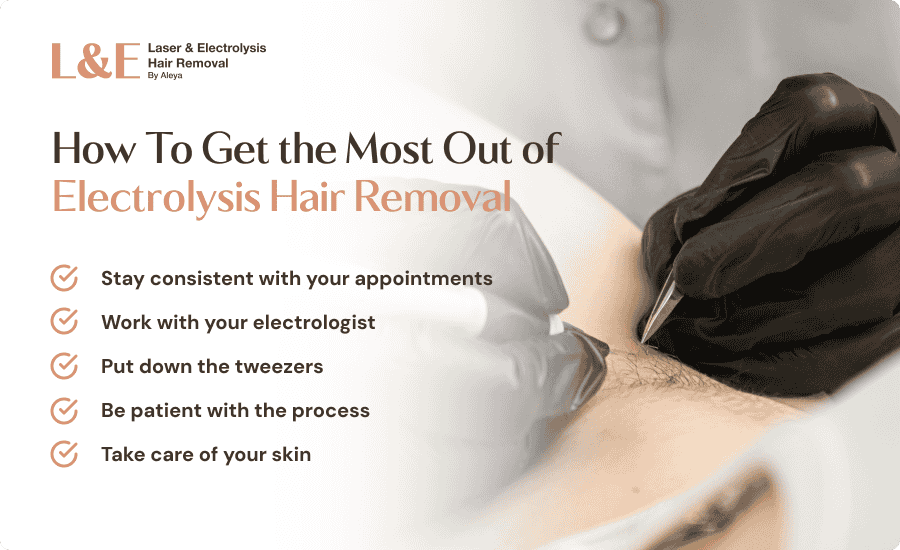
5 Ways To Get the Most Out of Electrolysis If You Have PMOS
Electrolysis can do a lot of the heavy lifting, but a few smart habits on your end can make the journey smoother.
If you’re dealing with PMOS-related hair growth, these tips can help you stay on track and avoid common setbacks:
1. Stay Consistent With Your Appointments
It can be tempting to hit pause once you start seeing fewer hairs, but sticking to your treatment schedule can make a big difference.
Regular appointments allow your electrologist to get hair strands during their anagen phase, helping you reach your goals sooner.
2. Work With Your Electrologist
Electrolysis permanently removes treated hairs, but PMOS can continue to trigger new hair growth.
Managing your hormone levels with the help of a healthcare provider can help decrease new growth and make your results easier to maintain.
3. Put Down the Tweezers
We know, we know, spotting a rogue chin hair can feel like a personal challenge.
But before you reach for the tweezers, take a deep breath and step away from the mirror.
Tweezing, waxing, and threading remove the hair from the follicle, making it harder for your electrologist to treat.
If you need a quick fix between appointments, shaving is usually the better option.
4. Be Patient With the Process
PMOS-related hair growth doesn’t always follow a predictable schedule. Some hair strands respond quickly, while others take more time.
Trust the process and focus on long-term progress rather than week-to-week changes.
5. Take Care of Your Skin
Think of aftercare as a little thank-you note to your skin.
Stay hydrated, follow your electrologist’s instructions, and resist the urge to pick, poke, or inspect every tiny bump in the mirror.
A little TLC now can help keep your skin calm, comfortable, and ready for your next appointment.
Electrolysis at Laser by Aleya: A Smarter Way To Manage PMOS-Related Hair Growth
PMOS-related hair growth doesn’t always play by the rules. Just when you think you’ve gotten ahead of it, another stubborn hair seems to appear out of nowhere.
While electrolysis can’t negotiate with your hormones, it can permanently eliminate unwanted hair.
This makes it a go-to treatment for people looking for long-lasting PMOS hair removal.
The result? Less time spent chasing regrowth and more time enjoying smooth skin.
At Laser by Aleya, we work with clients to create a treatment plan that fits their unique hair growth patterns.
Most clients find that as treatments progress, stubborn hair becomes less of a daily nuisance and more of a distant memory.
Polyendocrine Metabolic Ovarian Syndrome Electrolysis: FAQs
What is PMOS? Is it the same as PCOS?
Polyendocrine metabolic ovarian syndrome (PMOS), formerly called polycystic ovary syndrome (PCOS), is much more than its original name suggested.
In fact, many people diagnosed with the condition don’t have ovarian cysts at all.
PMOS is a hormonal and metabolic condition that can affect more than your reproductive health.
It can contribute to symptoms like unwanted hair growth, acne, weight changes, and fertility challenges.
At its core, it often involves insulin resistance and higher-than-normal androgen levels, which can contribute to the symptoms many women experience.
Will electrolysis cure PMOS-related hair growth?
No. Electrolysis can permanently remove treated hairs, but it doesn’t treat the hormonal imbalances behind PMOS.
New hair strands might still develop over time, especially if hormone levels continue to fluctuate.
However, once a follicle has been successfully treated, it won’t produce hair again.
How long does electrolysis take for PMOS facial hair?
It usually takes one to two years of consistent treatment. However, keep in mind that PMOS-related hair growth can be unpredictable, so treatment often takes patience.

![How Long Does Electrolysis Take to Work? [Timeline & FAQs]](https://www.laserbyaleya.com/wp-content/uploads/2014/04/how-long-does-electrolysis-take-to-work-hero-image-768x469.png)