Sun Exposure Before Laser Hair Removal: Expert Tips & FAQs
Sun Exposure Before Laser Hair Removal: Key Takeaways
- Tanning before laser hair removal adds extra melanin to your skin, making it more difficult for the laser to distinguish between skin and hair
- If your skin is sunburned, recently tanned, or even mildly irritated, your laser specialist might need to reschedule your session
- To keep your skin happy and your results on point, stay out of direct rays for at least two weeks before and after your laser session
Before your laser hair removal session, there’s one thing that could quietly sabotage your results, and it’s not what most people expect.
Even just a weekend of unprotected sun exposure can make your skin more sensitive, increase the risk of side effects, and reduce how effectively the laser works.
Too much ultraviolet (UV) radiation doesn’t just damage skin, as it can also interfere with your treatment and safety.
To help you get the best results and avoid common mistakes, we’ve put together everything you need to know.
By the end of this guide, you will:
- Understand exactly why sun exposure affects your laser results and what’s at risk if you skip protection
- Get expert-approved tips to keep your skin safe before, during, and after each laser session
- Discover how Laser by Aleya makes your treatment safe, comfortable, and tailored just for you
Why Does Sun Exposure Matter Before Laser Hair Removal?
Whether you’re gearing up for your first session or already deep into your laser hair removal journey, here’s why keeping your skin out of the sun is a great idea.
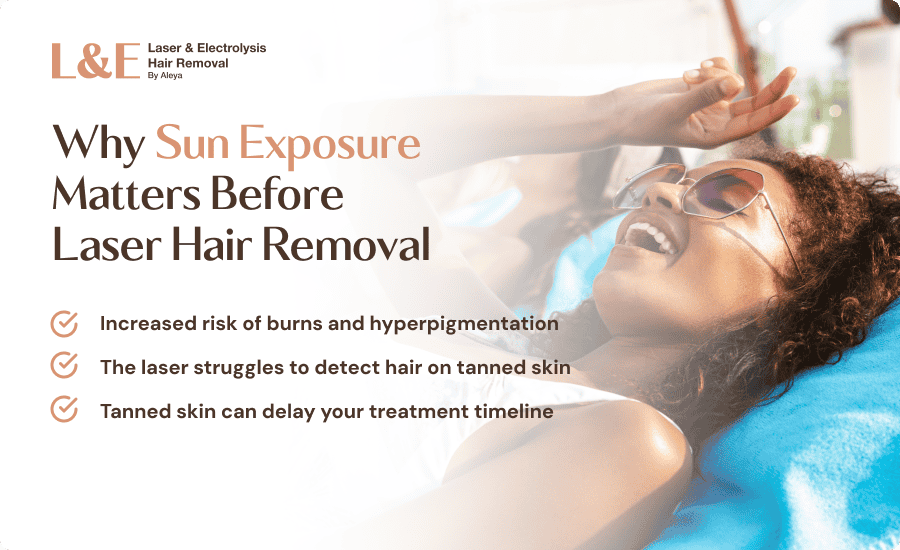
1. Increased Risk of Burns and Hyperpigmentation
Laser hair removal works by targeting melanin (the pigment in your hair) with concentrated light.
But when your skin is tanned or sunburned, there’s more melanin in the skin itself, not just in the hair.
This can confuse the laser and result in:
- Blisters
- Dark spots (hyperpigmentation)
- Light spots (hypopigmentation)
Tanned skin increases your risk of side effects significantly, even with advanced laser hair removal machines, like diode or Nd:YAG lasers designed for deeper skin tones.
2. The Laser Struggles To Detect Hair on Tanned or Sun-Lightened Skin
Sun exposure can also lighten the hair shaft (especially in naturally lighter-haired individuals), making it more difficult for the laser to detect the contrast between hair and skin.
For the best results, you’ll want high contrast: darker hair against lighter, untanned skin.
3. Tanned Skin Can Delay Your Treatment Timeline
If you arrive at your appointment with a recent tan, even from a few hours in the sun, your laser specialist might need to reschedule your session to avoid complications.
Want to avoid burns and patchy results?
- Avoid sun exposure and tanning beds for at least two weeks before your session
This gives your skin time to return to its natural tone and reduces risk during the treatment.
How Long Should You Avoid the Sun Before Laser Hair Removal?
After laser hair removal, it’s best to steer clear of direct sun for at least two weeks .
Your skin needs time to heal, and too much sun too soon can lead to irritation, burns, or dark spots that stick around longer than you’d like.
Sun Exposure After Laser Hair Removal: What to Expect
After a laser hair removal session, your skin is in a vulnerable state.
In fact, the Institute of Medical Physics explains that the laser creates a controlled thermal impact, temporarily disrupting your skin’s barrier and making it more reactive to UV rays.
That’s why even brief sun exposure can lead to redness, pigmentation changes, or slower healing.
Here’s what to expect if you head into the sun too soon:
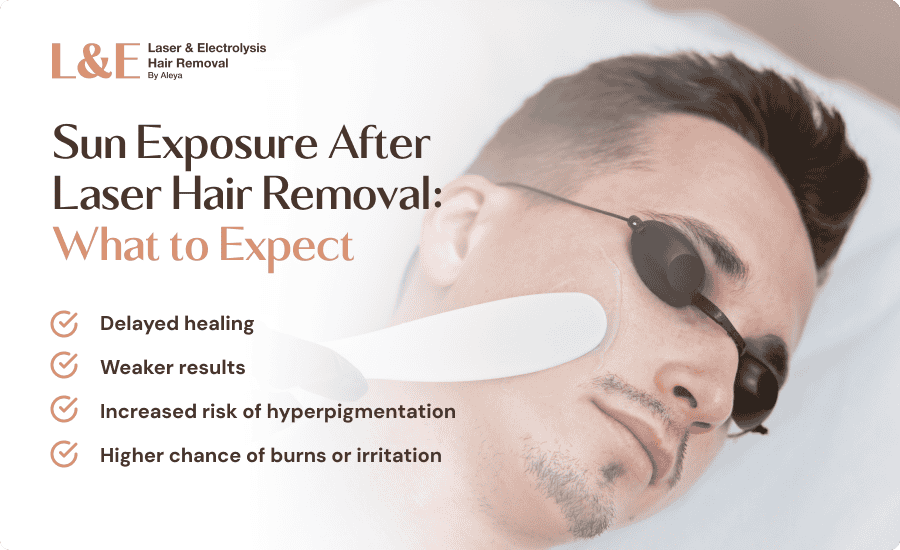
1. Increased Risk of Hyperpigmentation
Post-laser skin is more prone to developing dark spots, especially in areas with higher melanin or if you already have a tan.
This can result in uneven skin tone that takes weeks or months to fade.
2. Higher Chance of Burns or Irritation
The laser already generates heat.
Add UV rays into the mix and your skin might throw a full-on tantrum: think redness, swelling, and maybe even blisters.
Areas like your face, legs, and bikini line are especially sensitive, so skipping that beach day is totally worth it.
3. Delayed Healing
Your skin needs a little R&R post-treatment. But UV exposure? That’s like canceling its spa day.
Too much sun can slow down the healing process and make your skin itchy, flaky, or irritated.
4. Weaker Results
Laser hair removal is a team effort between you and your skin.
If your skin’s stressed out from sun damage, it won’t respond as well to the treatment.
In some cases, your next session might even need to be postponed, and who wants to drag the process out longer than necessary?
Laser Hair Removal and Tanning: Why They’re a Risky Combo
Tanning, whether from the sun, a bed, or even a bottle, might seem harmless, but when it comes to laser hair removal, it can seriously mess with your results and your skin’s safety.
1. The Laser Can’t Tell What’s Hair and What’s Tan
Laser hair removal targets melanin in the hair follicle.
But when your skin is tanned, it contains more melanin too, making it harder for the laser to distinguish between skin and hair.
This increases the risk of burns, blisters, and discoloration.
2. Tanned Skin Is More Sensitive
Even if your tan looks great, it’s a sign that your skin has already been damaged by UV exposure, which also makes it more sensitive and prone to irritation.
When you combine that with laser heat, your skin could respond with redness, swelling, or even peeling, especially in sensitive areas like the face or bikini line.
3. Spray Tans and Self-Tanners Aren’t Safe Either
Even fake tans are a no-no.
Products that tint your skin can block the laser’s ability to detect the hair follicle, making treatments less effective and increasing your chances of side effects.
How To Protect Your Skin From the Sun Between Laser Hair Removal Sessions
Laser hair removal leaves your skin a little extra sun-sensitive, so skipping the SPF isn’t an option; it’s a must.
Whether you’re just getting started or cruising through your sessions, these sun-smart tips will help you dodge irritation, dark spots, and any post-laser drama.
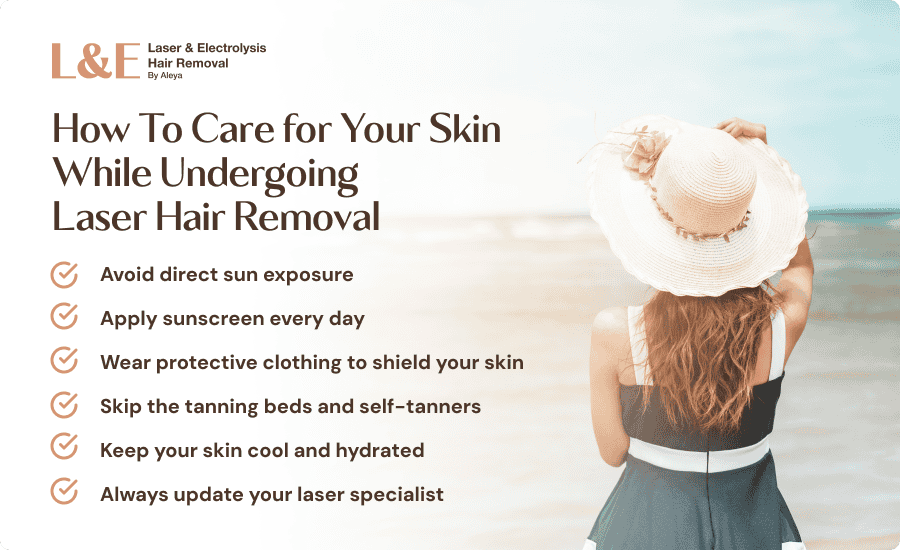
1. Avoid Direct Sun Exposure for at Least Two Weeks
Your skin needs a little time to chill after each laser session.
UV rays can increase your risk of burns, irritation, and dark spots.
Try to stay out of direct sunlight for at least two weeks before and after your appointment.
If you do need to be outside, limit your time during peak hours (10 a.m. to 4 p.m.) when the sun is strongest.
2. Apply Sunscreen Every Day
Use a broad-spectrum SPF 30 or higher daily, even on cloudy or cold days.
Reapply every two hours when you’re outdoors, and more often if you’re sweating or swimming.
Look for mineral formulas with zinc oxide or titanium dioxide, as they’re gentle, effective, and laser-skin-friendly.
3. Wear Protective Clothing To Shield Your Skin
Can’t avoid being out in the sun?
Dress smart. Think long sleeves, wide-brimmed hats, and UV-blocking fabrics can go a long way in protecting treated areas.
If you’ve had laser on your legs, lightweight pants or a breezy maxi skirt are perfect for staying covered and cool.
4. Skip the Tanning Beds and Self-Tanners
Even a faux glow can throw off your results.
Tanning boosts the melanin in your skin, making it harder for the laser to target hair safely and effectively.
That extra pigment ups your risk of burns, irritation, and patchy results.
To keep things smooth and safe, it’s best to stay au naturel until your treatment series is done.
5. Ensure Your Skin Is Cool and Hydrated
Post-laser skin might feel warm or slightly irritated, which is completely normal.
Soothe the area with aloe vera or a gentle, fragrance-free moisturizer to calm inflammation and support healing.
Don’t forget to stay hydrated because drinking plenty of water helps your skin recover faster and keeps it resilient between sessions.
6. Keep Your Laser Specialist in the Loop
Been out in the sun? Let your specialist know, even if it was just a weekend at the park or a quick beach walk.
They can evaluate your skin and adjust your treatment plan if needed to keep you safe and your results on track.
Find Reliable Laser Hair Removal Services at Laser by Aleya
When it comes to laser hair removal, choosing the right provider is just as important as the treatment itself.
At Laser by Aleya, you’ll get expert, personalized care designed for your unique skin tone, hair type, and comfort level, with a strong focus on safety and long-term results.
We leverage advanced laser technology that works effectively across a wide range of skin tones, and we take the time to walk you through everything from prep to aftercare, including how to protect your skin from the sun.
No matter what area you’re treating, you can count on Aleya to keep your experience safe, seamless, and stress-free.
Sun Exposure Before Laser Hair Removal: FAQs
How long after laser hair removal can you be in the sun?
Stay out of the sun for at least two weeks to give your skin time to heal and reduce the risk of burns, dark spots, or irritation from UV exposure.
Are spray tans bad for you?
Spray tans are safer than UV tanning because they skip harmful rays. However, they’re not risk-free.
DHA, the active ingredient in spray tans, is safe on skin but not fully tested for inhalation.
That’s why the FDA recommends protecting your eyes, lips, and mucous membranes during application.
How long do spray tans last?
A spray tan usually lasts about five to 10 days, depending on your skin type, how well you care for it, and how dark the tan is.
Lighter shades fade faster, while deeper ones can stick around a bit longer.
To make it last, prep your skin properly, use sulfate-free soaps, moisturize daily, and skip long hot showers and chlorine.
Can I get laser hair removal if I’ve been in the sun recently?
It depends on how recent it is.
If you’ve had significant sun exposure in the last one to two weeks, especially if you’re tanned or sunburned, it’s best to postpone your session.
How should I protect my skin before my laser hair removal appointment?
Avoid sunbathing and tanning beds for at least two weeks before your session to keep your skin at its natural tone.
When you’re outside, wear SPF 30 or higher on any areas being treated and cover up with protective clothing to minimize sun exposure.


