Does Insurance Cover Laser Hair Removal? [Costs & FAQs]
![Does Insurance Cover Laser Hair Removal? [Costs & FAQs]](https://www.laserbyaleya.com/wp-content/uploads/2025/10/does-insurance-cover-laser-hair-removal-hero-image.png)
Does Insurance Cover Laser Hair Removal? Key Takeaways
- In most cases, no, laser hair removal isn’t covered by insurance because it’s considered a cosmetic procedure
- If your laser hair removal treatment is tied to a health issue, there’s a shot your insurance could help out
- Some insurance plans might cover it with a doctor’s note or reimburse you if you submit a receipt
Are you willing to splurge a little for smooth skin and zero razor burn?
Well, you’re not alone because laser lovers spent over $205 million in 2024 to keep unwanted hair at bay.
If insurance has been on your mind, you’re probably wondering, “Does insurance cover laser hair removal?”
While we hate to burst your bubble, laser hair removal isn’t covered by insurance if it’s only for cosmetic reasons.
You’ll need to have a medical condition, like hirsutism, to even be considered for coverage.
And even then, it depends on whether your doctor can make a strong case that laser hair removal is part of your treatment plan.
Not sure if you’d qualify for coverage? By the end of this guide, you will learn:
- Why insurance usually doesn’t cover laser hair removal
- Which medical conditions might be eligible
- How to get laser hair removal covered by insurance
- What affordable, expert care looks like at Laser by Aleya
Laser Hair Removal Costs at Laser by Aleya
Before we answer your question, “Does insurance cover laser hair removal?” and get into the insurance side of things, here’s the lowdown on laser hair removal costs at Laser by Aleya.
| Treatment Area | Price |
| Upper Lip | $30 |
| Half Face | $60 |
| Full Face | $120 |
| Underarms | $55 |
| Full Arms | $175 |
| Half Arms | $90 |
| Full Legs | $175 |
| Half Legs | $100 |
| Full Back | $100 |
| Half Back | $60 |
| Full Chest | $100 |
| Happy Trail | $45 |
| Backside (for women) | $100 |
| Brazilian (for women) | $75 |
| Bikini (for women) | $55 |
| Full Body | $500 |
Why Insurance Typically Doesn’t Cover Laser Hair Removal Cost
Laser hair removal can be life changing.
Imagine never stressing about last-minute shaving before a beach day or dealing with razor bumps ever again.
But when it comes to insurance, most people find themselves footing the bill.
Here’s why:
1. It’s Seen as Cosmetic
Insurance usually only covers treatments that are needed for medical reasons.
This includes removing hair caused by hormonal conditions like PCOS or treating skin irritation from recurring ingrown hairs.
Since it’s mostly for appearance and convenience, laser hair removal isn’t covered.
2. It’s Not the First Option
If you’re dealing with razor burn, ingrown hairs, or irritation, insurance companies usually expect you to try simpler fixes first.
This includes creams or antibiotics, before moving on to something longer lasting like laser treatment.
3. There Are Cheaper Alternatives
Since you can still shave, wax, or use depilatory creams at home, insurers don’t consider laser hair removal essential, even if it’s way more effective and convenient in the long run.

Medical Conditions That Might Qualify for Insurance Coverage
Because it’s seen as cosmetic, laser hair removal isn’t something most insurance plans will pay for.
That said, many people still wonder, “Does insurance ever cover laser hair removal?”
In some situations, if there’s a valid medical cause, your insurance might help cover part of the expense.
1. Polycystic Ovary Syndrome (PCOS)
Polycystic ovary syndrome (PCOS) is a common hormone-related condition that can cause excess hair growth on the face or body.
If unwanted hair is taking a toll on your confidence or daily life, your OB-GYN or endocrinologist might suggest laser hair removal as part of your care.
In some situations, insurance could help with the cost, particularly if laser treatment is paired with other therapies, like hormone therapy.
2. Hirsutism
Hirsutism isn’t a condition itself, as it’s a symptom that usually points to a hormone imbalance, like PCOS or adrenal issues.
If you’re dealing with dark, coarse hair in areas like the chin, upper lip, or chest, and it’s been diagnosed by a medical provider, laser hair removal might be considered a necessary treatment rather than a cosmetic choice.
With the right documentation, some insurance plans will consider partial coverage.
3. Chronic Ingrown Hairs
Laser hair removal can be more than a beauty treatment if shaving or waxing frequently causes:
- Ingrown hairs
- Painful bumps
If you’re constantly battling irritation or painful bumps, your dermatologist may recommend laser hair removal to give your skin a break.
With proper paperwork, your insurance might cover part of the cost.
4. Gender-Affirming Care
For many trans and non-binary people, reducing facial or body hair helps their outer appearance better reflect who they know themselves to be.
(Read more about transgender laser hair removal here if you’re curious!)
When included in a transition-related treatment plan, some insurance providers will offer coverage, especially those that follow World Professional Association for Transgender Health (WPATH) guidelines.
Bonus tip: Does insurance cover laser hair removal in my state? If you’re in New York, the answer might be yes.
State law requires insurance companies to cover treatment for gender dysphoria, which can include hormone therapy and gender-affirming procedures like laser hair removal.

How To Get Laser Hair Removal Covered by Insurance
Are you still wondering “Does insurance cover laser hair removal?”
Getting insurance to pay for laser hair removal is a long shot, but not a lost cause! Here’s how to tilt the odds in your favor.
1. Go To a Specialist Who Understands Your Condition
Talk to a specialist who understands what you’re going through, like a dermatologist, OB-GYN, or an endocrinologist.
They can help figure out what’s behind the hair growth and whether laser is a fit.
They’ll be able to diagnose the issue and document why laser hair removal should be considered part of your medical treatment plan.
Pro tip: Ask your doctor to include details about how the hair growth affects your physical or emotional well-being.
That could mean:
- Chronic skin irritation
- Ingrown hairs
2. Request a Doctor’s Letter
This letter is the heart of your insurance claim. It should clearly explain:
- Your diagnosis (like PCOS, hirsutism, or recurring folliculitis)
- The treatments you’ve already tried (such as antibiotics, topicals, or shaving-related care)
- Why laser hair removal is medically necessary in your case
The more detailed and medically grounded this letter is, the better your chances of approval.
3. Contact Your Insurance Provider Directly
Your next step is to contact your insurance provider. Here are some key questions to ask:
- “Does my plan allow for exceptions on medically necessary laser hair removal?”
- “Do I need pre-authorization before starting treatment?”
- “Can you walk me through what paperwork you’ll need from me?”
Write down the representative’s name, the date of the call, and get a reference number; this will help later if you need to appeal.
4. Submit All Documents
Once you have everything together, submit your documents to the insurance company.
This should include:
- Your doctor’s letter or sign-off
- Any relevant medical records or diagnosis codes
- Photos of the affected area (if requested or helpful)
- A detailed treatment plan from your provider
What To Do if Insurance Won’t Cover Laser Hair Removal
So, your insurance said no. Frustrating? Definitely. The end of the road? Not at all.
If laser hair removal is something you truly need, whether for comfort, confidence, or a medical reason, there are still some solid ways to make it happen without breaking the bank.
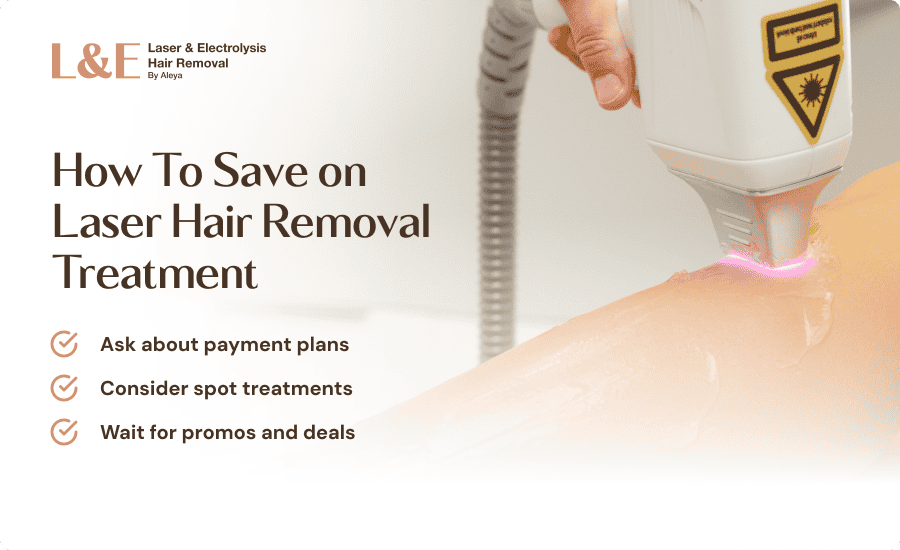
1. Ask About Payment Plans
Many clinics (like ours!) offer pay-per-session treatments, so you only pay when you come in for a procedure.
This makes laser hair removal way more doable, especially if you’re treating a larger area like legs or full face.
2. Consider Spot Treatments
If you’re not ready to commit to multiple areas, focus on the one that bothers you most.
Areas like the upper lip, chin, or underarms are smaller, need fewer sessions, and tend to be more affordable per treatment area.
3. Keep an Eye Out for Promos
Laser hair removal clinics often run seasonal specials, student discounts, bundle deals, or offer membership perks that can lower your cost per session.
If you’re planning to stick with it long-term, these can add up to big savings.
Find Expert Laser Hair Removal That Doesn’t Break the Bank at Laser by Aleya
If you still can’t help but wonder, “Does insurance cover laser hair removal?” You’re not alone.
Since it’s considered a cosmetic procedure, most insurance plans won’t cover it.
Just because insurance won’t chip in, doesn’t mean you have to settle for stubble forever.
At Laser by Aleya, we believe expert care shouldn’t feel out of reach. That’s why we:
- Keep our pricing transparent
- Offer flexible payment options
- Create treatment plans that actually fit your budget
Whether you’re focusing on your face, underarms, legs, or other treatment areas, you’ll always know the cost upfront.
No surprise fees, no pressure, and no overselling.
If you’re wondering about the tech you’re paying for, we use the Lumenis Diode LightSheer.
It is a powerful, FDA-cleared laser that’s known for being safe, effective, and surprisingly comfortable.
This diode laser works on a wide range of skin tones and is gentle enough for sensitive areas, all while delivering real, long-lasting results.
Just remember, when you book with Aleya, you’re getting more than just laser hair removal.
You’re getting personalized care, support at every step, and results that leave you feeling confident in your skin.
Does Insurance Cover Laser Hair Removal? FAQs
Does insurance cover laser hair removal?
Unfortunately, insurance usually won’t cover laser hair removal because it’s not considered a medically necessary procedure.
Does insurance cover laser hair removal if it’s recommended by a doctor?
In some cases, yes, but it depends on your specific insurance plan.
Keep in mind that coverage is rare, but not impossible, especially with proper documentation and a diagnosis that demonstrates medical need.
Does insurance cover laser hair removal when excessive hair growth is causing emotional distress?
Generally, no, but it’s worth exploring if you have supporting documentation from a healthcare provider.
Does insurance cover laser hair removal in all circumstances?
No, not always.
Most insurance plans won’t cover laser hair removal purely for cosmetic reasons, like wanting smoother skin or saying goodbye to your razor.
But there are exceptions.
If the treatment is part of managing a medical condition like PCOS, hirsutism, or chronic folliculitis, you might be able to get coverage with the right documentation from your doctor.
Still, it’s best to contact your provider directly and ask, “Does insurance cover laser hair removal if it’s medically necessary?”
How much does laser hair removal cost out of pocket?
It depends on the area you’re treating and how many sessions you’ll need.
Because most plans don’t include it, “Does insurance cover laser hair removal?” is one of the most common questions we hear from clients preparing to invest in smoother skin.
At Laser by Aleya, smaller areas like the upper lip usually start around $30 to $60 per session.
Larger areas like legs can range from $100 to $175.
I want to save up for my laser hair removal treatment. How many sessions will I most likely go through?
It usually takes six to eight sessions to get the smooth, lasting results you’re looking for.
And since “Does insurance cover laser hair removal?” is usually answered with a “no,” planning ahead for multiple sessions is key.
Do you offer payment plans or financing options?
We do! At Laser by Aleya, we offer flexible payment options to make your treatments more manageable.
Join our newsletter by scrolling to the bottom of our page.
You’ll get special offers, expert tips, and a little extra love from us delivered right to your inbox.


