Laser Hair Removal Scars Explained [+ Ingrown Hair Scars FAQs]
![Laser Hair Removal Scars Explained [+ Ingrown Hair Scars FAQs]](https://www.laserbyaleya.com/wp-content/uploads/2017/12/laser-hair-removal-scars-hero-image.png)
Can Laser Hair Removal Cause Scarring? Key Takeaways
- Scarring from laser hair removal is rare, but it can happen, especially if the treatment is done incorrectly or your skin isn’t properly prepped
- Ingrown hair scars usually happen when hair removal goes wrong or when you pick at ingrown hairs instead of letting them heal
- Your risk of scarring goes up if you have a recent tan, sunburn, or tattoos in the treatment area
Believe it or not, around 100 million people the world get scars from surgery or skin trauma.
If you’ve heard horror stories about hair removal gone wrong, chances are they involved laser hair removal scars caused by improper laser settings.
After reading this guide, you’ll be able to:
- Spot the signs of ingrown hair scars and learn what sets them apart from other skin marks
- Identify the top five risk factors that can lead to scarring from ingrown hairs or laser treatments
- Feel confident choosing safe, expert laser hair removal services, with personalized care from Aleya herself
What Laser Hair Removal or Ingrown Hair Scars Look Like
Ingrown hair scars and laser hair removal scars tend to show up after your skin’s been through the wringer, think constant shaving, tweezing, waxing, and sometimes even laser hair removal.
When a hair curls back into the skin instead of growing out, it can lead to a painful bump.
And if that bump becomes inflamed or infected, it may leave behind a scar.
If you’re dealing with ingrown hair scars, they might show up as:
- Flat or slightly raised dark spots: Especially common in people with medium to dark skin tones, these scars often look like leftover hyperpigmentation.
- Pitted or textured marks: If the ingrown hair caused a deep infection or cyst, it might leave behind a dent or small crater in the skin.
- Thickened or keloid-like scars: In people prone to keloids, repeated trauma from ingrown hairs can cause raised, firm scars that grow beyond the original irritation.
- Red or pink discoloration: On lighter skin, scars might appear pink or red, especially shortly after healing.
Ingrown Hair Scars and Laser Hair Removal Scars: 5 Factors That Raise Your Risk
Laser hair removal is generally safe, but there are a few instances where the risk of scarring increases.
If you fall into one of these categories, it doesn’t mean you can’t get laser; it just means you’ll want to be extra cautious and work with an experienced laser specialist.
Certain factors can increase your risk of scarring after laser hair removal, including:
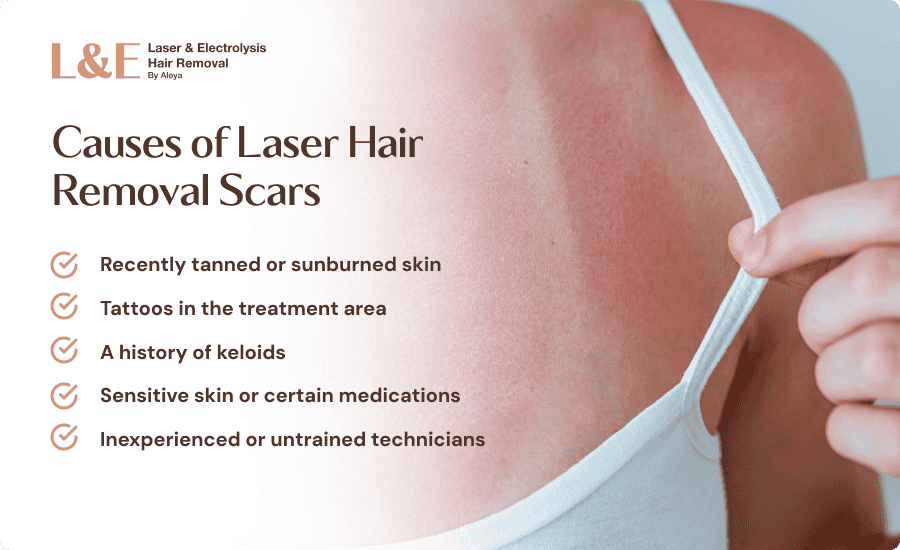
1. Recently Tanned or Sunburned Skin
Freshly tanned or sunburned skin is more sensitive to heat, which makes it easier to burn during treatment.
And if the laser hits skin pigment instead of the hair, it can cause irritation or even scarring.
2. Tattoos in the Treatment Area
Laser and tattoos are not a good match.
Zapping over ink can lead to laser burns, fading, or even scarring, definitely not the look you’re going for.
3. A History of Keloids or Thick Scarring
If your skin tends to form raised or thick scars, also known as keloid scars, be sure to let your laser specialist know.
You might still be a good candidate for laser hair removal, but you’ll likely need a little extra care and caution.
4. Sensitive Skin or Certain Medications
Skin conditions like eczema or psoriasis can make your skin more reactive than usual.
On top of that, medications like Accutane or certain antibiotics can increase light sensitivity.
That’s why it’s important to be upfront about your medical history; your laser specialist can adjust the treatment to protect your skin.
5. Inexperienced or Untrained Technicians
The wrong laser or the wrong settings for your skin tone can lead to burns or scarring.
That’s why it’s crucial to see a certified specialist, especially if you have darker skin.
Are Laser Hair Removal Scars Permanent? What You Can Do If It Happens
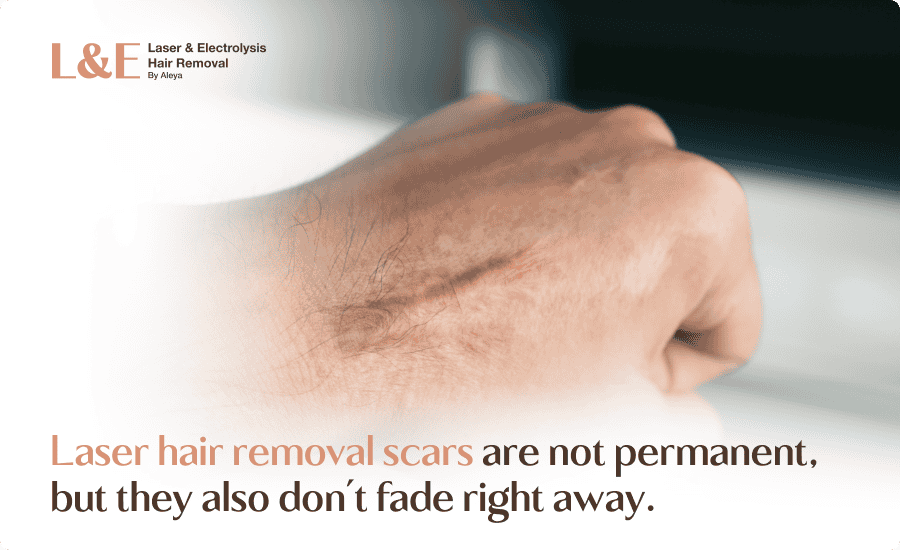
Ingrown hair scars aren’t permanent, but they don’t vanish overnight either.
They usually fade and soften over time, though some marks might never fully disappear.
Just because you’ve got a scar now doesn’t mean you’re stuck with it forever.
Like a breakup, it might sting (by just looking at it!) for a while, but with time and the right care, it fades into something barely noticeable.
- Act fast: If you notice an ingrown hair scar, burn, or blister after your session, treat it gently right away. Apply aloe vera, vitamin E oil, or a calming ointment to soothe the area.
- Avoid picking or scratching: It might be tempting, but picking at healing skin increases the chance of scarring.
- Use scar-fading products: Look for products with ingredients like silicone, vitamin C, or niacinamide because they can help fade discoloration and gradually smooth out your skin’s texture.
- Talk to a dermatologist: If your scar is raised, dark, or just not fading like it should, your dermatologist can recommend treatments like laser resurfacing, chemical peels, or steroid creams.
How To Lower Your Risk of Laser Hair Removal Scars
Laser hair removal is generally safe, but like any skin treatment, there’s a small risk of burns, especially if certain precautions aren’t taken.
Luckily, most of those risks are totally avoidable, especially if you know how to prep your skin or work with a licensed laser specialist.
Here’s how to play it safe at every step of your laser journey:
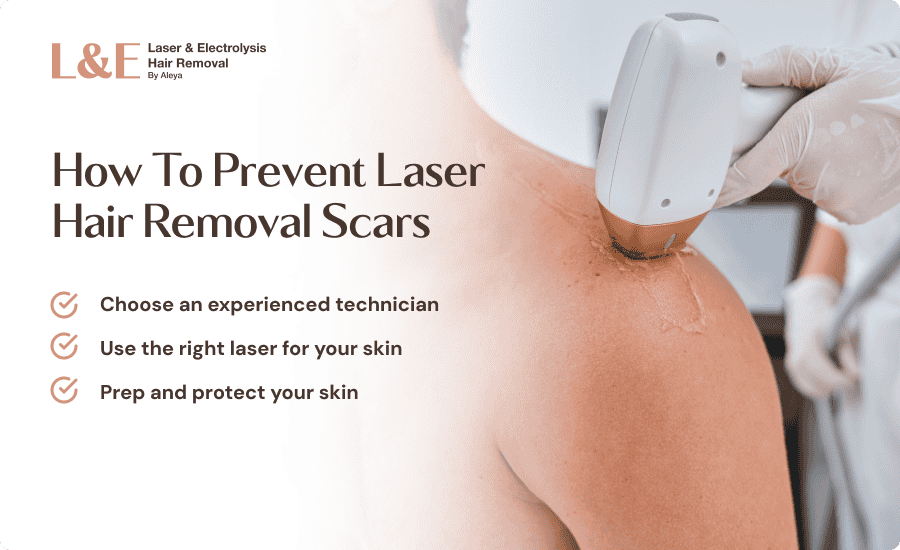
1. Choose an Experienced Technician
A skilled laser technician knows how to adjust settings based on your skin tone, hair type, and medical history.
This reduces the risk of burns dramatically. Don’t be afraid to ask about their experience or certifications.
It’s your skin, and an expert specialist will welcome your questions.
2. Make Sure They’re Using the Right Laser for Your Skin
Not all lasers work the same on every skin tone.
Using the wrong one for your skin tone can lead to burns or unwanted dark spots, not the kind of glow-up you want.
For example, at Laser by Aleya, we use the Diode LightSheer Laser.
It is one of the most versatile options out there.
It works well across many skin tones and features a built-in “ChillTip” that cools your skin during treatment for extra comfort and safety.
3. Prep and Protect Your Skin
Taking care of your skin before, between, and after sessions makes a big difference when it comes to avoiding burns.
Here’s what you’ll want to keep in mind:
- Before your appointment: Shave the area 24 hours in advance and show up with clean, product-free skin. No lotion, oils, makeup, or deodorant.
- Between sessions: Try to stay out of the sun and avoid tanning beds because tanned skin is more sensitive and more likely to react badly to the laser.
- After treatment: Keep your skin cool and moisturized. Aloe vera, vitamin E oil, or coconut oil can help soothe irritation and speed up healing. If your skin feels a little too toasty, think redness, swelling, or tenderness, be kind to it. Dab on something soothing like aloe or vitamin E, and give your laser specialist a heads-up before your next session.
You’re in Good Hands With Laser Hair Removal at Laser by Aleya
At Laser by Aleya, you’re not just getting a treatment, you’re also getting expert care from someone who truly knows what she’s doing.
Aleya is a highly trained laser specialist with years of experience.
She also has the right technology for every skin tone, and the knowledge to customize each session for safety, comfort, and results.
Whether you have sensitive skin or past bad experiences with laser hair removal, Aleya takes the time to understand your needs and guide you through the process step by step.
Ingrown Hair Scars: FAQs
Is laser hair removal safe?
Yes, laser hair removal is safe, especially when it’s done by an experienced laser specialist.
With the right laser for your skin type and proper aftercare, the risk of burns, discoloration, or scarring is very low.
Can laser hair removal cause keloids?
It’s rare, but possible, mainly in people who are already prone to keloid scarring.
If you’ve had raised or thick scars in the past, make sure to let your specialist know.
Is it safe for people with sensitive skin?
Absolutely.
In fact, many people with sensitive skin choose laser hair removal to avoid the irritation that comes from shaving or waxing.
Does laser remove existing scars?
Not really.
Laser hair removal won’t get rid of old scars, but it could help improve the look of skin over time, especially if your scars come from ingrown hairs or irritation.
If you’re looking to treat scars specifically, laser resurfacing is a better option.
How common is scarring from laser hair removal?
Scarring from laser hair removal is rare, especially when the treatment is done properly.
Most people only experience mild, temporary laser hair removal side effects like redness or swelling.
Scars are more likely to occur if the wrong laser is used, aftercare is ignored, or a burn isn’t treated correctly.
How effective is laser hair removal?
Laser hair removal is highly effective. Most people see a 70–90% reduction in hair after completing a full treatment series.
How often can you get laser hair removal?
It depends on the area being treated and your hair growth cycle, but sessions are typically spaced every four to eight weeks.
Here’s the lowdown:
- Face areas (like the upper lip or chin): every four to six weeks
- Body areas (like legs, bikini line, or underarms): every six to eight weeks


